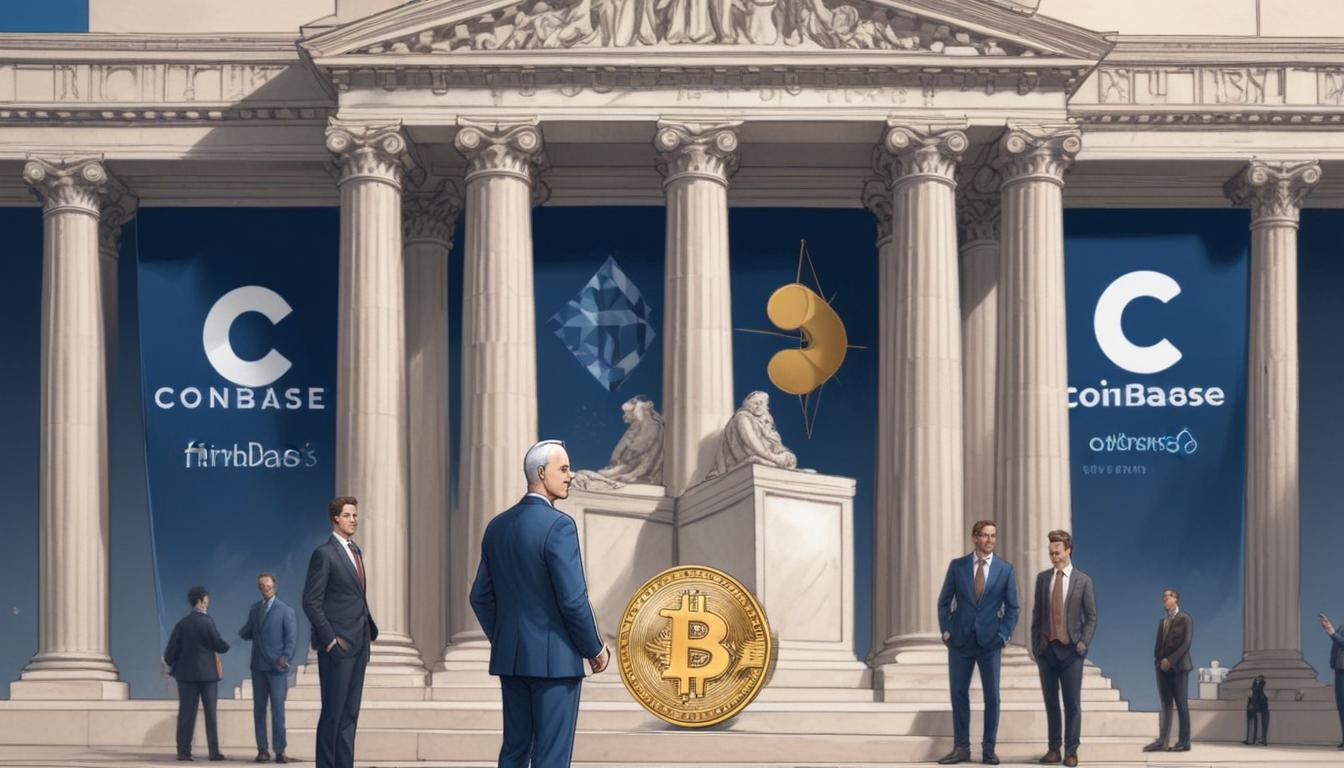
Coinbase's Strategic Alliance: Forging the Future of Finance
Coinbase, a leading name in the cryptocurrency exchange landscape, recently announced pivotal pilot projects with prominent U.S. banks, a move CEO Brian Armstrong hailed as foundational for the future of finance. This isn't merely another collaboration; it signifies a deliberate, strategic effort to deeply intertwine traditional finance (TradFi) with the burgeoning digital asset ecosystem. While the identities of the participating financial institutions understandably remain undisclosed at this early stage, the implications for market structure and trust resonate across the global financial world. These pilot programs are meticulously engineered to establish a clear, regulated pathway for mainstream institutional adoption, solidifying Coinbase's pivotal role as a key architect in this monumental convergence of old and new financial paradigms.
By directly engaging with established financial giants, Coinbase is showcasing a profound commitment to regulatory compliance and building robust, enterprise-grade infrastructure. This proactive and strategic posture is designed to significantly de-risk digital assets for a broader spectrum of institutional investors, moving the industry beyond speculative narratives towards tangible, executable strategies. It’s about demonstrating precisely how blockchain technology and its derivatives can be seamlessly integrated into existing financial frameworks, marking a crucial evolution in cryptocurrency's journey towards wider acceptance within the legacy financial world. This focused engagement effectively shifts the conversation from theoretical possibility to practical implementation, proving that digital assets can operate safely and efficiently within highly regulated environments.
This landmark collaboration is strategically positioned to cultivate essential trust and familiarity, prerequisites for the expansive, large-scale adoption of digital assets by institutions. The very act of major U.S. banks participating in these exploratory initiatives sends an unequivocal signal: cryptocurrency is actively transitioning from a niche, alternative asset class into a potential foundational pillar of the global financial ecosystem. As these initial projects mature, they are poised to systematically tackle some of the most persistent hurdles impeding institutional involvement. These include not only achieving clearer regulatory frameworks but also developing seamless operational integration solutions that bridge the inherent gap between innovative crypto infrastructure and established banking systems. This foundational work is actively laying the groundwork for a future where digital assets are not merely an optional investment, but an intrinsic, seamlessly integrated component of our daily financial interactions. It's a testament to the industry's maturation, illustrating a clear trajectory towards institutional confidence and widespread utility.
The Core Pillars of Crypto-TradFi Integration: Stablecoins, Custody, and Trading Infrastructure
Coinbase's strategic pilot initiatives with leading U.S. financial institutions are meticulously engineered around three fundamental pillars, each critical for seamlessly embedding digital assets into the established financial ecosystem. These foundational areas – stablecoins, robust crypto custody solutions, and advanced digital asset trading infrastructure – represent the building blocks for an integrated financial future where blockchain technology underpins mainstream operations. Understanding these pillars is key to grasping the profound shift occurring in the financial landscape.
Stablecoins: The Digital Bridge to Fiat Efficiency
At the forefront of this integration effort are stablecoins, hailed for their transformative potential in revolutionizing payment and settlement systems. These digital assets, pegged to stable real-world currencies like the U.S. dollar, offer an unparalleled combination of speed, cost-efficiency, and transparency. Unlike traditional cross-border transactions that often involve multiple intermediaries, lengthy clearing times, and high fees, stablecoins facilitate near-instantaneous transfers with significantly reduced overhead. This capability is particularly attractive for corporate treasuries, international remittances, and interbank settlements, where current inefficiencies represent substantial friction. The ongoing pilots are exploring scenarios where major banks could either issue their own highly regulated "digital dollars" – potentially a form of wholesale central bank digital currency (CBDC) or privately issued, bank-backed stablecoins – or leverage existing, compliant stablecoins like USDC to streamline internal and external operations. This move promises a more agile and efficient financial plumbing, paving the way for programmable money applications within traditional finance.
Crypto Custody: Securing Institutional Trust in Digital Assets
The second indispensable pillar is the development of institutional-grade crypto custody services. Attracting significant capital from wary institutional investors hinges entirely on providing secure, reliable, and compliant storage solutions for digital assets. Banks, with their centuries-long history as trusted custodians of traditional financial instruments, are uniquely positioned to extend this expertise to the digital realm. However, this is no trivial task. It demands the implementation of sophisticated security measures that exceed conventional standards, including state-of-the-art cryptographic techniques such as Multi-Party Computation (MPC), Hardware Security Modules (HSMs), and robust cold storage solutions designed to protect private keys from various attack vectors. Ensuring the immutability and verifiable ownership of digital assets, alongside comprehensive audit trails and appropriate insurance coverage, is paramount. Furthermore, navigating the complex and still-evolving regulatory landscape, particularly with guidance from bodies like the SEC, is crucial for offering compliant and trustworthy services. The pilots are actively addressing the operational challenges of integrating these novel digital asset custody systems with banks' legacy infrastructure, ensuring a seamless and secure transition for client portfolios.
Trading Infrastructure: Enabling Institutional Market Access
Finally, the pilot projects are deeply focused on establishing advanced digital asset trading infrastructure. This signifies a strategic move towards empowering banks to offer their institutional clients direct and regulated access to the burgeoning cryptocurrency markets. This critical component involves far more than simply connecting to an exchange; it encompasses the development of robust market access points, sophisticated trade execution engines, and comprehensive pre- and post-trade compliance frameworks tailored specifically for the unique characteristics of digital assets. Banks require solutions that can aggregate liquidity across multiple venues, manage market volatility, and integrate seamlessly with their existing risk management and reporting systems. By building out this foundational trading infrastructure, Coinbase and its banking partners are actively creating a transparent, regulated pathway for institutions to participate confidently in digital asset trading. This includes exploring models for prime brokerage, secure settlement, and comprehensive reporting, effectively bridging the chasm between traditional financial services and the decentralized world of cryptocurrencies, while maintaining the highest standards of integrity and market stability.
The Institutional Gateway: Navigating Crypto's Opportunities and Obstacles
The recent strategic partnerships between major U.S. banks and leading crypto platforms like Coinbase herald a new era for institutional capital in the digital asset space. These collaborations are not merely transactional; they are foundational efforts to construct regulated, trusted entry points for traditional finance. By actively engaging with established financial giants, the crypto industry gains a crucial seal of approval, significantly enhancing its legitimacy in the eyes of asset managers, pension funds, and sovereign wealth funds. This institutional validation is paramount, transforming digital assets from perceived speculative ventures into a recognized, albeit nascent, asset class. It effectively lowers the psychological and operational barriers for fiduciaries, paving the way for substantial capital allocation into the burgeoning crypto economy.
However, the journey toward seamless institutional crypto adoption is fraught with considerable challenges. A primary obstacle lies in reconciling the agile, distributed nature of blockchain technology with the rigid, centralized architecture of legacy banking infrastructure. This demands complex technological integrations, requiring banks to overhaul or adapt vast portions of their existing systems to safely and efficiently interact with digital assets. Furthermore, the fragmented and evolving regulatory landscape presents an ongoing maze. Agencies like the SEC continue to refine their stance on digital assets, creating an environment of uncertainty that mandates continuous adaptation and substantial legal diligence. Adhering to stringent compliance standards across multiple jurisdictions while innovating at the pace of crypto is a delicate balancing act, crucial for demonstrating that regulated digital asset services can coexist and thrive within traditional finance.
Beyond Pilots: Towards a Fused Financial Future
Coinbase's ambitious pilot programs with prominent U.S. banks are far more than mere experiments; they represent a deliberate, strategic endeavor to construct the fundamental architecture for a fused financial future. This forward-looking vision aims to seamlessly embed digital assets into the very fabric of traditional finance, rendering them an intrinsic, rather than peripheral, component of our global economic system. The long-term ramifications for broad-based crypto adoption are nothing short of transformative. Imagine a world where digital assets aren't confined to a separate, often volatile market, but instead function as an essential utility, fundamentally reshaping payments, settlements, and investments within the established financial ecosystem.
This profound evolution marks a critical pivot away from a paradigm primarily driven by pure speculation towards one anchored in construction and deep integration. Major financial institutions are no longer simply observing the crypto landscape; they are actively engineering the essential bridges that will lead to a more liquid, accessible, and resilient digital asset market. For astute observers and institutional investors, the focus must shift towards monitoring the incremental but impactful rollout of these integrated services, prioritizing milestones in regulatory clarity and the successful, secure integration of crypto-native solutions within existing, legacy banking infrastructure. This foundational work promises to unlock unprecedented levels of trust and efficiency.
Key Indicators: Charting the Path of Institutional Crypto Integration
As these pivotal pilot projects mature and expand, the digital asset finance landscape is poised for significant transformation. Investors, analysts, and industry participants should meticulously monitor several key indicators to gauge the true progress and trajectory of institutional crypto integration. These aren't just theoretical developments; they are tangible signals of deeper adoption and market maturation:
-
Expanded Regulated Stablecoin Utility: Look for the demonstrable expansion of regulated stablecoin use cases, especially in areas like cross-border remittances, corporate treasury management, and business-to-business (B2B) payments. A strong signal of success will be the tangible efficiency gains and cost reductions these applications bring compared to traditional methods, indicating a move beyond mere proof-of-concept to systemic operational improvements. This signifies stablecoins are achieving their potential as an efficient digital bridge.
-
Proliferation of Bank-Backed Digital Asset Custody Solutions: The emergence and growth of digital asset custody solutions directly offered or endorsed by major banks will be paramount. Pay close attention to the robustness of their security protocols, the clarity of their regulatory compliance frameworks, and their competitive positioning against established, specialized crypto custodians. The ability of banks to offer secure, insured, and highly compliant custody is vital for attracting substantial institutional capital seeking to minimize risk and adhere to strict fiduciary duties.
-
Tangible Integrated Digital Asset Trading Desks: A clear sign of full institutional embrace will be the visible establishment of integrated digital asset trading desks or platforms within traditional banking institutions. These are not merely experimental setups, but fully operational departments that facilitate sophisticated digital asset transactions alongside traditional asset classes. This will signify that banks are not just holding or settling digital assets, but actively enabling regulated market access and liquidity for their client base, reflecting a seamless blending of TradFi and the digital asset economy.
This ongoing integration phase is fundamentally about proving the reliability, security, and operational efficiency of digital assets within the rigorous constraints of the traditional financial framework. Each successful milestone paves the way for truly unprecedented mainstream adoption, moving us closer to a universally accessible and inherently digital financial future.
Market-Wide and Token-Specific Impact of the News
The news affects not only the overall crypto market but also has potential implications for several specific cryptocurrencies. A detailed breakdown and forecast are available in our analytics section.
#Stablecoins #Coinbase #Crypto Trading Infrastructure #Financial Integration #Institutional Crypto #Blockchain Finance #Digital Assets #Crypto #Crypto Custody