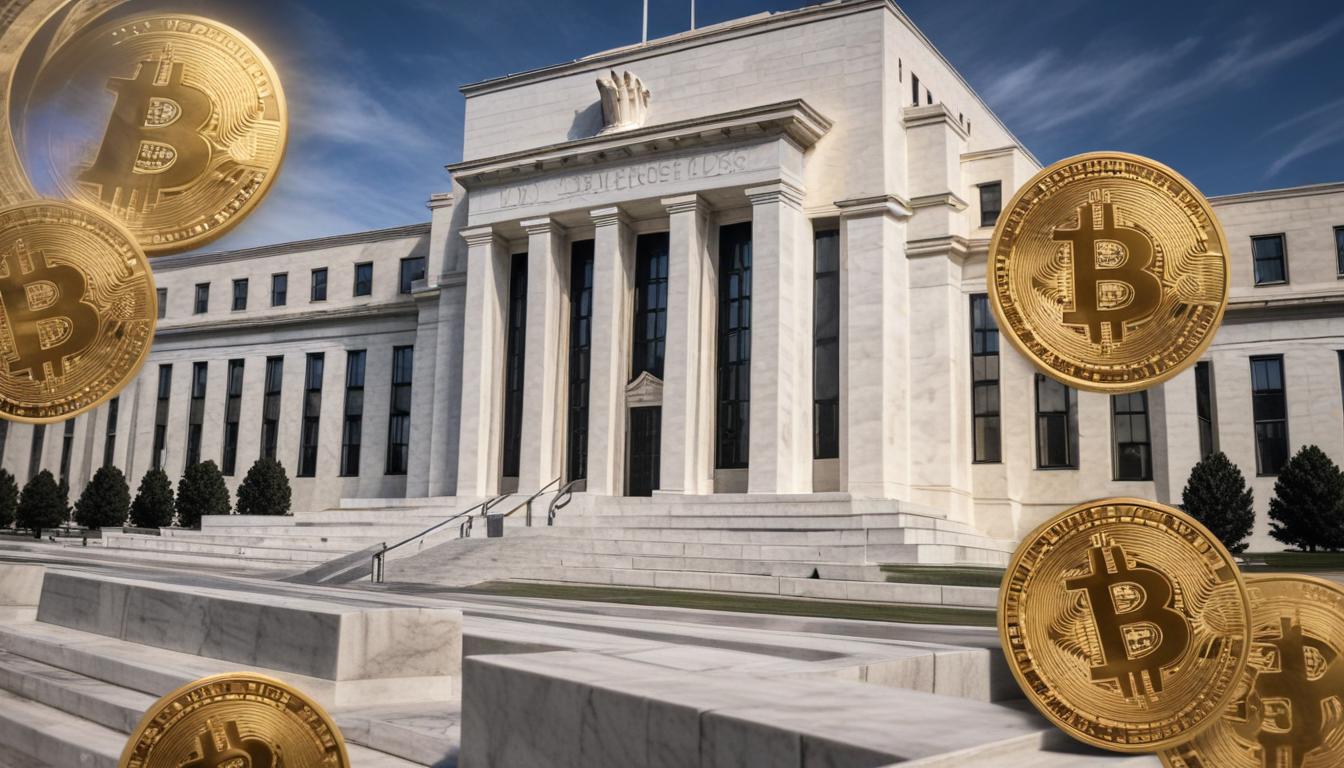
Federal Reserve Policy and Crypto Market Volatility
The Federal Reserve's monetary policy, particularly its decisions regarding interest rates, exerts considerable influence over global financial markets, and the cryptocurrency market is no different. Grasping the interplay between these decisions and the price fluctuations of cryptocurrencies is essential for navigating the inherent volatility of the digital asset landscape. This section delves into this intricate relationship, examining historical trends and assessing the potential effects of future rate adjustments on market sentiment and investment approaches, all within the broader framework of worldwide economic uncertainties.
Interest Rates and the Crypto-Dollar Relationship
The value of cryptocurrencies, most notably Bitcoin (BTC), frequently exhibits an inverse correlation with the strength of the U.S. dollar. Typically, when the Federal Reserve increases interest rates, the dollar gains strength. This strengthening can prompt a flow of capital away from riskier assets, including cryptocurrencies, as investors seek the perceived safety and potentially higher returns available through dollar-denominated investments. Conversely, a reduction in interest rates by the Fed can weaken the dollar, potentially drawing investment back into cryptocurrencies and other higher-risk ventures. However, this dynamic isn't always clear-cut, as regulatory changes, technological advancements, and overall market sentiment can significantly sway cryptocurrency prices. For example, positive news regarding the adoption of blockchain technology by major corporations might offset the negative impact of rising interest rates.
Historical Correlation Between Fed Actions and Crypto Performance
Historically, periods of aggressive interest rate hikes by the Federal Reserve have often coincided with downturns in cryptocurrency valuations. This is partially due to investors reallocating their portfolios toward more conservative assets, which are viewed as less susceptible to economic tightening. Conversely, periods of monetary easing, where the Fed reduces interest rates, have sometimes been followed by heightened interest and price increases in the cryptocurrency market. It's crucial to remember that these are only observed trends, and exceptions invariably occur. The cryptocurrency market's response isn't always immediate or directly proportional to the Federal Reserve's actions.
Read also: Nigeria's Economic Future: DeFi & Web3 as Resilience Solutions Against Tariffs
The Impact of Uncertainty: Market Sentiment and Investor Behavior
The influence of Federal Reserve policy on cryptocurrency markets extends beyond the direct impact of interest rate changes. The uncertainty surrounding future Federal Reserve decisions often significantly molds market sentiment and investor actions. Unclear Fed intentions or volatile expectations concerning future rate adjustments can amplify market volatility. Cryptocurrency markets, known for their sensitivity to news and general sentiment, may undergo intensified fluctuations during these uncertain periods. This can trigger both rapid price surges (if investors anticipate easing) and substantial sell-offs (if investors foresee further tightening). For example, if the Fed signals a potential shift in its policy, even without concrete action, the crypto market may react dramatically based on speculation.
Future Rate Adjustments and Investment Strategies
Accurately predicting the future path of Federal Reserve policy and its precise consequences on cryptocurrency markets is inherently difficult. Nevertheless, comprehending historical patterns and carefully assessing the current economic environment allows for the creation of more informed investment strategies. Investors should closely monitor key economic indicators, such as inflation rates, employment figures, and GDP growth, as well as carefully analyze statements from Federal Reserve officials to better anticipate the likely direction of future rate adjustments. A crucial strategy remains diversification; relying exclusively on a single asset class, including cryptocurrencies, can expose investors to potentially significant losses. Constructing a well-diversified portfolio that balances risk tolerance with potential rewards is essential for successfully navigating the complexities of the cryptocurrency market amidst broader global economic uncertainty.
The Interplay of Macroeconomic Factors
It's important to recognize that the Federal Reserve's actions represent just one element of a much larger equation. Geopolitical developments, regulatory modifications, technological advancements within the blockchain sector, and overall global economic conditions all exert considerable influence on the cryptocurrency market's performance. Therefore, a comprehensive understanding of these interconnected factors is vital for a thorough assessment of the relationship between Federal Reserve policy and cryptocurrency market volatility. The volatility observed within the crypto market isn’t solely attributable to the Fed’s actions; it stems from a complex combination of numerous interconnected factors operating concurrently. For instance, a sudden surge in regulatory scrutiny could overshadow the impact of a Fed rate cut.
Conclusion: Navigating the Uncertain Future
The connection between Federal Reserve policy and cryptocurrency market volatility remains complex and dynamic. While historical data suggests a correlation between adjustments to interest rates and movements in cryptocurrency prices, the precise effect of future rate modifications remains uncertain. Investors should craft well-informed strategies that account for the interaction of diverse macroeconomic factors, incorporate appropriate diversification levels, and diligently monitor market trends to effectively navigate the inherent volatility of the cryptocurrency market within the expansive context of global economic uncertainty. This understanding forms the bedrock for successfully navigating the often-turbulent waters of the digital asset space.
Global Recession Risks and the Crypto Market
The shadow of a potential global recession looms over all asset classes, and the cryptocurrency market is no different. For investors navigating these uncertain times, understanding how a significant economic downturn could impact digital assets is crucial. This section explores the possible effects of a global recession or even a depression on cryptocurrency investments, analyzes historical performance during economic downturns, and examines various scenarios based on different levels of economic severity.
Recessionary Impacts on Cryptocurrency Investments
A global recession or depression could trigger diverse consequences for cryptocurrency investments. The most immediate impact would likely be a decrease in investment as individuals and institutions prioritize liquidity, seeking refuge in traditionally "safe haven" assets. During economic hardship, disposable income shrinks, leading to less investment in speculative assets like cryptocurrencies.
This change in investor behavior could substantially decrease cryptocurrency values, affecting established cryptocurrencies like Bitcoin and Ethereum, as well as smaller altcoins. The extent of this decline would likely correlate directly with the depth and duration of the recession. A mild recession might lead to a temporary dip, while a full-blown depression could trigger a prolonged bear market for cryptocurrencies.
Furthermore, a recession could expose vulnerabilities within the cryptocurrency ecosystem. Projects with weak fundamentals, limited real-world applications, or unsustainable tokenomics could face severe challenges, potentially leading to their collapse. This "cleansing" effect could ultimately benefit the industry by removing weaker projects and strengthening the foundations of more robust ones.
Historical Performance of Cryptocurrencies During Economic Downturns
The relatively short history of cryptocurrencies makes it challenging to definitively assess their performance during significant economic downturns. Bitcoin, the first cryptocurrency, emerged in the wake of the 2008 financial crisis, arguably fueling its initial appeal as an alternative to traditional financial systems. However, the cryptocurrency market's limited track record during severe recessions means that historical data is scarce.
The COVID-19 pandemic in 2020 offers a data point, albeit an imperfect one. While not a traditional recession triggered by macroeconomic factors, the pandemic caused significant economic disruption and market volatility. Initially, cryptocurrencies experienced a sharp decline alongside other asset classes. However, as governments implemented massive stimulus packages and central banks injected liquidity into the markets, cryptocurrencies rebounded strongly, fueled by increased risk appetite and the narrative of Bitcoin as a hedge against inflation.
It is important to note that the pandemic-induced economic crisis was unique, driven by a public health emergency rather than traditional economic imbalances. The subsequent government response also differed significantly from typical recessionary policies. Therefore, drawing definitive conclusions about cryptocurrency performance during future recessions based solely on the 2020 experience is problematic.
Scenario Analysis: Varying Levels of Economic Severity
To better understand the potential impact of a global recession on cryptocurrencies, consider various scenarios based on different levels of economic severity:
- Mild Recession: Characterized by a short-term contraction in economic activity and moderate unemployment, cryptocurrencies would likely experience a correction but not a catastrophic collapse. Investor sentiment would become more cautious, leading to decreased trading volumes and price volatility. However, projects with strong fundamentals and demonstrable utility could weather the storm and potentially emerge stronger as the market recovers. Bitcoin, in particular, might retain some of its value as a perceived store of value, although its price would likely remain highly volatile.
- Severe Recession: In this scenario, characterized by a deeper and more prolonged economic contraction, rising unemployment, and significant business failures, cryptocurrencies would likely face more severe headwinds. Investor sentiment would turn decidedly negative, leading to a substantial outflow of capital from riskier assets. Bitcoin and other major cryptocurrencies would likely experience significant price declines, while altcoins could face even greater challenges. Many altcoins could become illiquid or even fail.
- Economic Depression: An economic depression, characterized by a prolonged and severe economic downturn, widespread unemployment, and a collapse of international trade, would represent the most dire scenario for cryptocurrencies. The entire financial system would be under immense pressure, and the survival of cryptocurrencies would be highly uncertain. The focus would shift to preserving capital and accessing basic necessities, leaving little room for speculative investments. Cryptocurrencies might only retain value within niche communities or as a means of circumventing failing traditional financial systems. However, the overall impact would be devastating, with the vast majority of cryptocurrency projects likely to fail.
Read also: Nigeria's Web3 Revolution: Funding, Developers & the Regulatory Maze! 🚀
Factors Mitigating the Impact of a Recession on Crypto
While a global recession undoubtedly poses risks to the cryptocurrency market, several factors could potentially mitigate the negative impact:
- Decentralization: The decentralized nature of many cryptocurrencies could provide some resilience against government intervention or censorship during times of economic turmoil. This could make them attractive to individuals seeking to bypass traditional financial controls or protect their assets from inflation or confiscation.
- Global Reach: Cryptocurrencies operate globally, allowing individuals in countries with unstable economies or political systems to access alternative financial systems. During a recession, this feature could become increasingly valuable, driving demand for cryptocurrencies in certain regions.
- Technological Innovation: The cryptocurrency industry is constantly evolving, with new technologies and use cases emerging regularly. Even during a recession, innovation could continue, potentially leading to the development of new applications that drive adoption and value for certain cryptocurrencies.
- Increased Institutional Adoption: The growing participation of institutional investors in the cryptocurrency market could provide a degree of stability during economic downturns. Institutions typically have longer investment horizons and more sophisticated risk management strategies, which could help to cushion the impact of a recession on cryptocurrency prices.
The Role of Stablecoins During Economic Uncertainty
Stablecoins, cryptocurrencies designed to maintain a stable value relative to a reference asset like the US dollar, could play a crucial role during periods of economic uncertainty. They offer a way for investors to remain in the cryptocurrency ecosystem while mitigating the volatility of other cryptocurrencies like Bitcoin. During a recession, investors might flock to stablecoins as a safe haven within the crypto market, driving up demand and potentially stabilizing their value relative to other cryptocurrencies.
However, it's important to recognize that stablecoins are not without risk. They are subject to regulatory scrutiny, and there is always the potential for a loss of confidence in stablecoin issuers, leading to a "bank run" and a collapse in their value. Therefore, investors should carefully evaluate the risks associated with specific stablecoins before relying on them as a safe haven during economic uncertainty.
Geo-Political Impacts During Economic Downturns
Trade wars, tariffs, and other geopolitical factors could exacerbate the impact of a global recession on the cryptocurrency market. Escalating trade tensions could disrupt global supply chains, increase inflation, and undermine confidence in the global economy. This could lead to increased risk aversion and a flight to safe haven assets, potentially negatively impacting cryptocurrencies. Furthermore, geopolitical instability could lead to increased regulatory scrutiny of cryptocurrencies, potentially limiting their utility and appeal.
For example, if a major economic power were to impose strict regulations on cryptocurrency trading or ban their use altogether, it could have a ripple effect across the global cryptocurrency market, potentially impacting prices and liquidity. Therefore, geopolitical factors represent a significant and potentially impactful influence on the cryptocurrency market.
Government Stimulus Packages and Crypto Markets
Government stimulus packages implemented in response to a recession could have a mixed impact on cryptocurrency markets. On the one hand, stimulus checks and other forms of direct financial assistance could provide individuals with additional funds to invest in cryptocurrencies, potentially driving up prices. On the other hand, government borrowing to finance stimulus packages could lead to increased inflation, which could erode the value of cryptocurrencies and reduce their appeal as a hedge against inflation.
The effectiveness of government stimulus packages in boosting cryptocurrency prices would depend on several factors, including the size and scope of the stimulus, the distribution mechanism, and the overall economic climate. If the stimulus is targeted towards lower-income individuals who are more likely to spend it on basic necessities rather than investments, it might have a limited impact on cryptocurrency markets.
Long-Term Prospects for Cryptocurrencies in a Post-Recession World
Despite the risks posed by a global recession, the long-term prospects for cryptocurrencies remain positive. The underlying technology of blockchain has the potential to revolutionize various industries, and the increasing adoption of cryptocurrencies by institutional investors suggests a growing belief in their long-term value.
A recession could actually accelerate the adoption of cryptocurrencies in certain areas. For example, if traditional financial institutions become unstable or unreliable, individuals might turn to cryptocurrencies as a more secure and accessible alternative. Similarly, businesses might adopt cryptocurrencies to facilitate cross-border payments or to access alternative sources of funding.
Preparing for a Potential Recession: Investment Strategies for Crypto
Given the uncertainty surrounding the global economic outlook, cryptocurrency investors should take steps to prepare for a potential recession. This includes:
- Diversifying your portfolio: Don't put all your eggs in one basket. Diversify your cryptocurrency holdings across different types of assets, including Bitcoin, Ethereum, stablecoins, and select altcoins with strong fundamentals.
- Reducing your risk exposure: Consider reducing your overall exposure to cryptocurrencies if you are concerned about a potential recession. You can do this by selling some of your holdings and holding cash or other safe haven assets.
- Focusing on long-term value: Invest in cryptocurrency projects with strong fundamentals, demonstrable utility, and a proven track record. Avoid speculative assets or projects with weak fundamentals.
- Staying informed and disciplined: Stay informed about economic developments and market trends. Don't make impulsive decisions based on fear or greed. Stick to your investment plan and don't panic sell during market downturns.
Conclusion: Navigating Economic Storms with Crypto
The potential impact of a global recession on the cryptocurrency market is a complex issue with no easy answers. While a recession undoubtedly poses risks, it could also create opportunities for innovation and adoption. By understanding the potential consequences and taking appropriate precautions, cryptocurrency investors can navigate economic storms and position themselves for long-term success. The key is to remain informed, diversified, and focused on the long-term value proposition of cryptocurrencies. As the global economic landscape continues to evolve, the cryptocurrency market will likely play an increasingly important role in the future of finance.
Read also: Nigeria's Economic Future: DeFi & Web3 as Resilience Solutions Against Tariffs
Geopolitical Instability and Its Influence on Crypto
The cryptocurrency market, known for its volatility, is acutely sensitive to geopolitical events. This section examines the multifaceted effects of geopolitical factors on the cryptocurrency market, assessing their impact on investor confidence, market stability, and the broader adoption of digital assets.
Geopolitical tensions can significantly affect the cryptocurrency market. When trade relations deteriorate, global economic growth slows, and investor confidence weakens, leading to increased risk aversion. In such environments, investors often reduce their exposure to riskier assets, including cryptocurrencies, and seek the perceived safety of traditional safe-haven assets like gold or government bonds. This shift in investment patterns can trigger sell-offs in the cryptocurrency market, resulting in price declines and increased volatility.
Furthermore, trade wars can disrupt supply chains and contribute to inflation, impacting the overall economic outlook. This can indirectly affect the cryptocurrency market by reducing disposable income and investment capital. While inflation can erode the purchasing power of fiat currencies, potentially leading some investors to seek refuge in cryptocurrencies as a hedge against inflation, the effectiveness of cryptocurrencies as an inflation hedge remains a subject of debate. Their inherent volatility can make them a risky option for risk-averse investors during periods of economic uncertainty.
The Impact of Tariffs on Cryptocurrency Adoption
Tariffs, taxes imposed on imported goods, can have a complex and sometimes contradictory impact on cryptocurrency adoption. Tariffs can stimulate the demand for alternative financial systems, particularly in situations where traditional financial infrastructure is unreliable or inaccessible. For example, in countries facing trade sanctions, cryptocurrencies can facilitate international transactions, bypassing traditional banking systems.
On the other hand, tariffs can also stifle economic growth and reduce overall trade volume, potentially limiting the adoption of cryptocurrencies. If businesses face higher costs due to tariffs, they may have less capital available for investment in innovative technologies like blockchain. This creates a climate of trade uncertainty that discourages investment and innovation in the cryptocurrency sector, especially in the countries involved. In some cases, tariffs may serve as a catalyst for cryptocurrency adoption, while in others, they may act as a deterrent.
Geopolitical Conflicts and Crypto Market Volatility
Geopolitical conflicts, including wars, political instability, and international sanctions, can significantly impact the cryptocurrency market, often leading to increased volatility and uncertainty. When geopolitical tensions escalate, investors tend to become more risk-averse, leading to sell-offs in the cryptocurrency market, resulting in price declines and increased trading volume. For instance, the Russia-Ukraine conflict led to significant fluctuations in the cryptocurrency market as investors assessed the potential economic and regulatory consequences.
Furthermore, geopolitical conflicts can disrupt the infrastructure and regulatory environment surrounding cryptocurrencies, potentially limiting their use and adoption. For example, governments may impose restrictions on cryptocurrency transactions or seize cryptocurrency assets in response to political instability or international sanctions. This can create uncertainty and discourage investment in the cryptocurrency sector.
However, geopolitical conflicts can also create opportunities for cryptocurrencies. In countries facing political instability or economic sanctions, cryptocurrencies can provide a means of circumventing traditional financial systems and accessing global markets. They enable individuals and organizations to bypass restrictive capital controls and facilitate cross-border transactions.
Investor Confidence and Market Sentiment
Investor confidence and market sentiment play a crucial role in shaping the cryptocurrency market's response to geopolitical instability. When investors are confident in the stability and security of the global economy, they are more likely to invest in riskier assets like cryptocurrencies. However, when geopolitical tensions rise, investor confidence tends to decline, leading to increased risk aversion and a flight to safety. This can trigger significant price fluctuations in the cryptocurrency market.
Market sentiment, the overall attitude of investors towards the cryptocurrency market, can also be influenced by geopolitical events. Positive geopolitical developments, such as the resolution of a trade dispute, can boost investor confidence and lead to price increases. Conversely, negative developments, such as the outbreak of a war, can dampen investor sentiment and lead to price declines.
The cryptocurrency market's sensitivity to investor confidence and market sentiment makes it particularly vulnerable to geopolitical instability. Even minor geopolitical events can trigger significant price fluctuations in the cryptocurrency market, making it challenging for investors to navigate these volatile conditions. Keeping a close watch on geopolitical developments and understanding their potential impact on market sentiment is crucial for making informed investment decisions in the cryptocurrency space.
Regulatory Responses to Geopolitical Instability
Geopolitical instability has prompted regulators worldwide to scrutinize cryptocurrencies more closely. Concerns about their potential use for illicit activities, such as money laundering, terrorist financing, and sanctions evasion, have prompted regulators to implement stricter rules and regulations for cryptocurrency exchanges and other digital asset service providers. This increased regulatory scrutiny aims to mitigate the risks associated with cryptocurrencies and ensure that they are not used to undermine national security or financial stability.
Regulatory responses to geopolitical instability can have both positive and negative impacts on the cryptocurrency market. On the one hand, stricter regulations can enhance transparency and accountability, making cryptocurrencies more attractive to institutional investors and mainstream users. On the other hand, overly restrictive regulations can stifle innovation and limit the adoption of cryptocurrencies. Finding the right balance between regulation and innovation is crucial for fostering a healthy and sustainable cryptocurrency ecosystem.
The regulatory landscape surrounding cryptocurrencies is constantly evolving, and it is important for investors to stay informed about the latest developments to navigate the risks and opportunities associated with this rapidly changing market. Monitoring regulatory announcements and understanding their potential impact on cryptocurrency investments is essential for making informed decisions.
Examples of Geopolitical Events and Their Impact on Crypto
Several historical examples illustrate the impact of geopolitical events on the cryptocurrency market:
-
The US-China Trade War: The escalating trade tensions between the United States and China in 2018-2020 led to increased economic uncertainty and market volatility, impacting the cryptocurrency market. Investors sought safe-haven assets, and while some turned to cryptocurrencies, the overall impact was mixed due to regulatory concerns and market manipulation.
-
The Russia-Ukraine Conflict: The ongoing conflict between Russia and Ukraine has had a significant impact on global financial markets, including the cryptocurrency market. The conflict has led to increased volatility, sanctions, and concerns about the use of cryptocurrencies for sanctions evasion. Cryptocurrencies have played a role in fundraising for both sides of the conflict and have been used to circumvent traditional financial systems.
These examples demonstrate the complex and often unpredictable ways in which geopolitical events can influence the cryptocurrency market. Analyzing historical patterns and understanding the underlying dynamics of geopolitical events is crucial for anticipating their potential impact on cryptocurrency investments.
The Role of Decentralization During Geopolitical Turmoil
The decentralized nature of many cryptocurrencies is often touted as a key advantage during times of geopolitical turmoil. Decentralization implies that no single entity controls the cryptocurrency network, making it more resistant to censorship and government interference. In countries facing political instability or economic sanctions, cryptocurrencies can provide a means of circumventing traditional financial intermediaries. This allows individuals to maintain access to financial services and preserve their wealth.
However, the effectiveness of decentralization in mitigating geopolitical risks is not always guaranteed. Governments can still exert influence over cryptocurrency exchanges and service providers, potentially limiting their use. Additionally, vulnerabilities in the underlying technology or governance structures can undermine the principles of decentralization and make the market more vulnerable to manipulation. For example, if a large portion of the network's nodes are controlled by a single entity or group, the network may be susceptible to censorship or attacks.
Read also: Nigeria's Web3 Revolution: Funding, Developers & the Regulatory Maze! 🚀
Cryptocurrency as a Tool for Sanctions Evasion
One of the primary concerns surrounding cryptocurrencies in the context of geopolitics is their potential use for sanctions evasion. Cryptocurrencies can facilitate cross-border transactions without the need for traditional financial institutions, making it more difficult for governments to monitor and control the flow of funds. This can enable individuals and organizations subject to sanctions to bypass restrictions and continue engaging in prohibited activities.
Governments are actively working to combat the use of cryptocurrencies for sanctions evasion, including through the implementation of stricter regulations and the development of new technologies to track and trace cryptocurrency transactions. However, the decentralized and anonymous nature of many cryptocurrencies makes it challenging to effectively prevent their use for illicit purposes. Regulatory agencies are increasingly using blockchain analytics tools to identify and track suspicious transactions and are working with cryptocurrency exchanges to implement stricter know-your-customer (KYC) and anti-money laundering (AML) procedures.
Read also: Nigeria's Web3 Revolution: Funding, Developers & the Regulatory Maze! 🚀
The Future of Crypto in a Geopolitically Uncertain World
The future of cryptocurrencies in a geopolitically unstable world is uncertain. On the one hand, the increasing adoption of cryptocurrencies in countries facing political instability and economic sanctions suggests that they could play a more prominent role in the global financial system. On the other hand, the growing scrutiny of cryptocurrencies by governments and regulators could lead to stricter regulations and limitations on their use.
Ultimately, the success of cryptocurrencies in a geopolitically unstable world will depend on their ability to adapt to changing regulatory environments and address concerns about their use for illicit activities. Cryptocurrencies that prioritize transparency, security, and compliance with regulations are more likely to thrive in the long run. Innovation in areas such as privacy-enhancing technologies and decentralized governance could also help to address concerns about censorship and control.
Given the inherent volatility and uncertainty of the cryptocurrency market in the face of geopolitical risks, it is important for investors to develop sound investment strategies. Here are some strategies to help reduce your exposure to specific geopolitical risks:
- Diversification: Diversify your cryptocurrency holdings across different types of assets and geographic regions. This can help to mitigate the impact of any single geopolitical event on your portfolio.
- Risk Management: Implement risk management techniques, such as setting stop-loss orders and limiting your exposure to highly volatile assets. This can help to protect your capital during periods of market turbulence.
- Due Diligence: Conduct thorough due diligence on cryptocurrency projects and exchanges before investing, paying particular attention to their regulatory compliance and security measures. This can help to avoid scams and protect your investments.
- Stay Informed: Stay informed about geopolitical developments and their potential impact on the cryptocurrency market. This will enable you to make informed investment decisions and adjust your strategies as needed. Stay updated on current events affecting crypto.
Conclusion: Navigating Turbulence in the Face of Global Tensions
Geopolitical instability presents both challenges and opportunities for the cryptocurrency market. While trade wars, tariffs, and international conflicts can lead to increased volatility and uncertainty, they can also drive adoption and innovation. By understanding the complex interplay between geopolitical factors and the cryptocurrency market, investors can develop informed strategies to navigate these turbulent times and position themselves for long-term success. The ability of the cryptocurrency market to adapt and evolve in response to geopolitical pressures will ultimately determine its resilience and its role in the future of finance.
Government Stimulus Packages and their Effects on Crypto
Government stimulus packages, designed to inject capital into struggling economies, can significantly influence cryptocurrency markets, creating both opportunities and risks. While seemingly a purely macroeconomic event, these interventions can reshape investor behavior and market trends. Understanding this interplay is essential for navigating the crypto market amid global economic uncertainty.
Stimulus Packages and Investor Behavior
The injection of capital via stimulus packages can significantly alter investor risk appetite. Successful stimulus measures that boost economic activity and consumer confidence may encourage investors to allocate funds to higher-risk assets, including cryptocurrencies, potentially driving prices up. Conversely, ineffective stimulus or unintended consequences like rising inflation could prompt investors to seek safer assets like gold or government bonds, leading to a cryptocurrency market sell-off. Therefore, the success of a stimulus package in swaying investor sentiment towards cryptocurrencies largely depends on its design, implementation, and overall achievement of its economic objectives.
The Inflationary Impact on Crypto Values
A primary concern with government stimulus packages is their potential to fuel inflation. When governments increase spending or print more money, the value of existing currency can decrease, leading to higher prices. In such scenarios, investors may seek assets that hedge against inflation, potentially shifting capital away from cryptocurrencies towards more stable assets. However, some argue that cryptocurrencies, particularly those with a limited supply like Bitcoin, can serve as an inflation hedge. The outcome hinges on the extent and persistence of inflation triggered by the stimulus.
Stimulus and the Stock Market's Influence on Crypto
Stimulus packages often impact traditional stock markets, which, in turn, can influence crypto. A surge in stock values due to increased investor confidence and liquidity following stimulus injections can sometimes suppress crypto prices as investors reallocate funds. However, a strong stock market fueled by a successful stimulus could also create a positive spillover effect, with general investor optimism permeating across markets and potentially boosting cryptocurrencies. This relationship is often shaped by factors such as market sentiment, regulatory dynamics, and investor perceptions of the relative risk of both asset classes.
Read also: Nigeria's Web3 Revolution: Funding, Developers & the Regulatory Maze! 🚀
Sector-Specific Stimulus and its Implications
Government stimulus packages often target specific sectors like renewable energy, technology, or infrastructure. This can disproportionately affect cryptocurrency projects or technologies aligned with those sectors. For example, a stimulus focused on renewable energy could boost demand for cryptocurrencies used in energy trading or blockchain-based carbon credit platforms. Conversely, a stimulus focused on a sector unrelated to blockchain might not significantly impact cryptocurrency values immediately. This highlights the potential for localized effects, requiring investors to assess the specific focus of a stimulus package to better predict its impact on relevant parts of the crypto-ecosystem.
The scale and effectiveness of implementation also influence the impact on cryptocurrency markets. A successful stimulus in a major global economy could create a positive ripple effect globally, boosting investor confidence and potentially driving up crypto prices worldwide. Conversely, a poorly managed or ineffective stimulus in a leading economy could cause widespread negative sentiment, leading to a global downturn in crypto markets. This interconnectedness underscores the importance of closely monitoring international economic policies and their potential effects.
Finally, government stimulus packages can indirectly shape the cryptocurrency landscape through regulation. Governments might increase scrutiny of crypto markets to mitigate potential risks associated with increased speculative activity or illicit financial flows triggered by the influx of capital. This increased scrutiny could lead to new regulations, potentially dampening enthusiasm or hindering market growth. Conversely, a proactive and supportive regulatory environment could foster innovation and encourage adoption. Balancing innovation with appropriate regulatory approaches toward cryptocurrency presents a complex challenge demanding continuous evaluation by stakeholders.
Conclusion: Navigating the Storm
While government stimulus packages can potentially boost cryptocurrency prices through increased risk appetite and liquidity, the risk of inflation and the potential for regulatory intervention must be carefully considered. Investors should maintain a diversified portfolio, closely monitor economic indicators, and develop strategies to adapt to the evolving landscape of government intervention and its unpredictable consequences. This awareness is crucial for successfully navigating the volatile and complex world of cryptocurrency investment during periods of global economic uncertainty.
Decoding Fed Policy's Impact on Crypto Volatility
Understanding the Federal Reserve's influence on cryptocurrency markets is crucial for navigating their inherent volatility. This article explores the complex relationship between interest rate adjustments, macroeconomic factors, and cryptocurrency price fluctuations.
Key Takeaways:
- Rising interest rates often correlate with decreased cryptocurrency valuations due to capital flowing towards safer assets.
- Uncertainty surrounding future Fed decisions significantly impacts market sentiment and amplifies volatility.
- Diversification is key to mitigating risk, balancing potential rewards against the unpredictable nature of the crypto market.
- Consider macroeconomic factors beyond Fed policy, including geopolitical events and regulatory changes, when assessing crypto market trends.
#Stimulus Packages #Global Recession #Economic Impact #Crypto Volatility #Federal Reserve #Geopolitics #Cryptocurrency