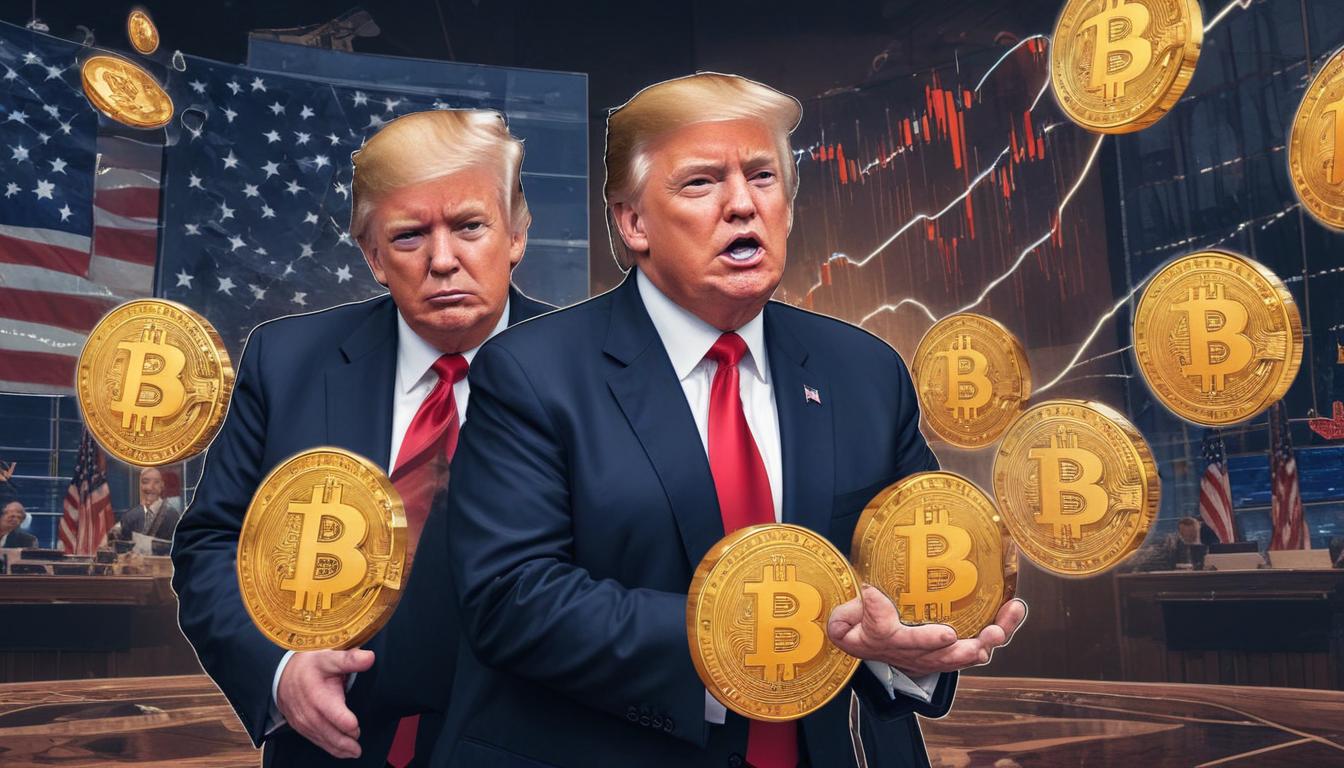
Immediate Market Reactions: Crypto's Response to Trump's Tariffs
The cryptocurrency market, renowned for its volatility, is highly sensitive to global economic and political events. Donald Trump's tariff announcements and subsequent policy shifts were no exception, causing immediate and significant ripples across the digital asset landscape. Analyzing these reactions provides crucial insights into the complex relationship between traditional finance, geopolitical tensions, and the burgeoning cryptocurrency ecosystem. This analysis will focus specifically on Bitcoin's response, the broader market volatility, shifts in investor behavior, the correlation with traditional markets, and finally, the long-term implications and regulatory considerations.
Bitcoin: A Market Barometer in the Face of Tariff Uncertainty
Bitcoin, the dominant cryptocurrency, frequently acts as a bellwether for overall market sentiment. Examining Bitcoin's price movements surrounding Trump's tariff pronouncements reveals a clear pattern of reactivity. For instance, conflicting statements regarding tariffs on Chinese goods led to a noticeable Bitcoin price dip, highlighting the market's sensitivity to policy uncertainty. While subsequent clarifications sometimes resulted in partial price recoveries, the initial impact underscored the inherent risks in digital asset investing. This volatility emphasizes the need for careful risk management and a diversified portfolio strategy, especially in times of geopolitical instability.
Amplified Volatility Across the Crypto Market
The broader cryptocurrency market, encompassing a vast array of digital assets, mirrored Bitcoin's heightened volatility in response to the tariff announcements. This amplified volatility arose from the uncertainty surrounding the tariffs’ potential impact on global trade, economic growth, and overall investor confidence. While some altcoins followed Bitcoin's price movements, others displayed resilience or vulnerability, showcasing the nuanced characteristics of individual cryptocurrencies and their investor bases. This divergence underscores the importance of fundamental analysis in assessing individual crypto projects and avoiding blanket investment strategies.
Investor Sentiment and Shifting Trading Behaviors
Trump's tariff announcements significantly impacted investor sentiment and trading patterns. Initial uncertainty triggered cautiousness, prompting some investors to liquidate holdings and seek safer assets. This flight to safety contributed to price drops and increased volatility. Conversely, periods of clarity or policy adjustments occasionally fostered cautious optimism, encouraging re-entry or increased investment. This cyclical pattern of fear and optimism, driven by evolving policy landscapes, creates a dynamic and challenging investment environment that demands adaptability and thorough due diligence.
Correlation with Traditional Markets and Macroeconomic Factors
The cryptocurrency market's reaction to Trump's tariffs highlighted its growing correlation with traditional financial markets and macroeconomic factors. Although often touted as uncorrelated assets, cryptocurrencies' increasing integration into the global financial system is fostering interdependence. During periods of tariff-induced uncertainty, the crypto market frequently mirrored traditional stock market movements, demonstrating a shared vulnerability to geopolitical risks and economic headwinds. This interconnectedness underscores the necessity of considering macroeconomic factors and global events when evaluating crypto investments, a shift from the earlier perception of crypto as an entirely isolated market.
Long-Term Implications and the Regulatory Landscape
Beyond immediate market fluctuations, Trump's tariffs raised long-term concerns. The possibility of tariff-induced inflation, combined with regulatory uncertainty, created a challenging environment for digital assets. Investors became acutely aware of macroeconomic factors' influence on crypto valuations and the pressing need for regulatory clarity to foster market stability. This growing awareness emphasizes the importance of understanding the evolving regulatory landscape and anticipating the potential interaction between governmental policies and the future of cryptocurrencies. Navigating this complex interplay will be crucial for long-term success in the crypto space.
Conclusion: Trump's tariff announcements acted as a significant catalyst for market reactions within the cryptocurrency space. The resulting price volatility, shifts in investor sentiment, and the increasing correlation with traditional markets underscore the interconnectedness between global events and the digital asset world. Understanding these dynamic relationships is paramount for navigating the complexities of the crypto market and making informed investment decisions in an era of increased geopolitical and economic uncertainty. A nuanced, adaptable, and data-driven approach is essential for navigating the ongoing evolution of the cryptocurrency market.
Long-Term Concerns: Inflation, Tariffs, and Crypto Valuations
The immediate market response to Trump's tariff announcements—evident in Bitcoin's price swings and the overall crypto market volatility—offers a glimpse into the potential long-term effects on cryptocurrency valuations. A primary concern is the possibility of tariff-induced inflation and its impact on investor sentiment within the digital asset space. While cryptocurrencies are often touted as inflation hedges, the reality is more nuanced, requiring a thorough understanding of the interplay between global trade, monetary policy, and investor behavior.
Inflationary Pressure from Tariffs: A Double-Edged Sword
Tariffs inherently increase the cost of imported goods, potentially leading to rising consumer prices. This inflationary pressure erodes purchasing power and creates uncertainty in traditional markets, potentially driving investors toward alternative assets like cryptocurrencies. This presents a potential benefit for crypto as investors seek to protect their capital. However, the relationship between inflation and crypto valuations isn't always straightforward. Increased inflation can trigger central bank responses, such as interest rate hikes, which can dampen investor appetite for riskier assets, including cryptocurrencies. This uncertainty often fuels volatility as investors react to changing economic forecasts and policy pronouncements. This volatility creates both opportunities and challenges. While some see market downturns as buying opportunities, others may liquidate holdings, exacerbating price declines. Overall market sentiment, shaped by policy and macroeconomic factors, significantly influences long-term valuations.
Read also: MANTRA (OM) Crash EXPOSED: Manipulation, Kabal Team & Lost Billions! Was Your Money Safe?
Crypto as an Inflation Hedge: A Complex Narrative
The narrative of cryptocurrencies as inflation hedges has gained traction, especially during economic uncertainty. The argument centers on the idea that cryptocurrencies, with their fixed supply and decentralized nature, are resistant to the inflationary pressures that erode fiat currencies. However, the reality is more complex. While cryptocurrencies may offer some inflation protection, their valuations are also influenced by regulatory developments, technological advancements, and overall market sentiment. The interplay of these factors can either strengthen or weaken their effectiveness as inflation hedges.
The Dollar's Role: A Shifting Landscape
The US dollar's status as the global reserve currency adds another layer of complexity to the relationship between tariffs, inflation, and crypto valuations. Tariffs can impact the dollar's strength, influencing the price of USD-denominated cryptocurrencies. A weaker dollar might boost cryptocurrency value, while a stronger dollar could exert downward pressure. Understanding the dynamics between global trade, monetary policy, and the dollar's role in the international financial system is crucial for assessing the long-term impact of tariffs on the crypto market.
Decoupling from Traditional Markets: A Gradual Process
While cryptocurrencies have historically shown some decoupling from traditional markets, their increasing integration into the global financial system suggests a growing interdependence. During periods of economic uncertainty, cryptocurrencies increasingly mirror traditional market movements. This interconnectedness highlights the importance of considering macroeconomic factors when evaluating crypto investments.
Government policies also influence regulatory responses, significantly impacting the crypto market's long-term trajectory. Governments and central banks may implement policies to mitigate inflation, indirectly affecting cryptocurrency regulation. Increased scrutiny, tighter regulations, or bans could alter the long-term valuations of digital assets. Understanding the evolving regulatory landscape and the interplay between government policies and the future of cryptocurrencies is paramount for long-term investors.
Read also: US Creates Digital Fort Knox: Secret Bitcoin Reserve Unveiled!
Long-Term Implications: A Call for Prudent Analysis
Assessing the long-term implications of Trump's tariff policies on crypto valuations requires a nuanced approach. While tariff-induced inflation presents both opportunities and challenges, the interconnectedness of global markets, the evolving regulatory landscape, and investor sentiment all shape the future of digital assets. Prudent analysis, careful risk management, and a deep understanding of macroeconomic factors are essential for navigating the long-term implications of trade policies on the crypto market. The future of crypto remains intricately linked to the broader economic and political landscape, demanding vigilance and adaptability from investors.
The Fed's Response: Implications for the Crypto Market
The Federal Reserve's strategies to manage tariff-induced inflation carry significant consequences for the cryptocurrency market. Initial market reactions to tariff announcements offer only a short-term view of potential volatility. The Fed's subsequent actions, including adjustments to interest rates or engaging in quantitative easing (QE), can significantly reshape crypto valuations over time. Understanding this intricate relationship is essential for navigating the crypto investment landscape.
One of the Fed's primary tools for managing inflation involves adjusting interest rates. Raising interest rates aims to curb inflation by increasing borrowing costs and slowing economic expansion. However, this can diminish investor interest in riskier assets, such as cryptocurrencies, as higher rates make traditional savings options more appealing, potentially drawing capital away from the crypto market. Conversely, lowering interest rates can stimulate economic activity and increase risk appetite, potentially boosting crypto valuations. Therefore, crypto investors closely monitor the Fed's decisions on interest rates, as they can greatly influence market sentiment and capital flows.
Read also: MANTRA (OM) Crash EXPOSED: Manipulation, Kabal Team & Lost Billions! Was Your Money Safe?
Quantitative Easing and its Impact on Crypto
Quantitative easing (QE), a monetary policy tool used by central banks to introduce liquidity into the economy, can significantly influence the crypto market. QE involves a central bank purchasing assets like government bonds to increase the money supply and lower long-term interest rates. This injection of liquidity can flow into riskier assets, potentially inflating crypto valuations. However, QE can also contribute to inflationary pressures, potentially leading to further policy adjustments by the Fed, thus creating a complex and dynamic environment for crypto investors.
The Dollar's Strength and Crypto Prices
The Fed's policies also influence the strength of the U.S. dollar. A stronger dollar can exert downward pressure on crypto prices, as cryptocurrencies are commonly denominated in USD. Conversely, a weaker dollar can potentially boost crypto valuations. Therefore, grasping the Fed's policy objectives and their potential impact on the dollar's strength is essential for assessing the implications for the crypto market. Investors need to consider how shifts in dollar value might affect their cryptocurrency holdings.
Investor Sentiment and the Fed's Narrative
Beyond direct monetary policy impacts, the Fed's communications and the narrative surrounding its actions shape investor sentiment. Clear and consistent communication can help stabilize market expectations and reduce uncertainty. Conversely, mixed signals or unexpected policy shifts can trigger volatility and intensify market anxieties. The Fed's ability to effectively manage market expectations and maintain credibility plays a vital role in fostering investor confidence within the crypto space.
Crypto as a Hedge in a Changing Monetary Landscape
The notion of cryptocurrencies serving as a hedge against inflation and economic uncertainty is often highlighted during periods of monetary policy adjustments. However, the true effectiveness of this hedge depends on various factors, including the Fed's actions, the overall economic environment, and investor behavior. While some investors might see cryptocurrencies as a safe haven during economic turmoil, others may remain cautious, leading to increased volatility and price fluctuations.
Regulatory Scrutiny and the Fed's Influence
The Fed's actions can indirectly influence regulatory scrutiny of the crypto market. Increased inflationary pressures or market volatility stemming from monetary policy adjustments may prompt regulators to intensify their oversight of the crypto space. This could result in stricter regulations, increased compliance demands, or even restrictions on specific crypto activities. Understanding the potential interplay between monetary policy and regulatory responses is crucial for navigating the long-term implications for the crypto market.
Navigating the Complexities of Fed Policy and Crypto
The relationship between the Federal Reserve's responses to tariff-induced inflation and the crypto market is complex and multifaceted. Factors like interest rate adjustments, quantitative easing, the dollar's strength, investor sentiment, and regulatory scrutiny all contribute to shaping the landscape for crypto valuations. Crypto investors must carefully analyze the Fed's actions, their potential impact on the broader economic environment, and the evolving regulatory landscape to make informed investment decisions. The interplay between monetary policy and the crypto market requires a nuanced and adaptive approach from investors navigating this dynamic environment.
The Interconnectedness of Global Markets and Crypto
The Fed's actions are not isolated; they are influenced by global economic conditions, geopolitical events, and the interconnectedness of financial markets. Tariff policies, while originating in the U.S., have global consequences affecting trade flows, currency valuations, and investor sentiment worldwide. The crypto market, increasingly integrated into the global financial system, is susceptible to these broader macroeconomic forces. Understanding the interplay between global events, monetary policy, and the crypto market is crucial for assessing the long-term implications of trade policies and regulatory responses.
The Future of Crypto in a Fluid Macroeconomic Environment
The future of cryptocurrencies is inextricably linked to the broader macroeconomic environment and the evolving policy landscape. The Federal Reserve's responses to tariff-induced inflation, along with regulatory developments and technological advancements, will continue to shape the trajectory of the crypto market. Investors must remain vigilant, adaptable, and informed to navigate the complexities of this dynamic space. The interplay between monetary policy, global events, and investor sentiment will continue to define the opportunities and challenges within the crypto market, demanding a comprehensive approach from investors seeking to capitalize on the potential of digital assets. A deep understanding of these interconnected forces is paramount for navigating the long-term implications of trade policies, regulatory responses, and the evolving role of cryptocurrencies in the global financial system.
Crypto Market Volatility: Trump's Tariffs and the Fed's Response
The cryptocurrency market's reaction to Trump's tariffs reveals its increasing correlation with traditional finance and global events. The Federal Reserve's subsequent responses further complicate this relationship, creating both opportunities and challenges for investors.
Key Takeaways:
- Tariffs caused immediate Bitcoin price dips, highlighting crypto's sensitivity to policy uncertainty and the need for diversified portfolios.
- The broader crypto market mirrored this volatility, showcasing the importance of fundamental analysis for individual cryptocurrencies.
- The Fed's interest rate adjustments and quantitative easing significantly influence crypto valuations, impacting investor sentiment and capital flows. Understanding the interplay between these factors is crucial for informed investment decisions.
- The growing correlation between crypto and traditional markets emphasizes the importance of considering macroeconomic factors and global events when evaluating crypto investments.
- Navigating the crypto market requires a nuanced, adaptable, and data-driven approach, incorporating an understanding of global interconnectedness, monetary policy, and the evolving regulatory landscape.
#Inflation Hedge #Crypto Investments #Fed response #Tariffs and Crypto #Trump tariffs crypto #Bitcoin Price #Investment Strategy #Crypto Volatility #Cryptocurrency Market