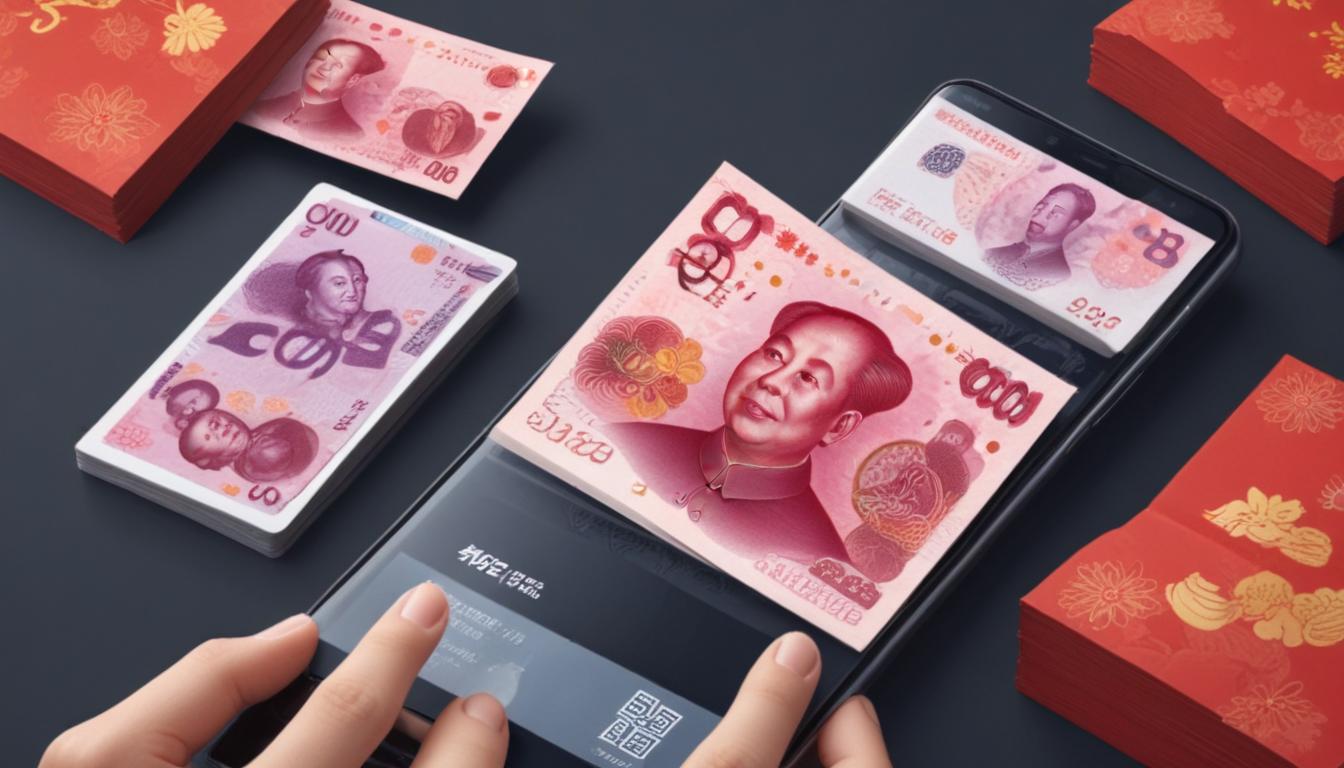
E-CNY's Monetary Evolution: Unpacking the 2026 Interest Payment Policy
A transformative development is poised to redefine the landscape of China's central bank digital currency (CBDC), the e-CNY. Effective January 1, 2026, the People's Bank of China (PBoC) will implement a landmark policy allowing commercial banks to provide interest payments on digital yuan holdings. This strategic pivot represents a profound upgrade, transitioning the e-CNY from a purely transactional, cash-equivalent instrument into a model that more closely resembles a traditional bank deposit. This crucial enhancement is meticulously crafted to significantly accelerate nationwide adoption and deepen its integration within the Chinese financial ecosystem.
The e-CNY's Evolution: From Bearer Instrument to Interest-Bearing Digital Asset
The ability to earn interest fundamentally reconfigures the utility and appeal of the digital yuan. Historically, the e-CNY functioned as a non-interest-bearing bearer instrument—analogous to physical cash in its lack of yield. Its primary allure lay in its transactional efficiency and sovereign backing. However, the impending policy shift radically alters this dynamic. By aligning with the incentives of traditional bank deposits, users will find a compelling new reason to not just use, but actively hold their e-CNY balances. This strategic move by the PBoC seeks to elevate the digital yuan from a mere medium of exchange to a genuine store of value.
This pivotal transition will be underpinned by a robust supervisory framework, meticulously developed and issued by the PBoC itself, designed to govern and standardize the new interest payment mechanisms. While specifics are still emerging, industry expectations point towards a tiered interest rate structure. This means the actual yield on e-CNY holdings could vary, potentially based on the aggregate amount an individual user maintains. Such a nuanced approach is specifically crafted to further incentivize the accumulation and long-term retention of digital yuan by consumers. Ultimately, this strategic adjustment aims to embed the e-CNY more profoundly within China's diverse financial ecosystem, offering a significant competitive edge and directly challenging the long-standing dominance of established private payment platforms like Alipay and WeChat Pay in the digital payments space.
Why Now? Catalyzing E-CNY Adoption in a Competitive Digital Payments Arena
The digital asset world is abuzz with a pivotal question: Why is the People's Bank of China (PBoC) choosing now to introduce interest payments on the e-CNY? This isn't a whimsical decision but a calculated strategic maneuver, directly addressing a persistent and undeniable challenge: the lagging adoption of the digital yuan within China's deeply entrenched payment landscape. Despite years of extensive pilot programs across various cities and the onboarding of millions of users, the e-CNY has struggled to truly differentiate itself and capture significant market share from the undisputed titans of digital payments, WeChat Pay and Alipay.
These private sector behemoths benefit from immense network effects, seamless user experiences, and integration into virtually every facet of daily life. Historically, the e-CNY, functioning as a non-interest-bearing digital cash equivalent, offered compelling transactional efficiency and sovereign backing, yet lacked a compelling incentive for users to hold balances rather than simply convert them back to traditional bank deposits or spend them via existing third-party applications.
The PBoC's landmark announcement to permit commercial banks to offer interest on e-CNY holdings, effective January 1, 2026, fundamentally alters this dynamic. By transitioning the e-CNY from a mere transactional tool into an instrument capable of generating returns, Beijing aims to unlock a powerful and previously missing incentive for consumers. This strategic enhancement is meticulously designed to encourage users not just to transact with the digital yuan, but critically, to actively retain their e-CNY balances.
Think of it this way: In a market where holding cash yields nothing, a digital currency that offers even a modest return instantly becomes more attractive. This interest-bearing model transforms the e-CNY into a hybrid instrument that combines the convenience of digital payments with a significant feature of traditional savings accounts. This dual functionality is expected to foster deeper integration of the digital yuan into everyday financial habits, positioning it as a more compelling choice beyond its purely utilitarian transactional capabilities. In a fiercely competitive environment, where user-friendly and deeply integrated private systems dominate, the promise of earning interest directly on a sovereign digital currency provides a distinct, tangible advantage and a robust mechanism to accelerate widespread, sustainable e-CNY adoption. This move is less about disrupting existing systems and more about establishing the e-CNY as an indispensable, value-generating component of China's financial future.
The Evolving Digital Yuan: From Domestic Pilot to Strategic Consolidation
The digital yuan, or e-CNY, marks a significant nearly decade-long journey of development for China's central bank digital currency (CBDC). Initiated as an ambitious concept, it rapidly evolved through extensive, real-world pilot programs, systematically deployed across numerous cities. These trials solidified its sophisticated two-tier operational model: the People's Bank of China (PBoC) issues the e-CNY, while commercial banks are tasked with its secure and efficient distribution across the nation. This systematic approach has been instrumental in building a resilient and scalable digital payment infrastructure.
Currently, the e-CNY is transitioning from its "pilot" designation into a crucial phase of broader domestic deployment. This strategic pivot reflects China's adjusted approach to its CBDC's trajectory. While initial aspirations included ambitious international applications and seamless cross-border settlement frameworks, these have encountered considerable practical and geopolitical hurdles. Consequently, collaborations, such as those with the Bank for International Settlements (BIS), have seen recalibrations, indicating a more cautious and pragmatic stance on global expansion. This shift underscores a clear strategy: consolidate the e-CNY's utility and adoption within China's vast internal financial landscape first, ensuring robust stability and widespread integration, before confidently projecting its influence further onto the global stage. This methodical focus guarantees the e-CNY's foundational strength through proven national success.
The Interest-Bearing E-CNY: A Strategic Shift in Monetary Policy and Financial Markets
The People's Bank of China's (PBoC) decision to empower commercial banks to offer interest on e-CNY holdings marks a profound strategic evolution, elevating the digital yuan far beyond a mere payment utility. This pivotal move fundamentally recalibrates China's financial ecosystem, introducing unprecedented levers for monetary policy and reshaping the competitive landscape for financial institutions.
This shift presents a dual challenge and opportunity for the commercial banking sector. While the ability to offer yields on the sovereign digital currency could attract new users and deepen financial inclusion, it also poses a direct competitive threat to traditional bank deposits. Commercial banks will need to strategically adapt their liquidity management frameworks and interest rate offerings to retain customers and prevent a substantial outflow of funds into the e-CNY. This could spur innovation in deposit products and necessitate a re-evaluation of current interest rate strategies to maintain balance sheet stability and profitability in a more dynamic environment.
For the People's Bank of China (PBoC), this policy signifies a dramatic enhancement of its monetary policy toolkit. The direct control over interest rates on a significant portion of the nation's money supply grants the PBoC an agile and precise instrument for economic management. This newfound capability allows for more granular control over various economic indicators:
- Inflation Management: By adjusting e-CNY yields, the PBoC can directly influence savings incentives and spending habits, offering a powerful mechanism to either dampen inflationary pressures or stimulate economic activity with greater immediacy than traditional tools.
- Economic Guidance: The ability to differentiate yields could be strategically deployed to guide credit allocation towards specific sectors deemed critical for national development, fostering targeted growth and investment.
- Liquidity Control: The PBoC gains a direct channel to manage systemic liquidity, potentially smoothing market fluctuations and enhancing financial stability.
This development underscores a maturing CBDC strategy for China, emphasizing the e-CNY's intrinsic role as a foundational component of the national financial infrastructure and a robust tool for enhanced economic governance. It signals a long-term vision where the digital yuan is not just an alternative payment method but an integral, interest-generating asset class within the broader financial system.
Furthermore, the introduction of interest payments critically reshapes the fiercely competitive digital payments arena. Private sector titans like WeChat Pay and Alipay, which have historically dominated due to their convenience and extensive network effects, now face a sovereign competitor with a tangible advantage beyond mere transactional utility. The e-CNY's ability to offer a yield provides a compelling incentive for users to actively hold balances, not just transact with them. This strategy aims to solidify the digital yuan's appeal, asserting its sovereign influence and consolidating its position within China's evolving digital economy. It represents a clear move towards integrating the convenience of digital payments with the fundamental principles of monetary policy, charting a new era for China's financial future.
Impact of the News on the Crypto Market
This development may significantly influence the overall trend of the cryptocurrency market. In our analytics section, we explore the key implications and possible market scenarios for investors and traders.
#Alipay #Interest Payments #Digital Payments #China #WeChat Pay #Digital Yuan #Financial Markets #Monetary Policy #People's Bank of China (PBoC) #CBDC