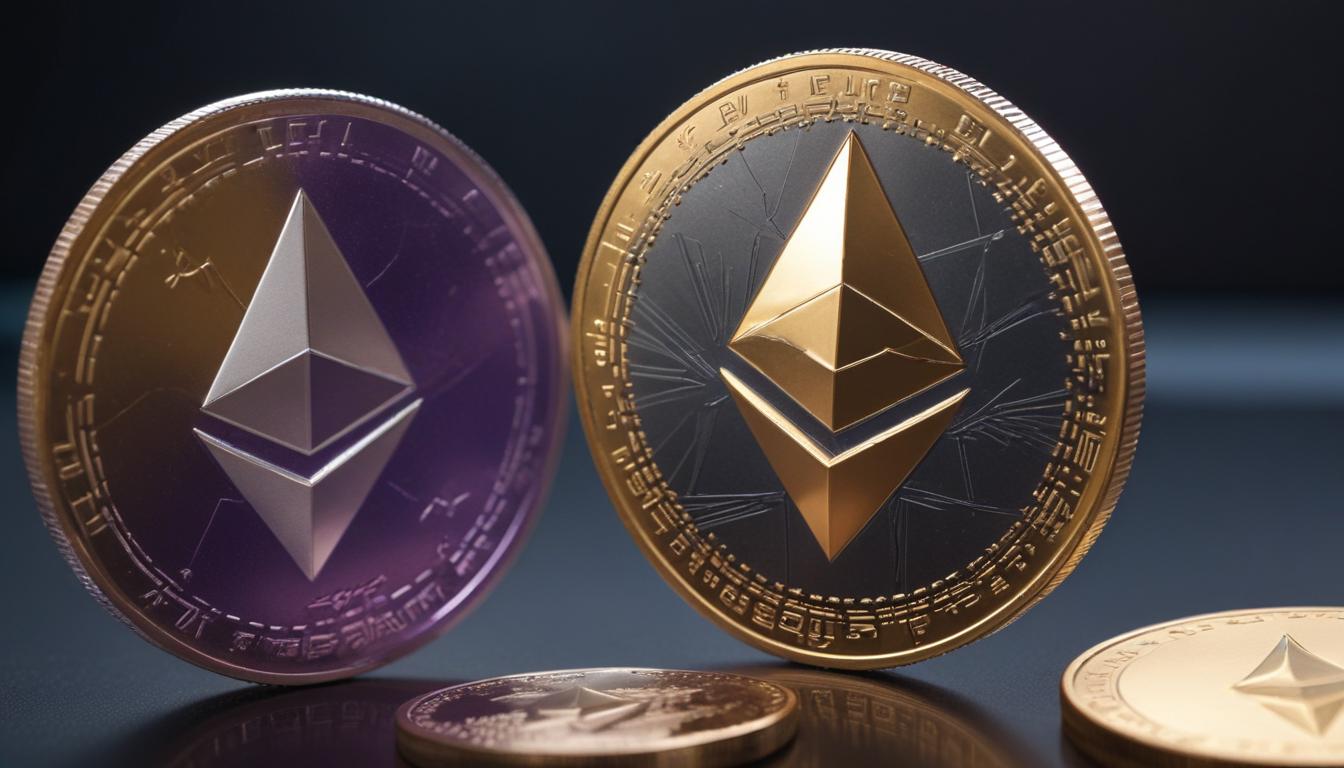
The Polymarket Prediction: Is Ethereum's Coveted #2 Spot Truly at Risk?
The fiercely competitive cryptocurrency landscape rarely stands still, and a recent, eyebrow-raising forecast from the decentralized prediction market Polymarket has ignited significant debate among investors and analysts alike. This intriguing prediction suggests that Ethereum (ETH), long considered the undisputed second-largest cryptocurrency by market capitalization, faces a substantial risk of relinquishing its prime position. Specifically, Polymarket assigns a compelling 60% probability that Ethereum's market cap ranking will fall to third place or lower at any point between January 1st and December 31st, 2026. This isn't merely a speculative ripple; it signals a potential paradigm shift in the established crypto hierarchy.
As a seasoned crypto observer and portfolio manager, I recognize the weight of such a projection. Currently, Ethereum commands a formidable market capitalization, standing at approximately $247.9 billion according to CoinGecko data. This figure comfortably positions it ahead of prominent contenders such as Tether (USDT), which hovers around $184 billion, along with other significant digital assets like Binance Coin (BNB) and Ripple (XRP). However, the very existence of this Polymarket contract underscores a growing narrative: the underlying strength and increasing market penetration of these challengers, particularly from the stablecoin and native exchange token sectors, are creating palpable competitive pressure.
This forecast compels us to critically re-evaluate Ethereum's long-term dominance. It forces a discussion on whether the market dynamics, which have historically favored Ethereum's smart contract platform, are evolving to increasingly reward assets offering different, yet equally vital, forms of utility. The rising sophistication and widespread adoption of stablecoins, designed for price stability, and native exchange tokens, deeply integrated into thriving trading ecosystems, are no longer just niche developments. They are burgeoning forces that could reshape the very foundation of cryptocurrency market leadership, directly challenging the established order and making Polymarket's prediction a significant point of discussion for any serious crypto investor.
The Rising Challengers: Stablecoins and Exchange Tokens' Ascent
While Ethereum has historically held a commanding second position in the cryptocurrency market, the dynamic digital asset landscape is witnessing a significant evolution. A notable projection from the decentralized prediction market Polymarket suggests that Ethereum's coveted rank could be challenged by 2026. This potential shift isn't born from speculative fervor, but rather from the formidable growth and increasing utility of asset classes such as stablecoins and native exchange tokens. Leading this charge are established players like Tether (USDT), Binance Coin (BNB), and Ripple (XRP), which are rapidly asserting their unique value propositions and expanding their market footprint.
Stablecoins, epitomized by Tether (USDT), offer a compelling case for widespread adoption due to their inherent price stability. This critical feature positions them as an invaluable bridge between the traditional financial system and the burgeoning crypto economy. For investors and traders, stablecoins serve as a reliable digital store of value, enabling rapid cross-border transactions with minimal volatility exposure. They are indispensable for:
- Hedging Volatility: Offering a safe haven during market downturns, allowing traders to lock in profits or mitigate losses without fully exiting the crypto ecosystem.
- Facilitating Transactions: Enabling swift, cost-effective global transfers, bypassing the complexities and delays of traditional banking rails.
- DeFi Participation: Providing a stable base currency for engaging with decentralized finance protocols, yield farming, and lending platforms without the speculative risks associated with volatile cryptocurrencies.
This unparalleled utility directly drives their escalating adoption and market capitalization, firmly positioning them as significant contenders.
Complementing stablecoins are native exchange tokens, with Binance Coin (BNB) standing out as a prime example. BNB leverages the vast reach and integrated services of the Binance exchange, cultivating a powerful network effect. Its utility extends across a comprehensive ecosystem, offering holders distinct advantages:
- Trading Fee Discounts: Providing tangible cost savings for active traders on one of the world's largest exchanges.
- Launchpad Access: Granting exclusive participation in initial coin offerings (ICOs) and token sales for new projects, often yielding significant early-stage opportunities.
- Ecosystem Integration: Fueling a wide array of platform-specific applications, including staking, governance, and payment solutions within the Binance Smart Chain (now BNB Chain).
This deep integration and demonstrable utility within a thriving ecosystem are potent drivers of demand, directly contributing to BNB's rising market valuation and challenging established hierarchies.
Furthermore, Ripple's XRP focuses on a distinct and critical use case: streamlining efficient cross-border payments and remittances. By addressing a long-standing inefficiency in global finance, XRP appeals directly to financial institutions seeking faster, cheaper, and more reliable transaction settlements. Its proven utility in this specific domain significantly bolsters its market presence. The combined rise and increasing utility of these diverse asset classes represent more than just incremental market gains; they signal a fundamental shift in investor and user preferences towards digital assets offering clear, tangible utility and stability, directly challenging Ethereum's long-held market dominance.
Ethereum's Market Challenges: Unpacking Its Perceived Vulnerability
Despite Ethereum's undeniable status as a foundational pillar of the decentralized web and the leading smart contract platform, it's no secret that the network faces significant headwinds. Recent market dynamics paint a picture of growing perceived vulnerabilities, prompting serious re-evaluation among investors and analysts. A primary indicator of this shift is Ethereum's current trading price, which remains substantially below its all-time high—approximately 58% lower, a figure that certainly captures attention. This considerable deviation from its peak valuation isn't just a mere statistic; it actively breeds investor hesitancy, raising questions about future growth trajectories and potentially diverting capital towards assets demonstrating stronger immediate momentum or offering highly specialized utility.
Furthermore, the expansive blockchain landscape has undergone a profound transformation, witnessing an increasing fragmentation of value across a burgeoning ecosystem of new Layer 1 solutions. While Ethereum pioneered the smart contract paradigm, a robust wave of innovative blockchains has since emerged, each meticulously designed to optimize for specific use cases, achieve superior scalability, or offer distinct economic models. These challengers actively vie for developer adoption, user engagement, and crucially, investment capital. This diffusion of resources means that the attention and capital once heavily concentrated on Ethereum are now considerably more dispersed across a competitive array of platforms, each claiming a slice of the market.
Consequently, this trend, coupled with evolving market preferences, has created palpable competitive pressure. Investors are increasingly gravitating towards highly liquid assets and those offering clear, utility-specific value propositions. For instance, stablecoins like Tether (USDT) provide unwavering stability, proving indispensable for navigating market volatility, hedging against risk, and facilitating seamless, rapid transactions without price fluctuations. Similarly, native exchange tokens offer integrated benefits within established trading platforms, such as reduced fees, access to launchpads, or ecosystem governance. The cumulative effect of Ethereum's significant performance gap relative to its historical peak and the compelling appeal of these specialized, highly liquid, and utility-driven digital assets collectively contributes to its perceived vulnerability within the fast-evolving cryptocurrency hierarchy. This scenario compels a critical analysis of Ethereum's strategic positioning and its ongoing efforts to maintain its market leadership.
Ethereum's Resilient Path: Strategic Innovation and Enduring Market Leadership
The prospect of Ethereum potentially ceding its long-held #2 market capitalization spot, as recently highlighted by prediction markets, carries significant implications far beyond mere price fluctuations. Such a shift would represent a profound inflection point for the entire cryptocurrency ecosystem and investor psychology. It could undeniably trigger a temporary cooling of investor enthusiasm, particularly for those deeply vested in Ethereum's long-term outperformance. More broadly, it might prompt a re-evaluation of institutional adoption trends and the overarching confidence in the narrative surrounding decentralized applications (dApps) and the broader decentralized web built upon its foundational infrastructure. Questions regarding Ethereum's intrinsic ability to scale effectively and maintain its competitive edge against a burgeoning landscape of specialized or rapidly evolving platforms could emerge, impacting developer migration and capital allocation.
However, the narrative of Ethereum's dominance is far from conclusive. The network's core developers and vibrant community are proactively engaged in a multi-faceted strategic offensive to reinforce its position and address scalability concerns head-on. A prime example is the recent Dencun upgrade, which introduced proto-danksharding. This critical enhancement is specifically designed to dramatically reduce transaction fees on Layer 2 scaling solutions, making dApps significantly more affordable and accessible for everyday users. This directly addresses one of Ethereum's persistent challenges and strengthens its competitive posture.
Looking ahead, further transformative advancements like full sharding are actively being developed. This ambitious upgrade promises to exponentially increase the network's transaction throughput, laying the groundwork for a truly mass-adopted decentralized internet. Complementing these technical leaps, the increasing adoption and sophistication of ETH staking provides a robust economic incentive for network participants. Staking not only secures the network through decentralized validation but also embeds deep value for holders, reinforcing Ethereum's economic foundation.
Crucially, the sheer strength, unparalleled liquidity, and mature ecosystem of Ethereum's decentralized finance (DeFi) and non-fungible token (NFT) sectors remain unchallenged. These vibrant domains continue to attract the lion's share of developer activity, user engagement, and total value locked (TVL), generating powerful network effects that are incredibly difficult for new entrants to replicate. These deeply embedded utilities, coupled with ongoing, iterative development, serve as potent counter-measures against the competitive pressures from stablecoins and native exchange tokens. Ultimately, Ethereum's enduring journey to maintain its leading position will be defined by its continuous innovation, its adaptable architecture, and the unparalleled utility it provides across the decentralized landscape.
Market-Wide and Token-Specific Impact of the News
The news affects not only the overall crypto market but also has potential implications for several specific cryptocurrencies. A detailed breakdown and forecast are available in our analytics section.
#Stablecoins #Ethereum Challenges #NFT #Dencun Upgrade #USDT #XRP #BNB #DeFi #Sharding #Ethereum #Crypto #Exchange Tokens #Tether USDT #Market Prediction