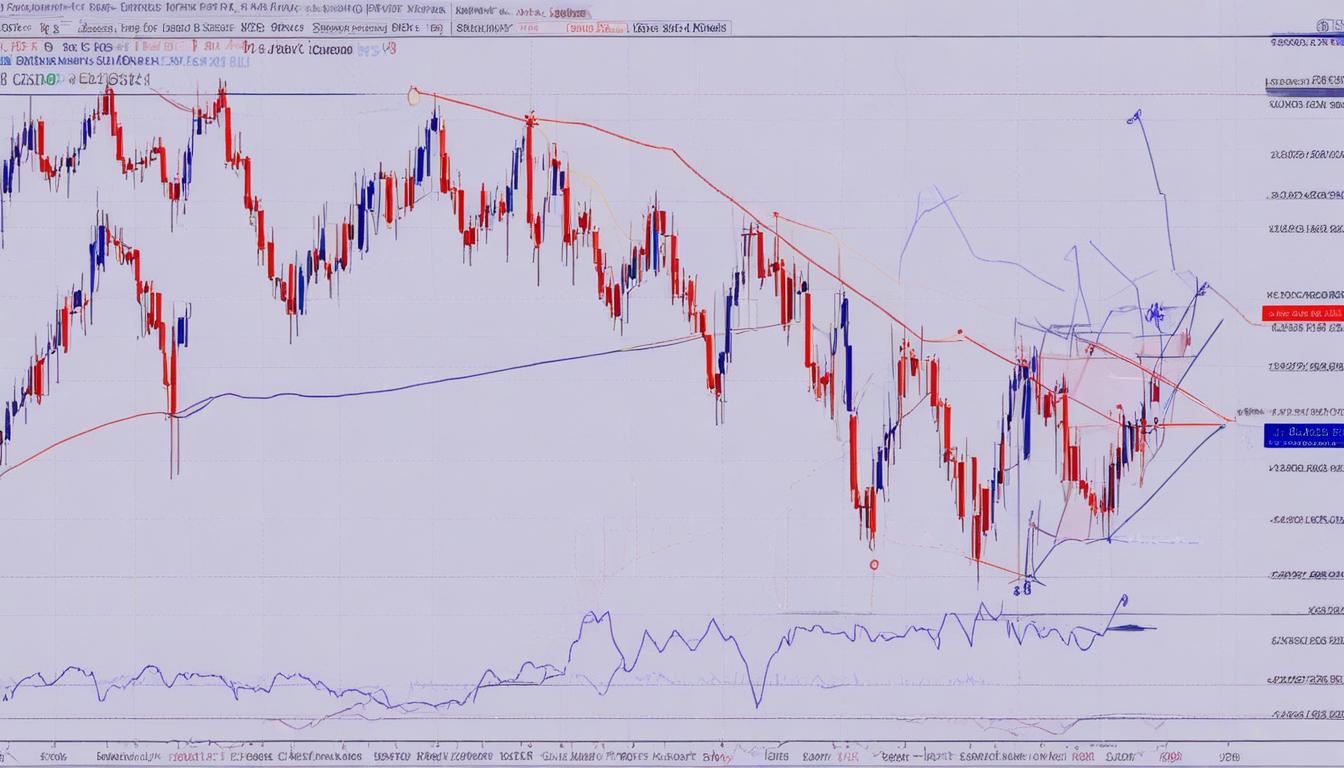
Understanding the GBPCHF Currency Pair and Forex Trading Dynamics
In the fast-paced world of Forex trading, identifying and acting on opportunities can significantly boost profitability. A recent analysis by Bank of America (BofA) regarding the GBPCHF currency pair has garnered considerable attention, suggesting that the recent dip in GBPCHF presents a bullish opportunity, rather than a cause for alarm. This section aims to dissect the intricacies of the GBPCHF currency pair, its inherent volatility, and its relevance, particularly for investors acquainted with the cryptocurrency market. Furthermore, we will explore the advantages of Forex diversification and liquidity compared to cryptocurrency markets, while emphasizing the importance of understanding global economic influences that shape the GBPCHF's movement.
Deciphering the GBPCHF Currency Pair: A Forex Primer
Before diving into Bank of America's bullish stance, it’s crucial to understand what the GBPCHF currency pair represents and its significance in Forex trading. The GBPCHF pair reflects the exchange rate between the British Pound (GBP) and the Swiss Franc (CHF). This particular pairing is known for its volatility and sensitivity to global economic events, making it a favorite among seasoned traders. But why should individuals familiar with crypto consider traditional Forex pairs like GBPCHF?
-
Diversification Beyond Crypto: Trading Forex, particularly pairs like GBPCHF, offers diversification beyond the cryptocurrency market. Forex operates as a distinct asset class with unique market drivers and trading dynamics, thus broadening the spectrum of investment opportunities. Unlike the often correlated movements within the crypto market, Forex responds to a different set of global economic indicators. For example, a shift in UK interest rates might have a direct impact on GBPCHF, while having little to no effect on Bitcoin.
-
Enhanced Liquidity: The Forex market, including GBPCHF, boasts exceptional liquidity. This high liquidity generally leads to tighter spreads and easier order execution compared to some cryptocurrency markets. Tighter spreads translate to lower transaction costs, and easier order execution reduces the risk of slippage, thereby improving trading efficiency. Consider the difference in trading volume between GBPCHF and a smaller altcoin; the ease of entering and exiting positions is significantly greater in the former.
-
Global Economic Perspective: Trading GBPCHF provides exposure to a broader global economic landscape, influenced by factors beyond the crypto realm. These include central bank policies in the UK and Switzerland, economic data releases, and geopolitical events. Understanding these macroeconomic forces provides a more comprehensive view of global finance. Monitoring these factors offers insights into how global events impact currency valuations, which can inform trading decisions and broader investment strategies.
Fundamentally, understanding and potentially trading GBPCHF can expand your financial skill set and provide strategies adaptable across various financial markets, ultimately enriching your overall investment approach.
Bank of America's Bullish Stance: Deconstructing the Drivers
Let’s examine the key question: Why is Bank of America highlighting a bullish opportunity despite a GBPCHF decline? Financial institutions like BofA employ expert analysts who diligently study market trends, economic indicators, and technical charts to form informed outlooks. These perspectives stem from extensive research and analysis. Several factors likely contribute to their bullish perspective:
-
Relative Economic Strength: BofA's analysts likely evaluate the relative economic performance of the UK and Switzerland. Favorable economic indicators from the UK, or unfavorable indicators from Switzerland, could support a bullish outlook for GBPCHF. Key indicators include GDP growth rates, inflation levels, unemployment statistics, and manufacturing indices. For example, if the UK's manufacturing sector is expanding while Switzerland's is contracting, it could indicate a strengthening Pound.
-
Central Bank Policy Divergence: The monetary policies of the Bank of England (BoE) and the Swiss National Bank (SNB) are crucial. If the BoE adopts a more hawkish stance (signaling potential interest rate increases) compared to the SNB, this divergence could strengthen the Pound against the Franc, thus creating a bullish environment for GBPCHF. For instance, if the BoE announces plans to reduce its balance sheet while the SNB maintains its current level of asset purchases, the GBP is likely to appreciate relative to the CHF.
-
Technical Chart Analysis: Technical analysts at Bank of America likely analyze GBPCHF charts to identify patterns and key indicators. A pullback after a period of upward movement could be seen as a normal correction before the uptrend resumes. They carefully monitor support levels, trend lines, and moving averages to identify potential entry points. For instance, identifying a confluence of the 200-day moving average with a Fibonacci retracement level could strengthen the case for a bullish reversal.
-
Market Sentiment Shifts: Prevailing market sentiment toward the Pound and the Franc significantly influences the currency pair. A shift in sentiment favoring the Pound, perhaps driven by improved economic forecasts or political stability in the UK, could foster a bullish GBPCHF outlook. Increased investor confidence in the UK economy could trigger a wave of GBP buying, driving GBPCHF higher. Sentiment is often influenced by factors like political stability, trade agreements, and overall investor confidence in a country's economic prospects.
These likely constitute the key factors informing Bank of America's view. Their analysis likely encompasses a wide array of macroeconomic and technical variables, offering a comprehensive perspective on the potential of the GBPCHF currency pair.
Seizing the Bullish Opportunity: Forex Trading Strategies in Action
If Bank of America foresees a bullish opportunity in GBPCHF, how can traders potentially capitalize on this insight? A strategic approach to Forex trading is essential. Here are several actionable strategies:
-
Independent Due Diligence: While Bank of America's analysis offers a valuable starting point, it should be a catalyst for your own investigation. Scrutinize GBPCHF charts, analyze recent economic data releases from both the UK and Switzerland, and track central bank announcements. Comparing BofA's insights with your independent analysis will lead to more informed trading decisions. Consider looking at alternative analyses from different financial institutions and cross-referencing their findings to gain a more holistic view.
-
Strategic Entry Point Identification: If you agree with the bullish outlook, pinpoint strategic entry points. Technical analysis can be highly valuable. Identify key support levels where you could initiate a long (buy) position. Spot chart patterns that suggest potential upward movement. For example, an inverse head and shoulders pattern forming near a key support level could signal a strong buying opportunity.
-
Robust Risk Management Protocols: Always implement rigorous risk management measures. Determine your risk tolerance and employ stop-loss orders to protect your capital. Forex trading utilizes leverage, which can magnify both profits and losses. Never risk more capital than you can afford to lose. Determine your position size based on your account balance and risk tolerance to prevent excessive losses.
-
Position Sizing Strategies: Prudent position sizing is paramount. Avoid dedicating all of your trading capital to a single trade, even if it seems promising. Diversify trades and manage position sizes according to your pre-defined risk management strategy. Employ strategies like the fixed fractional method to optimize your risk-reward profile. A common approach is to risk no more than 1-2% of your trading capital on any single trade.
-
Continuous Market Monitoring: The Forex market is inherently dynamic. Stay updated on news and events that could influence GBPCHF. Economic data releases, political developments, and changes in global risk sentiment can all impact currency movements. Subscribe to reputable financial news sources and set up alerts to stay informed of critical market developments. Create a watchlist of key economic indicators and set up alerts to be notified when they are released.
Illustrative Scenario: Assume you have done your research and concur with the bullish opportunity. You identify a key support level for GBPCHF using technical analysis. Consider initiating a long position near this support level, placing a stop-loss order slightly below it to limit potential losses and setting a profit target based on your assessment and risk-reward ratio. This example is simplified; real-world trading demands consideration of more complex variables.
Navigating Forex Trading Risks in GBPCHF
The potential bullish opportunity in GBPCHF is appealing; however, it's crucial to acknowledge the risks inherent in Forex trading, especially with a volatile pair like GBPCHF. Ignoring these risks can lead to financial setbacks. Here are key challenges to consider:
-
Volatility Amplification: GBPCHF can experience rapid and significant price fluctuations, posing potential risks for inexperienced traders. Mitigate volatility by using stop-loss orders to limit potential losses, adjusting position sizes to reduce exposure, and avoiding excessive leverage, which can magnify both gains and losses. Consider using volatility indicators like Average True Range (ATR) to adjust your stop-loss placement based on current market conditions.
-
Economic Data Sensitivity: GBPCHF is highly sensitive to economic data releases from both the UK and Switzerland. Unexpected data can trigger sharp price movements. Stay informed by monitoring economic calendars, avoiding trading during major data releases if you lack experience, and adjusting your strategy as needed based on data outcomes. Develop a strategy for how you will react to different possible outcomes of major data releases.
-
Geopolitical Influence: Global political events and geopolitical tensions can significantly affect currency values and market sentiment. Monitor global news and analyze how geopolitical risks may affect GBPCHF. Consider using hedging strategies to mitigate potential losses from unexpected political events. Geopolitical risks can be difficult to predict, but staying informed and having a plan for managing potential disruptions is essential.
-
Leverage-Induced Risks: Forex trading typically involves leverage, which can magnify both profits and losses. Excessive leverage can rapidly deplete your trading capital. Use leverage cautiously, understand margin requirements, and never trade with more leverage than you can comfortably manage. Practice using a demo account to understand the impact of leverage on your trading outcomes before using real capital. Before using real money, ensure you fully understand the margin requirements for your broker and the potential for margin calls.
By understanding and proactively addressing these challenges, you can approach GBPCHF Forex trading with greater confidence and resilience.
Strategies for Forex Trading Success in GBPCHF
Let's explore some prevalent trading strategies applicable to GBPCHF. These are simplified examples to be adapted to your unique trading style and risk tolerance:
-
Trend Following Methodology: If you observe a defined uptrend in GBPCHF (consistent with a bullish opportunity), consider a trend-following strategy. Initiate long positions when the price retraces to a moving average or trend line, aiming to capitalize on the upward momentum. Utilize moving averages, such as the 50-day or 200-day, to identify the prevailing trend and potential entry points. A simple trend-following strategy might involve buying whenever the price bounces off the 50-day moving average during an established uptrend.
-
Breakout Trading Techniques: Monitor for price breakouts above key resistance levels. A breakout may signal the beginning of a new upward trend. Initiate a long position upon confirmation of a breakout, placing a stop-loss order below the breakout level. Confirm breakouts by observing increased trading volume and momentum indicators. For example, a breakout above a previous high, accompanied by a surge in volume, could signal a strong buying opportunity.
-
Support and Resistance Dynamics: Identify key support and resistance levels on GBPCHF charts. In a bullish scenario, consider buying near support levels, anticipating an upward rebound. Use Fibonacci retracement levels and pivot points to identify potential support and resistance zones. Look for confluence, where multiple indicators align at the same price level to create a stronger signal.
-
Carry Trade Applications: A carry trade involves profiting from the interest rate differential between two currencies. If the UK has a higher interest rate than Switzerland, maintaining a long GBPCHF position can yield overnight interest (swap). However, this strategy is sensitive to interest rate changes and currency fluctuations. Monitor central bank announcements and economic data releases that could impact interest rate expectations. Keep in mind that the interest rate differential is not static and can change, affecting the profitability of the carry trade.
These are introductory examples. Successful Forex trading necessitates continuous learning, strategy adaptation, and refinement based on evolving market conditions and personal trading experience.
Conclusion: Capitalizing on GBPCHF Forex Trading
Bank of America's assessment of a bullish opportunity in the GBPCHF decline offers an intriguing prospect for traders to diversify beyond crypto and potentially profit from market movements. A thorough understanding of the GBPCHF currency pair, the factors influencing Bank of America’s analysis, and the implementation of disciplined trading strategies paired with meticulous risk management are essential to potentially capitalize on this outlook. While Forex trading involves inherent risks, a well-informed and strategic approach can unlock significant potential. Always conduct comprehensive research, manage your risk effectively, and maintain adaptability in the constantly evolving world of financial markets. The GBPCHF pair, with its volatility and responsiveness, presents both challenges and exciting prospects for traders who are prepared to engage thoughtfully and strategically.
Bank of America's Bullish GBPCHF Prediction: A Deep Dive into the Rationale
Bank of America's bullish GBPCHF forecast isn't a gut feeling; it's a confluence of factors suggesting a strengthening British Pound against the Swiss Franc. Their analysis likely encompasses a detailed examination of economic fundamentals, central bank policies, technical indicators, and market sentiment, all pointing towards a potential GBPCHF uptrend. This in-depth analysis will dissect the rationale behind Bank of America's prediction, exploring supporting elements and acknowledging potential counterarguments crucial for informed trading decisions.
Economic Fundamentals: A UK-Switzerland Comparison
A cornerstone of Bank of America's bullish stance likely rests on the comparative economic performance of the UK and Switzerland. Stronger UK indicators juxtaposed with weaker Swiss performance could fundamentally support Pound appreciation against the Franc. BofA analysts likely scrutinize key metrics such as GDP growth rates, inflation, employment figures, and Purchasing Managers' Index (PMI) readings.
Robust and sustained UK GDP growth exceeding Switzerland's signals a healthier, more dynamic economy, attracting foreign investment and increasing Pound demand, thereby pushing GBPCHF higher. Similarly, if the UK experiences rising inflation while Switzerland maintains price stability or deflation, the Bank of England might raise interest rates to combat inflation, further enhancing the Pound's appeal.
Conversely, UK economic weakness (GDP contraction, rising unemployment, declining consumer confidence) could undermine the bullish outlook. Conversely, positive Swiss economic developments (strong export growth, a resilient labor market) could strengthen the Franc and pressure GBPCHF downwards. A thorough comparative analysis of both countries' economic fundamentals is therefore crucial for evaluating Bank of America's prediction.
Central Bank Policies: Bank of England (BoE) vs. Swiss National Bank (SNB)
The BoE's and SNB's monetary policies significantly shape GBPCHF dynamics. A policy divergence, with the BoE adopting a more hawkish approach (favoring interest rate hikes) than the SNB, could considerably strengthen the Pound. This divergence often determines the relative attractiveness of the two currencies.
A BoE signal to raise interest rates to combat inflation makes the Pound more appealing to investors seeking higher returns, driving up GBPCHF. Conversely, a dovish SNB (low or negative interest rates to stimulate growth) makes the Franc less attractive, further supporting the bullish GBPCHF outlook.
Market expectations regarding future central bank actions are also paramount. Even without immediate rate hikes, strong signals of future monetary policy tightening (hawkish statements from BoE officials, strong supporting economic data, changes in forward guidance) can similarly impact the Pound. Traders meticulously monitor central bank communications and economic releases to gauge the likely future direction of monetary policy.
However, central bank policies are dynamic and can change rapidly due to evolving economic conditions. Unexpected economic shocks or shifts in inflation expectations could force the BoE to adopt a more dovish stance, potentially undermining the bullish GBPCHF prediction. Similarly, SNB intervention in the currency market to weaken the Franc could offset the impact of its dovish monetary policy.
Technical Analysis: Chart Patterns and Key Indicators
Bank of America's bullish outlook likely incorporates technical analysis of GBPCHF charts. Technical analysts study historical price patterns and various indicators to identify potential trading opportunities. A pullback in GBPCHF after an upward trend could be a healthy correction before the uptrend resumes.
Chart patterns supporting a bullish prediction include:
- Double Bottom: A price decline to a low, rebound, another decline to a similar low, followed by another rebound, suggests exhausted downward momentum and buyer intervention.
- Head and Shoulders Bottom (Inverted Head and Shoulders): The inverse of the head and shoulders top pattern, signaling a potential uptrend reversal.
- Ascending Triangle: Higher lows with resistance at a specific price level suggests increasingly aggressive buyers and a likely breakout above the resistance.
Technical indicators BofA analysts might consider include:
- Moving Averages: Identifying trends by smoothing price data; a bullish signal appears when a shorter-term moving average crosses above a longer-term one.
- Relative Strength Index (RSI): Measuring the magnitude of recent price changes; an RSI below 30 suggests GBPCHF is oversold and a rebound is likely.
- Moving Average Convergence Divergence (MACD): Measuring the relationship between two moving averages; a bullish signal is generated when the MACD line crosses above the signal line.
- Fibonacci Retracement Levels: Identifying potential support and resistance areas based on Fibonacci ratios; a pullback to a Fibonacci retracement level could be a buying opportunity.
However, technical analysis limitations must be acknowledged. Chart patterns and indicators aren't always reliable future price predictors and are subject to interpretation. Technical analysis should complement fundamental analysis for a more comprehensive market view.
Market Sentiment: Gauging the Collective Outlook
Overall market sentiment towards the British Pound and Swiss Franc significantly influences the GBPCHF exchange rate. A shift in sentiment favoring the Pound (e.g., improved Brexit negotiations, positive UK political developments, increased investor confidence in the UK economy) contributes to a bullish GBPCHF outlook.
Conversely, negative news damaging investor confidence in the UK economy could weigh on the Pound and undermine the bullish prediction. Increased demand for the Swiss Franc (e.g., safe-haven flows during global economic uncertainty or geopolitical tensions) could put downward pressure on GBPCHF.
Analyzing market sentiment is challenging due to its subjective nature and rapid changes. However, traders can utilize tools such as:
- Commitment of Traders (COT) Report: Published by the CFTC, this report provides data on trader positions in the futures market, gauging overall sentiment towards a currency.
- News and Social Media Analysis: Monitoring news headlines and social media discussions provides insights into prevailing sentiment towards the Pound and Franc.
- Volatility Indices (e.g., VIX): Measuring market volatility; high volatility often indicates increased uncertainty and risk aversion, leading to safe-haven flows into the Swiss Franc.
Potential Counterarguments and Associated Risks
While Bank of America's bullish GBPCHF prediction might be well-founded, potential counterarguments and risks could invalidate their outlook:
- Unexpected Economic Shocks: Unforeseen economic events (e.g., a sudden surge in Swiss inflation or a sharp UK economic contraction) could significantly alter the currencies' relative attractiveness.
- Changes in Central Bank Policy: The BoE or SNB could unexpectedly change their monetary policy stance in response to evolving economic conditions. A dovish BoE shift or a hawkish SNB shift could undermine the bullish GBPCHF prediction.
- Geopolitical Risks: Geopolitical events (e.g., a major UK political crisis or a global trade war) could significantly impact currency values and market sentiment.
- Technical Reversals: Technical indicators are not always reliable, and chart patterns can fail to materialize. A break below key support levels could signal an uptrend reversal and invalidate the bullish prediction.
- Brexit-Related Uncertainties: Lingering uncertainties surrounding Brexit's long-term economic impact could continue to weigh on the Pound.
Conclusion: A Balanced Perspective on the GBPCHF Bullish Outlook
Bank of America's bullish GBPCHF outlook is likely based on a comprehensive analysis of economic fundamentals, central bank policies, technical indicators, and market sentiment. While their analysis may be well-reasoned and based on expert insights, traders must conduct their own independent research and consider potential counterarguments and risks. The Forex market is inherently volatile and unpredictable; no prediction is guaranteed. By adopting a balanced perspective and managing risk effectively, traders can potentially capitalize on GBPCHF opportunities while mitigating inherent risks. Crypto-savvy investors, familiar with volatile digital assets, will recognize the importance of due diligence and risk management when analyzing even predictions from reputable institutions like Bank of America.
Actionable Insights for Capitalizing on the Bullish Opportunity
Bank of America's bullish GBPCHF outlook presents a compelling opportunity for traders, particularly those familiar with the rapid fluctuations often seen in cryptocurrency markets. However, capitalizing on this potential demands a strategic approach, integrating independent research, technical analysis proficiency, and robust risk management protocols. This section provides practical guidance to effectively navigate this bullish scenario.
Independent Research: Validating and Refining the Outlook
While Bank of America's analysis offers a valuable foundation, it's paramount to conduct thorough independent research. Solely relying on a single source, regardless of its reputation, exposes you to inherent biases and potential blind spots. Your independent investigation should complement, validate, and potentially refine their assessment, ensuring a comprehensive understanding of the market dynamics and minimizing reliance on a single viewpoint.
Your independent research should encompass the following:
-
Fundamental Analysis: Develop a comprehensive understanding of the economic forces shaping both the UK and Switzerland. Scrutinize recent economic data releases, focusing on critical indicators such as GDP growth, inflation rates, employment figures, and Purchasing Managers' Indices (PMIs). Compare these figures for both countries to identify potential divergences that either support or contradict Bank of America's bullish prediction. However, avoid fixating solely on headline figures; delve into the underlying economic trends and assess their potential impact on both currencies. Are there significant structural shifts influencing either economy? Are there any looming geopolitical factors affecting either the UK or Switzerland that could influence the GBPCHF pair? For example, a major shift in trade policy could significantly impact the economic outlook for either country, and consequently, its currency.
-
Technical Analysis: Identifying Confluence and Divergence: Conduct an independent analysis of GBPCHF charts, employing a diverse range of technical indicators. This goes beyond simply confirming patterns mentioned in Bank of America's report. Explore different timeframes, experiment with various indicators (Relative Strength Index (RSI), Moving Average Convergence Divergence (MACD), Bollinger Bands, Fibonacci retracements, etc.), and compare your findings with the bank's analysis. Are there any discrepancies or contradictions? Do you observe confirmation of potential support and resistance levels? What do your chosen indicators suggest about the current market momentum and potential future price movements? For instance, if the RSI indicates an overbought condition while the MACD suggests weakening momentum, it could signal a potential pullback, even within a broader bullish trend.
-
Market Sentiment Gauging: Beyond the Headlines: Evaluate the overall market sentiment toward both the GBP and CHF. Go beyond superficial news headlines and consider utilizing tools such as the Commitment of Traders (COT) report to understand the positioning of major market participants. How does the current market sentiment align with Bank of America's prediction? Is there any significant divergence that warrants further investigation? Are there any significant news events or announcements on the horizon that could potentially shift market sentiment? For example, an unexpected political event in the UK could trigger a wave of uncertainty and negatively impact sentiment towards the GBP, potentially weakening the bullish case for GBPCHF.
By adopting this multifaceted approach, you ensure that your trading decisions are grounded in a well-rounded understanding of the market, minimizing reliance on a single source's perspective and enhancing your ability to identify and manage potential risks. For example, you might discover through your research that while the UK economy shows signs of improvement, political uncertainty surrounding Brexit negotiations could still weigh on the GBP, moderating your bullish outlook.
Strategic Entry Point Identification: Mastering Technical Analysis for Precision
Identifying optimal entry points is crucial for maximizing profit potential and minimizing risk. While Bank of America's analysis may suggest potential entry points based on their assessment, your independent research should validate or refine these points. Leverage various technical analysis tools to identify potential areas of support and resistance, allowing you to pinpoint strategic levels to enter the market.
-
Support and Resistance Levels: Identifying Key Barriers: Pinpoint key support and resistance levels using a combination of chart patterns and technical indicators. Look for areas where the price has historically bounced or stalled, as these levels often represent significant psychological barriers for traders, creating potential buying or selling opportunities. Confirm these levels using multiple methods, such as Fibonacci retracements, pivot points, and moving averages. What is the historical strength of these levels? Have they been broken before, and if so, under what circumstances? For example, a support level that has held firm for several months is likely to be more significant than one that has only been tested a few times.
-
Chart Patterns: Predicting Potential Movements: Identify potential chart patterns that suggest a bullish reversal or continuation. These include patterns like double bottoms, head and shoulders bottoms (inverted head and shoulders), ascending triangles, and bullish flags. A comprehensive understanding of these patterns can enhance your ability to anticipate potential price movements and identify optimal entry points. Ensure that you thoroughly understand the characteristics of each pattern before attempting to interpret them. For example, an ascending triangle pattern typically indicates a period of consolidation before a breakout to the upside.
-
Momentum Indicators: Gauging Trend Strength and Reversals: Employ momentum indicators, such as the Relative Strength Index (RSI) and Moving Average Convergence Divergence (MACD), to assess the strength of the underlying trend and the potential for price reversals. These indicators can assist in determining whether a pullback represents a genuine correction within an established uptrend or a sign of a weakening trend. How do these indicators align with the current price action and other technical indicators you're utilizing? For example, if the RSI is approaching overbought levels while the MACD shows signs of divergence, it could suggest that the uptrend is losing steam and a correction is imminent.
By combining these technical analysis methods, you can systematically identify strategic entry points based on your own independent assessment, increasing the probability of executing successful trades. For instance, you might identify a confluence of factors, such as a key support level coinciding with a Fibonacci retracement and a bullish chart pattern, signaling a high-probability entry point for a long position.
Risk Management: Safeguarding Your Trading Capital
Regardless of a bullish outlook, effective risk management is paramount. Never risk more capital than you can afford to lose, and always implement a comprehensive risk management strategy to protect your trading capital. This involves employing various risk management techniques designed to mitigate potential losses and preserve your ability to trade.
-
Stop-Loss Orders: Limiting Potential Losses: Always utilize stop-loss orders to limit potential losses on each trade. Place your stop-loss order at a level below your entry point that represents the maximum acceptable loss for that particular trade. This crucial measure helps prevent substantial losses if the market unexpectedly moves against your prediction. Consider employing trailing stop-loss orders, which automatically adjust your stop-loss level as the price moves favorably, allowing you to lock in profits while continuing to protect your capital. For instance, you might set a stop-loss order at 1% of your trading capital for each trade, ensuring that no single trade can significantly impact your overall account balance.
-
Position Sizing: Calculating Appropriate Exposure: Calculate your position size carefully, taking into account your risk tolerance and overall account balance. Avoid over-leveraging your positions, as this can significantly amplify both potential profits and potential losses. Employ position sizing techniques, such as the Kelly Criterion or a fixed fractional approach, to manage risk effectively while preserving your trading capital. Ensure that your position size aligns with your individual risk tolerance and the inherent volatility of the GBPCHF pair. For example, you might decide to risk no more than 2% of your trading capital on any single trade, regardless of the perceived opportunity.
-
Diversification: Spreading Your Risk Across Assets: Avoid concentrating all your trading capital in a single asset or currency pair. Diversify your trading activities across multiple assets and strategies to mitigate risk. While Bank of America's analysis focuses specifically on GBPCHF, consider diversifying your portfolio to include other currency pairs or even different asset classes, such as stocks or commodities, to reduce your overall risk exposure. For instance, you could allocate a portion of your trading capital to other major currency pairs, such as EURUSD or USDJPY, to reduce your reliance on the performance of a single currency pair.
Implementing robust risk management strategies is essential for protecting your capital, mitigating the impact of market volatility, and ensuring long-term success in Forex trading. By consistently adhering to your risk management plan, you can navigate the inherent uncertainties of the market with greater confidence and resilience.
Staying Updated: Adapting to Evolving Market Dynamics
The Forex market is dynamic and constantly evolving. Staying updated on market-moving news and events is crucial for informed and adaptive trading. By monitoring economic data releases, central bank announcements, and geopolitical events, you can proactively adjust your trading strategy to respond effectively to changing market conditions and minimize exposure to unforeseen risks.
-
Economic Data Releases: Anticipating Market Reactions: Monitor economic calendars for upcoming data releases from both the UK and Switzerland. These releases can significantly influence currency valuations, often triggering sharp price movements. Prepare accordingly by anticipating potential volatility and adjusting your trading strategy as needed. For instance, if you are holding a long GBPCHF position, you might consider tightening your stop-loss order or reducing your position size ahead of a major economic data release, such as the UK's GDP announcement.
-
Central Bank Announcements: Understanding Policy Shifts: Pay close attention to announcements from the Bank of England (BoE) and the Swiss National Bank (SNB). Changes in interest rate policies, quantitative easing programs, or forward guidance can have a dramatic impact on the GBPCHF exchange rate. Understand how central bank actions could potentially influence market sentiment and adapt your trading strategies accordingly. For example, if the BoE signals a potential interest rate hike, it could strengthen the GBP and potentially boost your long GBPCHF position.
-
Geopolitical Events: Assessing Global Impacts: Stay informed about global geopolitical events, including political instability, international conflicts, and trade negotiations. Major political or economic events can significantly influence currency valuations and market sentiment. Assess the potential impact of such events on GBPCHF and adjust your trading plan to account for any increased risk or potential opportunity. For example, a major political crisis in the UK could weaken the GBP and negatively impact your long GBPCHF position, requiring you to adjust your stop-loss order or reduce your position size.
By staying informed and adapting your strategies, you can effectively respond to evolving market dynamics, minimize exposure to unforeseen events, and enhance your potential for profitable trading outcomes. For instance, by closely monitoring geopolitical developments, you might anticipate a potential safe-haven flow into the Swiss Franc, leading you to reduce your long GBPCHF exposure in advance.
Conclusion: A Comprehensive Approach to Navigating a Bullish Scenario
Bank of America's bullish GBPCHF outlook provides a valuable starting point for identifying potential trading opportunities. However, capitalizing on this potential requires a comprehensive and strategic approach. This includes conducting thorough independent research, identifying strategic entry points using technical analysis, implementing robust risk management techniques, and staying updated on market-moving news and events. By integrating these elements, you can significantly increase your chances of successfully navigating this bullish opportunity and achieving your trading objectives. Remember that Forex trading involves inherent risks, and no prediction is guaranteed.
Navigating Challenges and Risks in GBPCHF Forex Trading
While Bank of America's bullish outlook on GBPCHF may seem enticing, it's vital to understand the inherent challenges and risks involved in trading this volatile currency pair. Overlooking these risks could lead to significant financial setbacks, negating any potential profits from a successful bullish forecast. This section outlines these risks and provides actionable mitigation strategies to help traders navigate the complexities of GBPCHF trading.
The Volatility Factor: Managing GBPCHF's Price Swings
The GBPCHF pair is notorious for its volatility. Sharp and unexpected price fluctuations are common, resulting from the interaction of various economic and geopolitical factors affecting both the UK and Swiss economies. While this volatility presents opportunities for substantial gains, it also poses significant risks, especially for less experienced traders. A seemingly minor shift in market sentiment or a surprising economic data release can trigger considerable price swings, leading to substantial losses if not adequately managed.
Mitigation Strategies:
-
Utilizing Stop-Loss Orders: Employing stop-loss orders is crucial for protecting your capital. This protective measure automatically closes a trade when the price reaches a predefined level, limiting potential losses. Traders should set stop-loss orders based on their risk tolerance and a thorough analysis of the GBPCHF chart, considering support levels and potential downside risk. For example, if you identify a key support level at 1.1200, you might set a stop-loss order just below it at 1.1190 to limit potential losses if the price breaks through that support.
-
Adjusting Position Sizing: The size of your trading position should directly reflect your risk tolerance. Avoid over-exposing your capital to a single trade, particularly given GBPCHF's volatility. Smaller position sizes reduce the potential impact of adverse price movements, offering a safety net against significant losses. A common rule is to risk no more than 1-2% of your trading capital on any single trade.
-
Avoiding Excessive Leverage: Leverage, while potentially amplifying profits, also magnifies losses. Using high leverage in a volatile market like GBPCHF significantly increases risk. Traders should carefully consider their leverage levels, ensuring they are comfortable with the increased exposure. Practicing with a demo account to understand leverage's impact is strongly recommended before trading with real capital. Starting with a leverage ratio of 1:10 or 1:20 is often recommended for beginners.
-
Employing Volatility-Adjusted Strategies: Certain trading strategies are specifically designed to navigate volatile markets. For example, strategies focusing on shorter timeframes (scalping or day trading) or employing options for hedging can help manage the risks associated with GBPCHF's volatility. Consider using volatility indicators like Average True Range (ATR) to adjust your stop-loss placement based on current market conditions.
Economic Data Sensitivity: Reacting to Market-Moving News
GBPCHF is highly sensitive to economic data releases from both the UK and Switzerland. Unexpectedly strong or weak data, such as inflation figures, GDP growth rates, or employment numbers, can trigger significant and immediate price movements. These releases can be unpredictable, making it difficult to consistently profit from them without appropriate preparation and risk management. The impact of these releases can be amplified by algorithmic trading, which reacts instantly to data changes.
Mitigation Strategies:
-
Monitoring Economic Calendars: Stay abreast of upcoming economic data releases by meticulously tracking economic calendars. This allows for strategic planning, potentially avoiding trading during periods of high volatility around these announcements. Websites like Forex Factory or Bloomberg provide comprehensive economic calendars.
-
Developing Contingency Plans: Prepare alternative trading scenarios based on different potential data outcomes. This proactive approach allows for flexibility and a measured response, irrespective of whether the data surpasses or underperforms expectations. For example, create scenarios for positive, neutral, and negative data releases and determine your actions accordingly.
-
Using Technical Indicators for Confirmation: Relying solely on economic data releases for trading decisions is risky. Combine fundamental analysis (examining economic data) with technical analysis (using charts and indicators) to confirm potential trading signals and enhance decision-making. For example, if a positive UK GDP release causes an initial spike in GBPCHF, confirm if the price breaks through a key resistance level before entering a long position.
Geopolitical Influence: Navigating Global Uncertainty
Geopolitical events, including political instability, international conflicts, and shifts in global trade relations, can significantly impact GBPCHF. These unpredictable occurrences can lead to sudden and dramatic changes in market sentiment, causing significant price fluctuations that are difficult to anticipate. For example, a major political crisis in the UK or Switzerland, or escalating tensions between major global powers, could trigger significant volatility in the GBPCHF pair.
Mitigation Strategies:
-
Monitoring Geopolitical News: Closely follow geopolitical news and developments that may impact either the UK or Switzerland. This ongoing monitoring allows for anticipatory adjustments to trading strategies, considering potential impacts on the currency pair. Subscribe to reputable news sources and set up alerts for relevant geopolitical events.
-
Employing Diversification Techniques: Diversification across different asset classes and currency pairs can reduce the impact of unexpected geopolitical events on your overall portfolio. A diversified portfolio is more resilient to singular negative impacts on a specific asset or currency. Consider allocating your capital to other currency pairs, stocks, bonds, or commodities.
-
Utilizing Hedging Strategies: Consider using hedging techniques, such as options contracts, to protect against potential losses due to unforeseen geopolitical events. This approach mitigates risk by offsetting potential losses from one investment with gains from another. For example, purchasing put options on GBPCHF can protect against a sudden decline in the currency pair due to geopolitical uncertainty.
Leverage Risks: Understanding Margin Calls and Capital Preservation
Forex trading inherently involves leverage, allowing traders to control larger positions than their actual capital would permit. While leverage can amplify profits, it also significantly increases the risk of losses. A significant adverse price movement can quickly trigger a margin call, forcing the trader to deposit more funds to maintain their positions or face liquidation (the forced closure of their positions). Understanding margin requirements and managing leverage effectively is crucial for capital preservation.
Mitigation Strategies:
-
Utilizing Appropriate Leverage: Use leverage conservatively and only to an extent you are comfortable with. Excessive leverage significantly increases the risk of margin calls and substantial capital loss. Starting with lower leverage ratios (e.g., 1:10 or 1:20) and gradually increasing it as you gain experience is a prudent approach.
-
Understanding Margin Requirements: Thoroughly understand the margin requirements for your trading accounts. This knowledge allows for accurate assessment of risk and prevents unexpected margin calls due to insufficient funds. Contact your broker to clarify their margin policies and ensure you have a clear understanding of the required margin for your positions.
-
Implementing Stop-Loss Orders: Stop-loss orders protect against catastrophic losses, even with leverage. Set stop-loss orders to trigger at levels that prevent significant erosion of your trading capital. Regularly review and adjust your stop-loss orders as market conditions change.
-
Regularly Monitoring Account Balances: Keep a close watch on account balances to prevent unforeseen margin calls. Regular monitoring allows for timely adjustments to position sizes or leverage levels if needed. Set up alerts to notify you when your account balance falls below a certain level.
By understanding and implementing these mitigation strategies, traders can significantly reduce the risks associated with GBPCHF trading, allowing them to potentially capitalize on Bank of America's bullish outlook while mitigating potential losses. Remember that Forex trading always involves risk; responsible risk management is paramount to successful and sustainable trading. Before trading any currency pair, it's always a good idea to consult with a qualified financial advisor.
Examples of Successful GBPCHF Trading Strategies
Capitalizing on a bullish outlook for GBPCHF, as suggested by Bank of America, demands a practical understanding and application of diverse trading strategies tailored to the currency pair's specific behavior. While a bullish bias offers a directional advantage, successful execution requires a nuanced approach that integrates risk tolerance, prevailing market conditions, and individual trading preferences. This section explores several potentially profitable GBPCHF trading strategies, including trend following, breakout trading, support and resistance trading, and carry trading. Crucially, we will emphasize adapting these strategies to real-time market dynamics and aligning them with your personal risk parameters.
Trend Following in GBPCHF: Capitalizing on Established Momentum
Trend following is a widely used strategy designed to profit from the sustained directional movement of a currency pair. Given a bullish outlook for GBPCHF, trend following involves identifying and initiating long positions when the pair demonstrates a clear upward trajectory. This strategy operates on the premise that established trends tend to persist, offering traders opportunities to capture gains as the price continues its ascent.
Identifying a GBPCHF Trend:
- Moving Averages (MAs): Employ moving averages to pinpoint the dominant trend. Commonly used MAs include the 50-day, 100-day, and 200-day. A bullish trend is generally indicated when the price consistently remains above these moving averages, and the shorter-term MA is positioned above the longer-term MA. For example, a bullish signal emerges if the 50-day MA surpasses the 200-day MA, and the GBPCHF price consistently closes above both.
- Trendlines: Construct trendlines by connecting a series of successively higher lows on the GBPCHF chart. A well-defined trendline acts as a dynamic support level. As long as the price respects this trendline, the uptrend is considered intact. A breach below the trendline might suggest a weakening of the trend or a potential reversal. Think of a trendline as a visual representation of increasing demand; as long as buyers keep stepping in at higher prices, the trend remains valid.
- Moving Average Convergence Divergence (MACD): The MACD indicator can also be leveraged to validate the trend. A bullish signal is generated when the MACD line crosses above the signal line, signifying increasing upward momentum. The MACD helps to visualize changes in the strength, direction, momentum, and duration of a trend in a stock's price.
Optimal Entry Points for Trend Following:
- Pullbacks to Moving Averages: Consider entering long positions when the price retraces to a moving average that is acting as support. This enables you to join the trend at a more advantageous price, accompanied by a relatively tight stop-loss order placed just below the moving average. This approach is predicated on the expectation that the price will "bounce" off the moving average and continue its upward trajectory.
- Trendline Retests: Buy GBPCHF when the price returns to the established trendline and subsequently bounces off it. This confirms the trendline's reliability and offers a lower-risk entry opportunity. This strategy is based on the principle that a valid trendline will act as a magnet for price, attracting buyers who see it as a value area.
- Fibonacci Retracement Levels: Utilize Fibonacci retracement levels to identify potential support zones within the uptrend. Initiate long positions when the price retraces to a Fibonacci level, such as the 38.2% or 61.8% retracement, and displays signs of reversal. These levels are derived from the Fibonacci sequence and are thought to represent areas of natural support and resistance.
Risk Management Techniques for Trend Following:
- Stop-Loss Orders: Position stop-loss orders below the moving average, trendline, or Fibonacci level employed for entry. This mitigates potential losses if the trend unexpectedly reverses. Think of a stop-loss order as an insurance policy against an unfavorable market move.
- Trailing Stop-Loss Orders: As the trend progresses favorably, consider implementing a trailing stop-loss order that automatically adjusts upward as the price rises. This secures profits and provides protection against substantial pullbacks. A trailing stop-loss allows you to participate in the upside while limiting your downside risk.
- Position Sizing: Calibrate your position size based on the strength of the trend and your individual risk appetite. Robust trends might justify larger positions, whereas weaker trends necessitate more conservative sizing. Remember that position sizing is a critical component of risk management and should be carefully considered before each trade.
Trend Following Example:
Assume that the 50-day MA consistently remains above the 200-day MA, signaling a bullish trend in GBPCHF. You identify a significant trendline connecting a series of higher lows. The price retraces to this trendline and bounces off it, reinforcing its validity. You initiate a long position at this point, placing a stop-loss order slightly below the trendline to mitigate potential losses. As the price continues to rise, you adjust your trailing stop-loss order to lock in profits.
Breakout Trading in GBPCHF: Profiting from Price Surges
Breakout trading is a strategy centered on capitalizing on substantial price movements that occur when the price surpasses a key resistance level. Within the context of a bullish outlook for GBPCHF, breakout trading involves identifying and entering long positions when the price decisively breaks above a resistance level, indicating the potential for a significant upward surge.
Identifying Potential Breakout Levels:
- Horizontal Resistance Levels: Identify horizontal lines on the GBPCHF chart where the price has repeatedly failed to breach. These levels represent significant areas of selling pressure, where sellers have historically overwhelmed buyers.
- Trendline Resistance: Recognize descending trendlines that are acting as resistance. A breach above a descending trendline can signal a reversal of a downtrend or the continuation of an existing uptrend. This is often seen as a sign that the sellers are losing control and the buyers are gaining the upper hand.
- Chart Patterns: Recognize chart patterns like ascending triangles or cup-and-handle formations, which frequently precede bullish breakouts. These patterns represent periods of consolidation before a potential surge in price.
Entry Points for Breakout Trading:
- Confirmation of Breakout: Await definitive confirmation of the breakout before initiating a long position. This confirmation can manifest as a strong candlestick close above the resistance level, increased trading volume, or a follow-through move in the subsequent trading session. Avoid "jumping the gun" and entering a trade before there is clear evidence that the breakout is genuine.
- Retest of Breakout Level: Some traders prefer to wait for the price to retest the breakout level as support before entering a long position. This provides a lower-risk entry point and confirms the validity of the breakout. This strategy is based on the principle that a former resistance level, once broken, will often act as a support level.
Risk Management in Breakout Trading:
- Stop-Loss Orders: Position stop-loss orders below the breakout level to mitigate potential losses if the breakout fails. If the breakout is false, the price will likely fall back below the resistance level, triggering your stop-loss order.
- Targeting Profit Levels: Establish profit targets based on the size of the consolidation pattern or the distance between the resistance level and the next significant level of resistance. This helps to define your potential reward and ensures that you have a plan for taking profits.
- Volume Confirmation: Validate the breakout with increased trading volume. A breakout accompanied by low volume might be a false signal, indicating a lack of conviction among buyers. A surge in volume suggests that there is strong buying pressure behind the breakout.
Breakout Trading Example:
The GBPCHF price has been consolidating below a horizontal resistance level for several days. You observe a strong candlestick close above this resistance level, accompanied by increased trading volume. This confirms the breakout. You initiate a long position immediately after the breakout, placing a stop-loss order slightly below the resistance level, which now acts as support. You set a profit target based on the size of the consolidation pattern.
Support and Resistance Trading in GBPCHF: Buying Low and Selling High
Support and resistance trading is a classic strategy that involves identifying key levels on the chart where the price tends to bounce or reverse. Given a bullish outlook for GBPCHF, this strategy involves buying near support levels and selling (or taking profits) near resistance levels. The core principle is identifying levels where the price has reacted previously.
Identifying Support and Resistance Levels:
- Horizontal Levels: Look for horizontal lines on the chart where the price has repeatedly bounced (support) or reversed (resistance). These levels often correspond to previous highs and lows, representing areas where buyers or sellers have historically stepped in.
- Dynamic Levels: Employ moving averages or trendlines as dynamic support and resistance levels. The price may bounce off these levels during an uptrend or downtrend. Unlike horizontal levels, dynamic levels change over time as the price moves.
- Fibonacci Levels: Apply Fibonacci retracement and extension levels to identify potential support and resistance areas. These levels are based on the Fibonacci sequence and can provide valuable insights into potential turning points in the market.
Entry Points for Support and Resistance Trading:
- Buying Near Support: Initiate long positions when the price approaches a support level and displays signs of reversal, such as a bullish candlestick pattern or a bounce off the level. Look for confirmation signals before entering a trade.
- Selling Near Resistance: Take profits or reduce your long position when the price approaches a resistance level. This strategy is based on the expectation that the price will struggle to break through the resistance level.
Risk Management Considerations:
- Stop-Loss Orders: Position stop-loss orders below support levels when buying and above resistance levels when selling. This protects your capital if the price unexpectedly moves against your position.
- Profit Targets: Set profit targets based on the distance between support and resistance levels. This helps to define your potential reward and ensures that you have a plan for taking profits.
- Confirmation Signals: Utilize additional technical indicators, such as oscillators or momentum indicators, to validate potential trading signals near support and resistance levels. This helps to increase the probability of a successful trade.
Support and Resistance Trading Example:
You identify a horizontal support level on the GBPCHF chart where the price has repeatedly bounced in the past. The price retraces to this support level and forms a bullish candlestick pattern, signaling a potential reversal. You initiate a long position at this point, placing a stop-loss order slightly below the support level. You set a profit target near the next significant resistance level.
Carry Trading in GBPCHF: Earning Interest on Your Position
Carry trading is a strategy that involves profiting from the interest rate differential between two currencies. In the context of GBPCHF, carry trading involves holding a long position if the UK has a higher interest rate than Switzerland. This allows you to earn overnight interest (swap) on your position. However, it is important to note that this strategy is highly sensitive to interest rate changes and currency fluctuations.
Conditions for Carry Trading:
- Positive Interest Rate Differential: The UK must have a higher interest rate than Switzerland. The larger the interest rate differential, the more attractive the carry trade becomes.
- Stable or Rising GBPCHF: The GBPCHF exchange rate must remain stable or rise. A significant decline in GBPCHF can offset the interest earned from the carry trade, leading to a net loss.
Entry Points for Carry Trading:
- Long GBPCHF Positions: Initiate long positions when the conditions for carry trading are favorable. This typically involves entering a trade and holding it overnight to collect the interest.
- Monitor Interest Rate Expectations: Closely monitor central bank announcements and economic data releases that could impact interest rate expectations. Changes in interest rate expectations can significantly impact the profitability of a carry trade.
Risk Management for Carry Trading:
- Limited Leverage: Employ limited leverage to reduce the risk of losses from adverse currency fluctuations. High leverage can amplify both profits and losses, making it crucial to manage leverage carefully.
- Stop-Loss Orders: Position stop-loss orders to protect against significant declines in GBPCHF. This helps to limit your potential losses if the currency pair moves against your position.
- Monitor Swap Rates: Pay attention to swap rates, which can fluctuate based on market conditions. Swap rates represent the interest earned or paid on overnight positions and can significantly impact the profitability of a carry trade.
Carry Trading Example:
The Bank of England has a higher interest rate than the Swiss National Bank, creating a positive interest rate differential. You believe that the GBPCHF exchange rate will remain stable or rise. You initiate a long GBPCHF position, employing limited leverage and placing a stop-loss order to protect against potential losses. You earn overnight interest (swap) on your position each day.
Adapting Strategies to Market Conditions and Individual Risk Tolerance
The success of any GBPCHF trading strategy hinges on adapting it to prevailing market conditions and aligning it with your individual risk tolerance.
-
Market Conditions:
- Trending vs. Range-Bound Markets: Trend-following strategies are most effective in trending markets, while support and resistance trading is more suitable for range-bound markets. Identify the current market condition and choose the appropriate strategy.
- Volatility: Adjust your position size and stop-loss orders based on the current volatility of GBPCHF. Higher volatility requires smaller positions and wider stop-loss orders.
News Events: Avoid trading during major news events that could cause significant price fluctuations. It's best to wait for the market to settle down before entering a trade.
Risk Tolerance:
- Conservative Traders: Conservative traders should employ smaller position sizes, wider stop-loss orders, and strategies with lower risk profiles, such as carry trading with limited leverage.
Aggressive Traders: Aggressive traders may utilize larger position sizes, tighter stop-loss orders, and strategies with higher risk profiles, such as breakout trading.
By carefully assessing market conditions and understanding your risk tolerance, you can fine-tune your GBPCHF trading strategies to maximize your potential for success while minimizing your risk of losses.
In conclusion, navigating the GBPCHF market effectively requires a solid understanding of various trading strategies, including trend following, breakout trading, support and resistance trading, and carry trading. Adapting these strategies to real-time market dynamics and individual risk preferences is essential for achieving consistent profitability. Remember that Forex trading always carries inherent risks, and responsible risk management is crucial for long-term success. The potential bullish opportunity in GBPCHF, as highlighted by Bank of America, can be a valuable starting point, but ultimately, each trader must develop and implement a strategy that aligns with their unique circumstances and goals.
Bank of America's Bullish GBPCHF Prediction: A Trader's Guide
Bank of America's bullish GBPCHF forecast presents a compelling opportunity for traders. This article breaks down the rationale and provides actionable strategies for capitalizing on this potential.
Key Takeaways:
- Diversify your portfolio by trading GBPCHF, a volatile pair offering high liquidity and unique market drivers compared to crypto.
- BofA's bullish stance stems from UK economic strength relative to Switzerland, central bank policy divergence, technical analysis signals, and positive market sentiment towards the GBP.
- Develop a robust trading plan, incorporating independent research, strategic entry point identification using technical analysis, and rigorous risk management (stop-losses, position sizing).
- Stay informed about economic releases, central bank announcements and geopolitical events to adapt to evolving market dynamics.
#GBPCHF trading strategy #Bank of America Forex forecast #Currency pair #Forex #Forex Trading #Risk Management #Technical Analysis #Bullish market