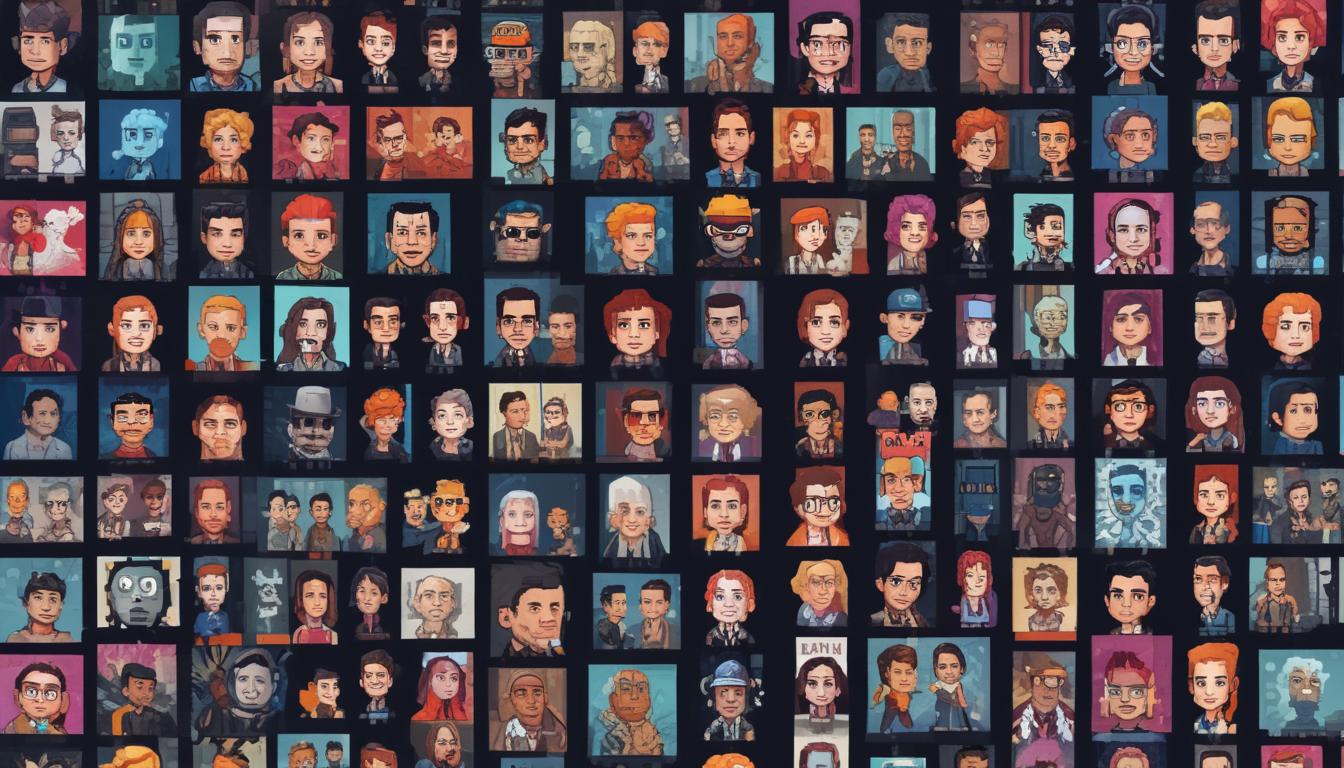
MoMA's Historic Acquisition: Welcoming CryptoPunks to the Permanent Collection
The Museum of Modern Art (MoMA) has definitively made art history with its momentous acquisition of eight CryptoPunks for its permanent collection. Announced in late 2025, this landmark decision profoundly legitimizes Non-Fungible Tokens (NFTs), elevating them from digital curiosities to masterpieces within a world-leading cultural institution. The selected CryptoPunks—Punks 4018, 2786, 5616, 5160, 3407, 7178, 74, and 7899—are now unequivocally recognized as integral components of modern and contemporary art, cementing blockchain-native artistic expression's enduring cultural significance and reshaping the very narrative of art history.
Community-Driven Path: How CryptoPunks Joined MoMA's Esteemed Collection
This pivotal integration into MoMA's collection was far from a solitary curatorial decision; rather, it exemplifies the profound power of community and collaboration inherent within the dynamic blockchain space. The entire acquisition process was orchestrated through a strategic donation initiative, spearheaded by "Art on Blockchain." This ambitious undertaking successfully united a diverse array of stakeholders, including dedicated collectors deeply invested in the NFT ecosystem and Larva Labs, the original visionary creators of CryptoPunks. This multi-faceted, community-driven approach underscores a new paradigm for institutional art acquisition and highlights the collective stewardship crucial for preserving digital heritage in the rapidly evolving Web3 landscape.
Read also: Altcoin DCA Window 2025: Hidden Buys & 5 Top Picks
Redefining Art History: CryptoPunks' Lasting Impact on Digital Art and Beyond
MoMA's decisive move is a powerful declaration, unequivocally affirming CryptoPunks' lasting cultural and artistic significance. As true pioneers of the NFT movement, launched by Larva Labs in 2017 as experimental Ethereum-based tokens, they originally established the foundational concept of digital scarcity—a principle now critical to today's multi-billion-dollar NFT market. Their remarkable evolution from nascent blockchain experiments to globally recognized cultural symbols, now proudly housed alongside traditional masterpieces, dramatically legitimizes digital art forms. This institutional validation from MoMA affirms that digitally native artworks possess intrinsic artistic merit, transcending mere speculation and securing their permanent place in the annals of art history. This landmark event signals a new era where blockchain technology is not just an innovation, but a fundamental force actively reshaping our understanding, creation, and appreciation of art globally.
CryptoPunks: Unveiling Digital Scarcity and Spearheading the NFT Art Revolution
In 2017, Larva Labs launched CryptoPunks, a project that was much more than a creative exercise; it was a watershed moment that irrevocably altered our understanding of digital ownership and verifiable scarcity. These pioneering pixel art characters, initially distributed freely on the Ethereum blockchain, inadvertently laid the groundwork for the non-fungible token (NFT) revolution. By generating a fixed supply of 10,000 unique, algorithmically generated digital identities, CryptoPunks emphatically demonstrated blockchain's unprecedented capability to imbue digital assets with verifiable scarcity—a concept previously elusive and, frankly, unimaginable in the realm of digital art and collectibles. This profound innovation directly catalyzed the exponential growth of the digital collectible market and the broader NFT landscape we navigate today, permanently reshaping the art world.
From Experimental Genesis to Global Cultural Beacon
Beyond their technical ingenuity, CryptoPunks quickly transcended their experimental origins to become a globally recognized cultural symbol. Their distinctive pixelated aesthetic, instantly recognizable and evocative, has moved far beyond the niche digital art sphere. It has permeated mainstream culture, appearing as a significant motif referenced across high fashion, popular media, and the broader cultural zeitgeist. This journey underscores their remarkable evolution: from early blockchain curiosities to artifacts now regarded with significant artistic and historical importance. Their ongoing narrative vividly illustrates how blockchain technology isn't just an innovation; it's a fundamental force actively reshaping the very definition, appreciation, and ownership of art in the 21st century. As a result, CryptoPunks serve as a potent reminder of digital assets' growing impact and their enduring place in contemporary culture.
NFTs Beyond Speculation: MoMA's Validation of Digital Art as Enduring Culture
As a seasoned observer navigating the confluence of traditional finance, the evolving art market, and blockchain innovation, MoMA's landmark acquisition of CryptoPunks transcends mere headlines; it signifies a profound cultural inflection point. For far too long, the discourse surrounding non-fungible tokens (NFTs) has been dominated by narratives of speculative fervor, with their value primarily assessed through volatile market fluctuations rather than intrinsic artistic or cultural merit. This institutional embrace by one of the world's most prestigious art museums, however, fundamentally reorients that perspective, compelling a critical reassessment of NFTs not as fleeting digital fads, but as enduring artistic and culturally significant artifacts.
This paradigm shift isn't unprecedented within the annals of art history. We've witnessed similar evolutions with groundbreaking artistic mediums that initially faced staunch skepticism before achieving widespread acceptance and eventually securing their place in major museum collections. Consider photography, initially dismissed as a purely mechanical reproduction tool, devoid of the "hand of the artist" and thus, true artistic potential. Yet, it persevered, ultimately recognized for its unique expressive capabilities and integrated into the art historical canon. Likewise, video art and other digital art forms, once nascent and experimental, navigated similar paths, gradually carving out crucial spaces within the contemporary art landscape. MoMA's inclusion of CryptoPunks reinforces this historical trajectory, championing digitally native artworks and unequivocally acknowledging their capacity to hold profound cultural weight in the contemporary world, much like how photography and video art ultimately redefined artistic expression and visual storytelling.
The legitimization offered by such a venerable institution signals that blockchain-native art has graduated from its experimental phase. It affirms that the creative ingenuity embedded within these digital assets, their unique historical context as pioneers of digital scarcity, and their cultural commentary on identity and ownership in the digital age, warrant their preservation and study alongside traditional masterpieces. This isn't just a curatorial nod; it's a powerful affirmation for artists, collectors, and the wider public that the digital realm is a fertile ground for genuine artistic expression, offering new avenues for creativity and profound cultural dialogue that will endure for generations.
Navigating the Digital Renaissance: How Traditional Institutions Embrace Web3 Art
The esteemed landscape of traditional art institutions, from venerable museums to cutting-edge galleries, is experiencing a profound transformation. What was once viewed with skepticism, the world of digital art, particularly Non-Fungible Tokens (NFTs) and other blockchain-native creations, is now being actively embraced. This isn't merely a fleeting trend; it represents a fundamental evolution in how we understand, preserve, and experience art in the 21st century, recognizing the inherent artistic and cultural value embedded in these innovative forms.
This pivotal shift brings forth a unique set of challenges and equally compelling opportunities for cultural institutions. Historically, art preservation revolved around physical conservation, requiring meticulous handling and controlled environments for tangible objects. However, safeguarding digital assets, especially those residing on dynamic and evolving blockchain infrastructure, demands an entirely new scientific and technical paradigm. Institutions must pioneer innovative digital preservation strategies to ensure the longevity and authenticity of these works. This includes robust digital storage solutions, cryptographic verification protocols, and continuous monitoring of underlying blockchain networks to mitigate future obsolescence.
Furthermore, the display and interaction with intrinsically digital art necessitate a complete re-evaluation of exhibition frameworks. Gone are the days when a physical wall was the sole canvas. Today, institutions are exploring a rich spectrum of technical innovations to bring these works to life. This ranges from high-fidelity, secure digital displays within physical galleries to immersive virtual reality (VR) and augmented reality (AR) experiences that transport viewers into the art itself. Such innovations not only enhance engagement but also open up new avenues for accessibility, democratizing the art experience for a global, digitally-native audience.
Beyond the technicalities, the curation of blockchain art within institutional settings sparks vital new dialogues. Curators are now grappling with complex themes such as the nuances of digital ownership, the verifiable provenance offered by blockchain technology, the implications of community governance in artistic projects, and even the evolving definition of authorship in a collaborative, decentralized ecosystem. This expansion fundamentally challenges the conventional boundaries of "art," pushing institutions to reconsider mediums of expression and foster appreciation for creativity that transcends traditional canvases.
Ultimately, this ongoing integration marks a critical juncture. It's a dynamic period where the established art world's centuries of expertise converge with the decentralized ethos and technological innovation of Web3 art. This convergence is not just about coexistence; it's about actively shaping a new, inclusive cultural frontier that acknowledges the profound impact of digital creations and paves the way for future generations to appreciate a truly global, technologically advanced artistic heritage.
Impact of the News on the Crypto Market
This development may significantly influence the overall trend of the cryptocurrency market. In our analytics section, we explore the key implications and possible market scenarios for investors and traders.
#Art History #Art on Blockchain #MoMA #Digital Art #Blockchain art #NFT #Web3 #NFTs #Digital Scarcity #Larva Labs