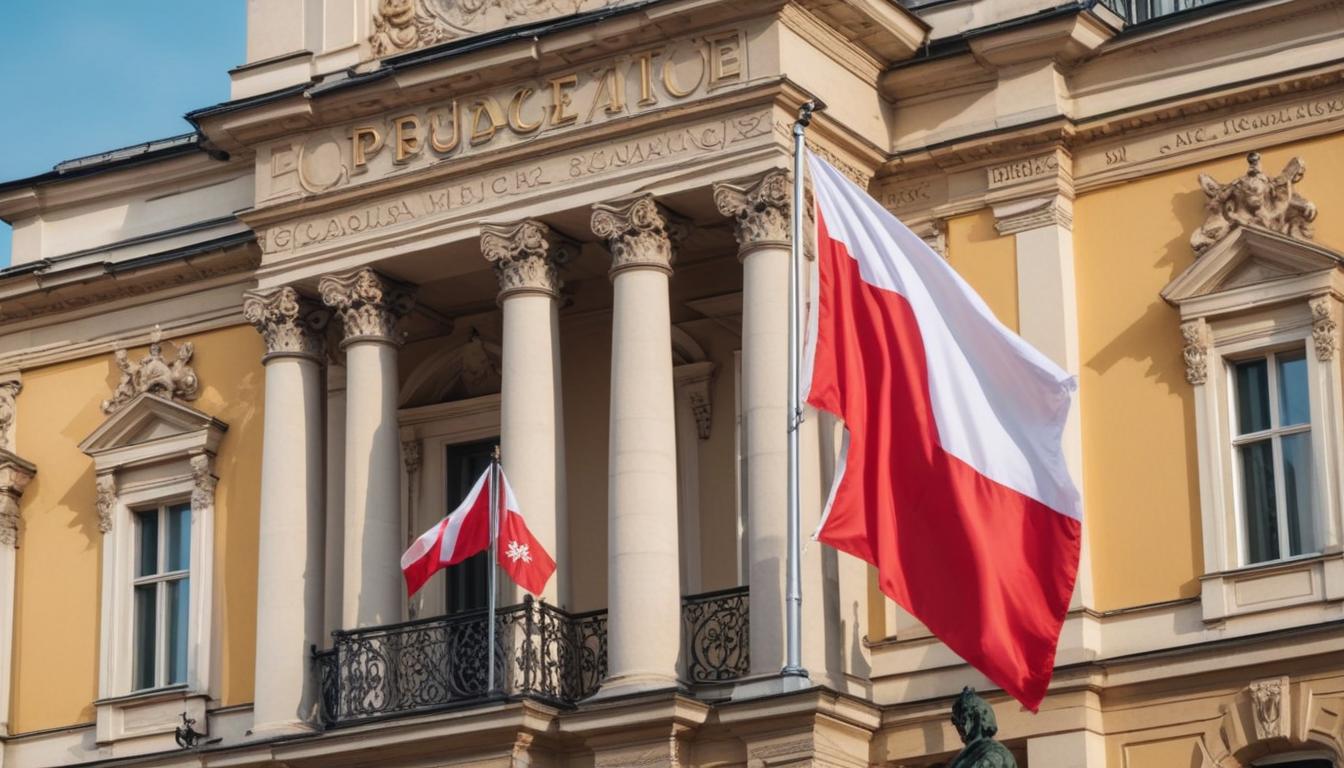
Presidential Veto: A Strategic Stance for Digital Freedoms and Innovation in Poland
President Karol Nawrocki's decisive veto of Poland's proposed Crypto-Asset Market Act signals a pivotal moment for the nation's burgeoning digital asset landscape. This action was far more than a simple legislative rejection; it represented a strategic declaration against what was perceived as regulatory overreach, firmly prioritizing the liberties of Polish citizens and the vital need to foster innovation within the burgeoning blockchain sector. The presidential office articulated clear concerns that the bill's provisions posed genuine threats to fundamental freedoms, property rights, and potentially undermined the overall stability of the state's economic future.
From the perspective of a crypto-native strategist, this veto stands as a significant victory for innovation. Overly stringent and complex regulations often act as a significant drag on entrepreneurial spirit, especially in rapidly evolving fields like decentralized finance. President Nawrocki’s move implicitly acknowledged that an unfavorable regulatory climate can easily trigger "regulatory arbitrage," compelling innovative businesses and skilled talent to seek more welcoming environments abroad. This foresight prevents the exodus of promising startups and intellectual capital, ensuring Poland retains its competitive edge in the global digital economy. The veto demonstrates a keen awareness of the delicate balance required to protect consumers without stifling the very growth and technological advancement that could define Poland's future prosperity.
The underlying drivers of the veto pointed to a framework that was deemed excessively long and convoluted, inherently detrimental to transparency and the cultivation of a truly competitive market. Such an onerous regulatory burden risked stifling nascent startup activity right from its inception. While the specific controversial provisions, such as those related to arbitrary website blocking powers and prohibitive supervisory fees, are detailed in other sections, the core message here is clear: these elements collectively created a legislative environment that would have favored established, often foreign, entities over agile domestic innovators. President Nawrocki's stance champions a balanced approach to digital asset regulation, one that actively supports growth and embraces technological progress, ensuring Poland remains an attractive hub for blockchain development as it prepares for the comprehensive EU-wide MiCA framework. This commitment to thoughtful, innovation-friendly policy positions Poland uniquely within the European digital landscape.
Unpacking the Crypto-Asset Market Act's Most Contentious Clauses: Website Blocking and Burdensome Fees
From the perspective of a seasoned cryptocurrency analyst and portfolio manager, the vetoed Crypto-Asset Market Act contained provisions that truly set alarm bells ringing for anyone invested in the health and innovation of Poland's digital asset landscape. While President Nawrocki's overarching message emphasized safeguarding freedoms and nurturing growth, two specific clauses within the proposed legislation stood out as particularly problematic, threatening to undermine the very principles that fuel a vibrant blockchain ecosystem.
Foremost among these was the draconian power granted to authorities for facile website blocking. This mechanism was not just an administrative detail; it represented a profound risk to the open access and decentralized information flow that are fundamental pillars of the cryptocurrency world. As an industry observer, I saw this provision as excessively opaque, offering little transparency on the criteria for blocking and opening wide the door to potential abuse. Such unchecked authority could easily become a chilling force, stifling free speech, discouraging legitimate market participants, and ultimately eroding trust within the Polish digital economy. A dynamic digital asset market thrives on unobstructed information exchange, and this measure would have significantly hindered that vital flow.
Beyond the threat to digital accessibility, the bill's excessive length and intricate structure signaled a move towards burdensome overregulation. This complexity, coupled with the introduction of considerably high supervisory fees, painted a stark picture for aspiring Polish blockchain startups. Imagine a nascent project, brimming with innovative ideas, facing a labyrinthine regulatory framework and prohibitive operational costs from day one. This scenario would invariably create an uneven playing field, heavily favoring larger, established international corporations with extensive legal and financial resources, while actively deterring agile domestic innovators.
The practical implication of these combined factors is clear: such a legislative environment would effectively discourage crypto businesses from establishing or expanding within Poland. Why would an innovative startup or a scaling blockchain company choose Poland when neighboring jurisdictions, like the Czech Republic or Lithuania, offer more pragmatic, innovation-friendly regulatory frameworks? These countries actively court digital asset businesses by providing clear, proportionate guidelines without stifling capital formation or operational agility. Poland's proposed approach, therefore, risked becoming a counterproductive force, pushing valuable talent and capital to more accommodating locales, thereby stifling competitive market development and impeding technological advancement within its own borders. In essence, it would have inadvertently created a regulatory barrier to entry, rather than a gateway to growth.
Government Backlash and Industry Response: A Divided Opinion
The presidential veto of Poland's Crypto-Asset Market Act ignited a fundamental ideological clash, vividly showcasing the ongoing global debate around digital asset regulation. From my vantage point as a cryptocurrency analyst and portfolio manager, this division highlights the complex tightrope walk between fostering technological innovation and safeguarding financial stability, an issue resonating far beyond Polish borders.
On one side, key government officials expressed profound alarm, framing the veto as a dangerous concession to market volatility. Finance Minister Andrzej Domański's stark warning, lamenting that "already now 20% of clients are losing their money as a result of abuses in this market," underscores a primary concern for investor protection. Deputy Prime Minister Radosław Sikorski echoed this sentiment, suggesting the president had "chosen chaos" and would be responsible if a "bubble were to burst." Their perspective champions a state-led interventionist approach, viewing robust regulation as the essential bulwark against fraud, speculative excess, and the potential for widespread investor detriment. This stance, prioritizing consumer safety and market integrity, is understandable from a governmental oversight perspective, aiming to prevent the unchecked growth of what they perceive as a high-risk sector.
Conversely, the cryptocurrency community largely championed the veto as a strategic victory for individual liberty, market freedom, and sensible, proportionate regulation. Industry advocates viewed the rejected bill not as a solution, but as an overly burdensome legislative framework that could stifle the very innovation it sought to manage. Their arguments centered on several critical points:
- Preventing Regulatory Overreach: The veto was seen as a rejection of clauses deemed too restrictive, potentially impeding the organic growth of blockchain technology.
- Fostering Innovation: Proponents argued that overregulation often drives promising startups and skilled talent to more crypto-friendly jurisdictions, a phenomenon known as "regulatory arbitrage." The veto, in this view, helps retain Poland's competitive edge in the global digital economy.
- Preserving Market Freedoms: The community emphasized the importance of a dynamic, less-controlled environment for crypto assets to flourish, advocating for frameworks that are adaptive and don't prematurely suffocate nascent technologies.
This stark divergence underscores the core challenge facing policymakers worldwide: how to craft a regulatory environment that both protects participants from egregious risks and simultaneously provides fertile ground for the transformative potential of blockchain and cryptocurrencies. Poland's experience serves as a compelling case study, illustrating that achieving this delicate balance requires continuous dialogue and a deep understanding of both traditional financial risks and the unique dynamics of the decentralized digital economy. The path forward for Poland, and indeed for many nations, will hinge on whether a pragmatic, innovation-friendly, yet secure regulatory framework can ultimately emerge from these divided opinions.
Poland's Pragmatic Push: Shaping MiCA's Proportional Path in the EU
Poland's recent presidential veto of the proposed Crypto-Asset Market Act has ignited a crucial conversation, positioning the nation as a key voice in the European Union's ongoing development of the landmark Markets in Crypto-Assets (MiCA) framework. This decisive action, rooted in concerns that overly stringent provisions could impede innovation and encroach upon fundamental freedoms, offers a strategic blueprint for other EU member states grappling with the complexities of digital asset regulation. Far from rejecting regulation outright, Poland's move signals a strong inclination towards a nuanced, proportional regulatory model—one designed to cultivate a thriving domestic blockchain ecosystem and attract innovative talent, rather than imposing rigid controls that might inadvertently drive businesses to more accommodating jurisdictions like the Czech Republic or Malta. This proactive, innovation-first stance preceding the wholesale adoption of potentially restrictive measures could significantly influence the broader EU landscape.
The Polish veto serves as a powerful case study, underscoring the vital importance of meticulously evaluating the practical consequences of proposed legislation before its implementation. While the specifics of concerns regarding opaque website blocking powers and prohibitive supervisory fees have been detailed elsewhere, their cumulative effect was seen as detrimental to a competitive market. As the EU fine-tunes its comprehensive MiCA framework, Poland's decision to pause and re-evaluate rather than enforce potentially counterproductive provisions could inspire other EU countries to adopt a similar strategy of balanced, proportionate regulation.
This approach champions a core message: fostering a robust blockchain ecosystem necessitates not only robust safeguards for investor protection and market stability but also ample room for innovation to flourish. For MiCA to succeed in its goal of harmonizing crypto regulations across the bloc, it must integrate new financial technologies responsibly while simultaneously supporting technological advancement. Poland's thoughtful deliberation therefore enriches the MiCA conversation, guiding the bloc toward a regulatory framework that is not only compliant with overarching EU directives but also actively supportive of national economic progress and global competitiveness in the rapidly evolving digital assets space. The lessons from Warsaw will be instrumental in shaping a future where regulation acts as a catalyst for growth, rather than a barrier.
Impact of the News on the Crypto Market
This development may significantly influence the overall trend of the cryptocurrency market. In our analytics section, we explore the key implications and possible market scenarios for investors and traders.
#Website Blocking Crypto #Poland Crypto Veto #Crypto Asset Market Act #Crypto Regulation Poland #MiCA EU #Digital Asset Innovation