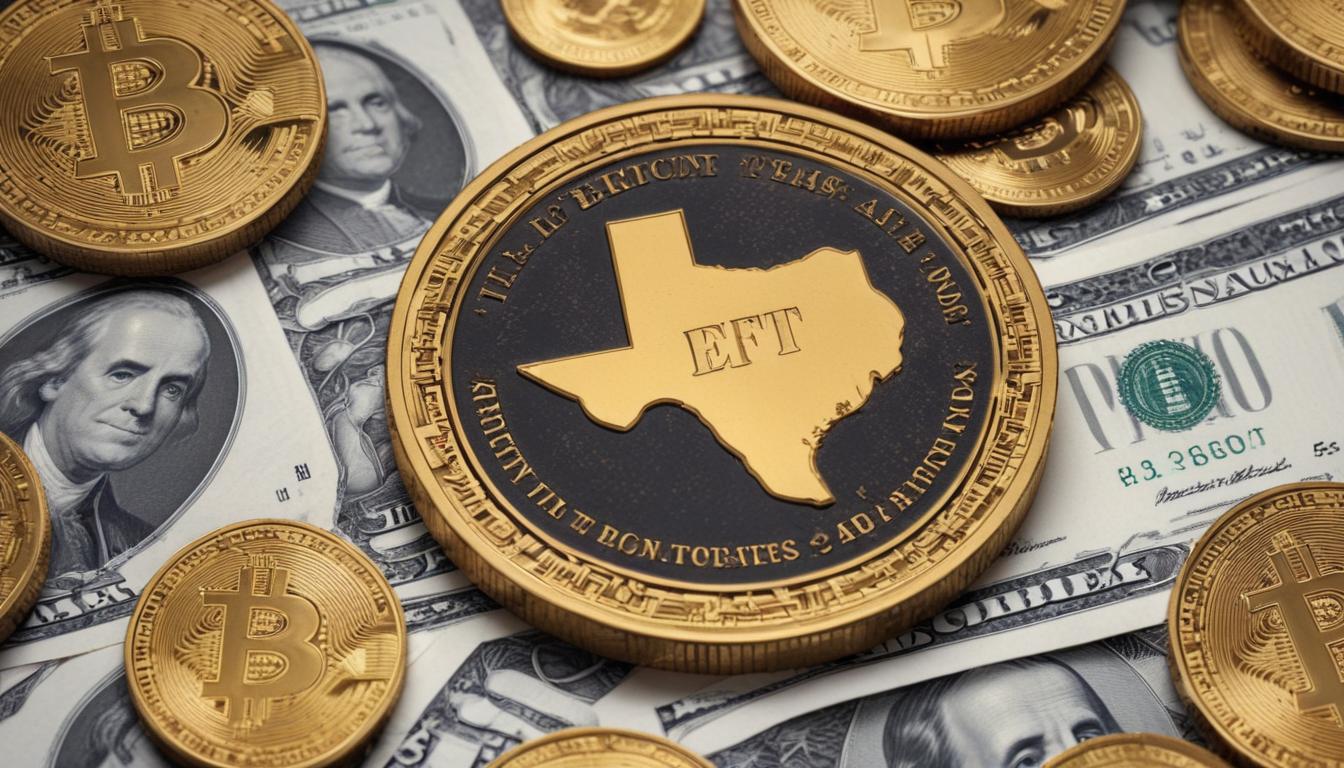
Texas Treasury Charts New Course: A Landmark Bitcoin Investment
In a pivotal moment for governmental finance and digital asset adoption, the State of Texas has made a historic entry into the cryptocurrency market, securing $10 million worth of Bitcoin. This groundbreaking move, executed via BlackRock's innovative spot Bitcoin Exchange Traded Fund (ETF), signifies the very first instance a U.S. state has allocated public treasury funds to the world's leading digital currency. This strategic decision by the Texas Treasury not only reinforces the state's reputation as a progressive hub for digital innovation but also establishes a formidable precedent for how other state treasuries across the nation might approach their future diversification and asset allocation strategies.
The acquisition of Bitcoin by a sovereign U.S. state treasury is far more than a simple transaction; it represents a significant leap towards mainstream institutional acceptance of digital assets. For years, the idea of large-scale governmental investment in cryptocurrencies remained largely theoretical, often hampered by regulatory ambiguities and operational hurdles. However, the emergence of regulated investment vehicles like BlackRock's spot Bitcoin ETF has dramatically lowered these barriers. This development empowers public entities to gain exposure to Bitcoin's compelling value propositions—such as its potential role as an inflation hedge and a crucial diversifier for reserve assets—without directly grappling with the complex operational logistics and stringent security concerns inherent in holding physical Bitcoin. Texas's decision serves as a powerful endorsement of Bitcoin's evolving status as a credible store of value and a legitimate component of sovereign wealth portfolios.
By embracing Bitcoin, Texas is not merely dabbling in financial innovation; it's demonstrating a forward-thinking and pragmatic approach to managing state assets in our rapidly digitizing global economy. This landmark purchase is poised to catalyze crucial discussions and re-evaluate investment paradigms within other state capitols, potentially ushering in a wave of similar state-level treasury adoptions of digital assets. The broader implications extend beyond individual states, contributing profoundly to Bitcoin's burgeoning legitimacy as a recognized and increasingly significant asset class within established global financial frameworks. This move firmly solidifies the narrative that Texas is strategically betting on Bitcoin, utilizing a regulated pathway to integrate digital assets into its treasury management, thereby signaling a definitive new era for public finance.
BlackRock's ETF: The Gateway for State-Level Bitcoin Investment
The emergence of spot Bitcoin Exchange Traded Funds (ETFs) has fundamentally reshaped the landscape for institutional engagement with digital assets, particularly for public entities like state treasuries. BlackRock's pioneering spot Bitcoin ETF stands out as a pivotal innovation, providing a crucial and regulated conduit that simplifies how governmental bodies can access the burgeoning cryptocurrency market. This mechanism ingeniously bypasses many intricate challenges traditionally associated with direct Bitcoin acquisition, such as establishing highly secure custody infrastructure, navigating the complexities of managing private keys, and complying with stringent public finance regulations. These operational and security hurdles have historically deterred even the most forward-thinking traditional institutions and governmental funds from considering direct exposure to Bitcoin.
Instead of demanding a complete overhaul of internal financial systems or the development of specialized blockchain expertise, the ETF offers a familiar, regulated, and streamlined investment pathway. For state treasuries, which operate under intense public scrutiny and strict fiduciary duties, the ability to invest in Bitcoin through a product traded on established financial markets — much like a stock or bond — is a game-changer. This integration within conventional investment frameworks significantly reduces the barrier to entry, transforming Bitcoin from a niche, technically demanding asset into an accessible component of a diversified portfolio.
The implications for public finance are profound. This standardized approach democratizes access for state-level investment, making what was once confined to theoretical discussions a tangible and achievable reality. Before spot Bitcoin ETFs, acquiring a substantial Bitcoin position required specialized knowledge in cryptography, robust operational security protocols, and navigating an often opaque regulatory environment. BlackRock's offering effectively "productizes" Bitcoin, making it palatable and manageable for conservative public funds. This not only bolsters Bitcoin's credibility as a legitimate asset class but also signals a new era where state treasuries can realistically explore digital assets as potential hedges against inflation, vehicles for long-term growth, or as strategic diversifiers for their reserve assets. This shift underscores the increasing maturity of the digital asset ecosystem and its growing integration into the global financial mainstream.
Why Texas? Unpacking the State's Pro-Bitcoin Stance
Texas's landmark entry into Bitcoin isn't a sudden pivot but rather a calculated evolution of its long-standing commitment to nurturing digital asset innovation. The Lone Star State has meticulously cultivated a reputation as a thriving epicenter for cryptocurrency and blockchain technology, proactively positioning itself as an attractive jurisdiction for businesses and individuals seeking clarity and support in this burgeoning sector. This forward-thinking approach is deeply ingrained in a legislative framework that, while continually adapting, generally champions technological progress and prioritizes providing regulatory certainty over imposing stifling restrictions. This fosters an environment where crypto enterprises can flourish, from large-scale Bitcoin mining operations leveraging abundant energy resources to startups building the next generation of blockchain applications.
This proactive stance is seamlessly integrated with Texas's overarching economic development strategy: to draw substantial investment, create high-skill employment opportunities, and diversify its formidable economy. Influential figures across the state's political and financial landscapes have consistently voiced their support for digital assets, recognizing their potential as vital tools for economic resilience and as a strategic hedge against inflation – a particularly pressing concern in today's dynamic global markets. The advent of regulated investment vehicles, such as BlackRock's innovative spot Bitcoin ETF, has crucially empowered state treasuries to explore assets like Bitcoin. This capability opens doors to potent benefits, including enhanced reserve diversification and the strategic adoption of cutting-edge technological paradigms. For Texas, this move by its treasury represents a logical and confident progression, underscoring Bitcoin's maturing role as a robust digital store of value and a compelling strategic asset. It serves as a resounding endorsement from a major U.S. state treasury, potentially accelerating broader governmental adoption of digital assets as regulatory frameworks continue to solidify and global finance evolves.
Beyond Texas: What This Means for Future State & Institutional Adoption
Texas's groundbreaking allocation of public funds to Bitcoin, notably facilitated by the BlackRock spot Bitcoin ETF, is far more than a localized financial maneuver; it's a powerful statement resonating across the entire digital asset ecosystem. This strategic move establishes a critical precedent that is poised to catalyze a significant "ripple effect" among other U.S. states and profoundly accelerate the institutional embrace of cryptocurrency as a legitimate, long-term asset class. States observing Texas’s pragmatic, regulated entry are highly likely to initiate their own due diligence processes, evaluating Bitcoin not merely as a speculative investment, but as a strategic treasury asset offering robust diversification benefits and a crucial hedge against inflationary pressures—paramount considerations for astute sovereign wealth management in today's dynamic economic climate.
The implications for broader institutional adoption are particularly profound. A U.S. state treasury now holding Bitcoin unequivocally elevates the asset's perceived legitimacy and credibility as a formidable store of value. This public endorsement serves as a potent signal to a diverse array of traditional financial institutions, including cautious pension funds, university endowments, and corporate treasuries. Many of these entities have historically viewed Bitcoin with skepticism, constrained by regulatory uncertainty and a perceived lack of institutional precedent. Texas's action provides that crucial real-world example, empowering these institutions to re-evaluate their investment mandates and consider Bitcoin for similar allocations within diversified portfolios. This tangible, state-level integration helps dismantle lingering institutional hesitations, paving the way for Bitcoin's deeper integration into mainstream finance.
Crucially, this trend extends beyond just direct investment. The increasing consideration of Bitcoin by governmental and institutional bodies will inevitably intensify the demand for clear, standardized national regulatory frameworks surrounding digital assets. As more entities engage with Bitcoin, the need for explicit guidelines from regulatory authorities like the SEC, CFTC, and Treasury will become undeniable. This push for regulatory clarity is widely seen within the cryptocurrency industry as an essential catalyst for sustained mainstream growth and the ultimate acceptance of assets like Bitcoin as integral components of global financial infrastructure. For investors and portfolio managers, this signals a maturing market where foundational policy is catching up with technological innovation. The diversification of public finance beyond traditional assets, sparked by pioneers like Texas, not only unlocks new avenues for Bitcoin’s role but also solidifies its position as a truly global and resilient financial asset, transforming the landscape for asset managers and economic planners worldwide.
Market-Wide and Token-Specific Impact of the News
The news affects not only the overall crypto market but also has potential implications for several specific cryptocurrencies. A detailed breakdown and forecast are available in our analytics section.
#Texas Bitcoin Investment #State Treasury Bitcoin #Bitcoin Treasury Allocation #future of Bitcoin #Governmental Bitcoin Adoption #Institutional Bitcoin Adoption #BlackRock Bitcoin ETF #Crypto Investment Trends #Spot Bitcoin ETF #Digital Assets Regulation #Bitcoin