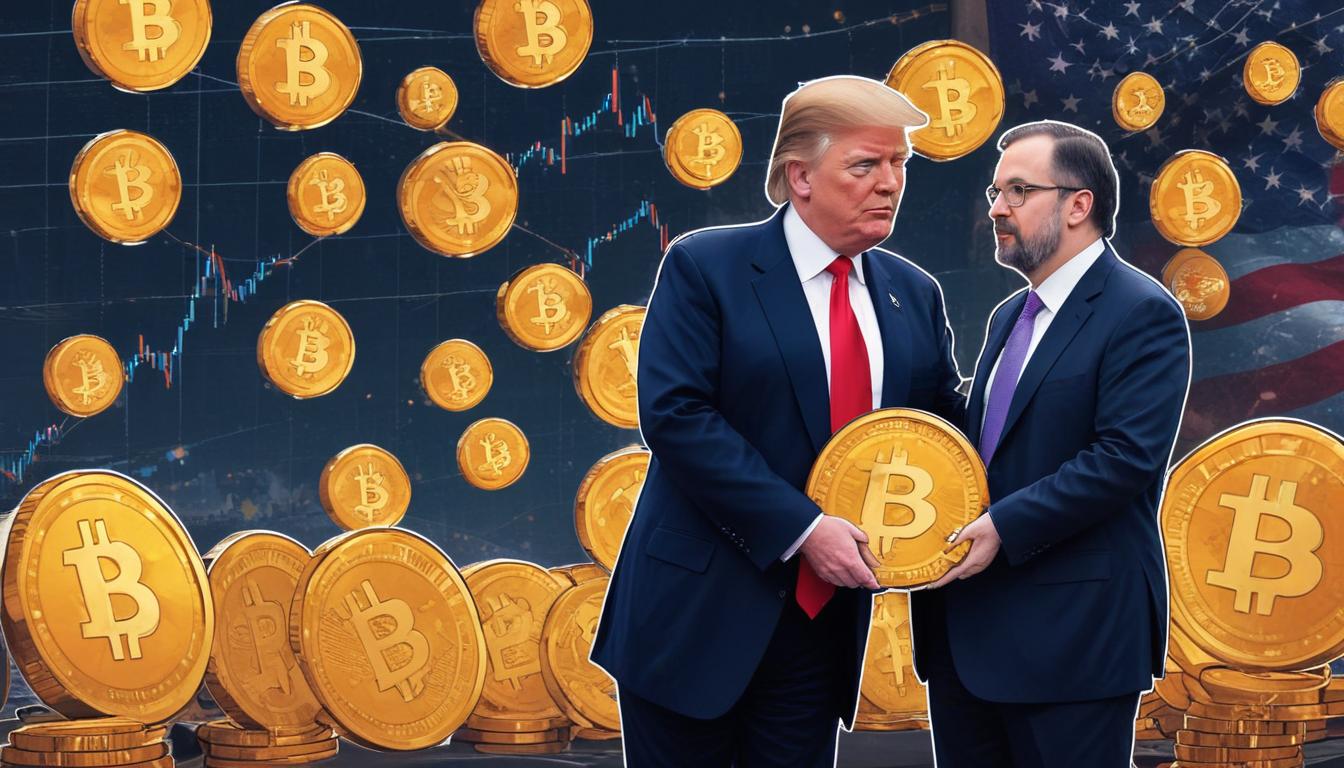
Trump's Tariff Policies and Crypto Market Volatility: An Overview
Trump's tariff policies created economic ripples that extended into the cryptocurrency market, influencing investor behavior. Economic uncertainty often drives investors to seek alternative assets. This often translates to a greater willingness to explore riskier assets like cryptocurrencies, contributing to market swings as investors recalibrate their portfolios amid changing trade conditions.
Read also: Trump's Crypto Gamble: Did His Vision Pave the Way or Lead to a Dead End?
Crypto as a Potential Hedge: A Complex Relationship
The relationship between tariff-induced economic uncertainty and cryptocurrency's role as a hedge is intricate. Some analysts suggested that cryptocurrencies, particularly Bitcoin, could serve as a shield against traditional financial market instability. This argument hinges on the decentralized nature of cryptocurrencies and their perceived independence from conventional financial systems. However, the inherent volatility within the cryptocurrency market casts doubt on its reliability as a stable hedge. Cryptocurrency markets often mirrored the reactions of traditional markets to geopolitical events, indicating that digital assets aren't entirely isolated from broader economic influences.
Examples of Market Reactions to Tariff Announcements
While specific data for every instance isn't available, historical patterns suggest that the cryptocurrency market experienced heightened volatility during periods marked by significant tariff-related announcements. For instance, Bitcoin sometimes underwent significant price corrections and subsequent recoveries following key tariff-related news. These fluctuations highlight the crypto market's sensitivity to geopolitical developments and the complex interplay of factors influencing investor sentiment. Market responses weren't always predictable, occasionally mirroring traditional market trends and at other times diverging, underscoring the nuanced relationship between cryptocurrencies and global economic events.
The Broader Implications for Crypto and Global Finance
Trump's tariff policies underscored the growing interconnectedness of global finance and its impact on the cryptocurrency market. While these policies primarily targeted traditional trade, their effects cascaded across various asset classes, including digital assets. This interconnectedness reinforces the importance of considering the broader economic context when analyzing cryptocurrency market trends. Geopolitical events can indeed shape the future of digital finance and the evolving role of cryptocurrencies in the global economy. As the cryptocurrency market matures and becomes more integrated with traditional financial systems, understanding these complex relationships becomes increasingly vital for investors and policymakers. This interconnectedness implies that events seemingly unrelated to crypto can have significant impacts.
This section has provided an overview of the general relationship between Trump's tariff policies and cryptocurrency market volatility. The following sections will explore specific sub-sectors within the crypto market and examine expert opinions on the potential for cryptocurrencies to serve as a hedge against economic uncertainty.
Sector-Specific Analysis: Navigating Crypto Sub-Sectors Amidst Trade Policy Shifts
The Trump administration's global trade policies introduced a dynamic landscape of opportunities and challenges within the cryptocurrency market. While tariffs primarily sparked discussions around market volatility, a more granular examination reveals varied impacts on specific sub-sectors like Decentralized Finance (DeFi), Non-Fungible Tokens (NFTs), and Layer-2 solutions. This section explores how these sub-sectors experienced the cascading effects of tariff policies, including exemptions for tech products, highlighting both potential relief and emerging concerns. Although seemingly directed at traditional industries, these policies significantly influenced the cryptocurrency space, impacting supply chains, operational costs, and the overall innovation trajectory within these burgeoning sectors.
DeFi: Adapting to Global Trade Complexities
Decentralized Finance (DeFi), aiming to provide permissionless financial services, found itself unexpectedly intertwined with the intricacies of global trade. While tariff exemptions on tech products offered a potential respite for the hardware essential to DeFi infrastructure, they also introduced new considerations. Many DeFi projects rely on globally distributed teams and open-source software development, raising questions about how shifts in international trade relationships might affect collaboration and innovation.
- Impact on Lending and Borrowing: The fluctuating value of cryptocurrencies, often influenced by macroeconomic factors like trade policy announcements, added complexity to DeFi protocols, potentially affecting borrowing and lending rates, and consequently, the stability of these nascent financial systems.
- Geographic Distribution Challenges: DeFi's reliance on international collaboration and distributed teams meant that changes in immigration policies or restrictions on data flows could impede development and deployment, impacting innovation.
NFTs: Trade's Tangential Influence on Digital Assets
The Non-Fungible Token (NFT) space, primarily focused on digital ownership and creative expression, might seem insulated from direct tariff impacts. However, the infrastructure supporting NFTs, ranging from blockchain networks to the physical hardware used for creation and storage, remained vulnerable to global supply chain disruptions.
- Supply Chain Vulnerabilities: Production of hardware components, such as specialized GPUs used for mining and NFT creation, relies on international trade. Disruptions can lead to increased costs and delays.
- Broader Economic Impacts: The broader economic repercussions of tariffs, including potential inflation or recessionary pressures, could indirectly influence the demand for NFTs, affecting their perceived value and overall market dynamics.
- Impact on Creators: Artists and creators relying on specific hardware or software, much of which is manufactured abroad, could see increased costs and limited access, affecting the development and sales of NFTs.
Layer-2 Solutions: Navigating Scalability Challenges in a Shifting Trade Environment
Layer-2 solutions, designed to enhance the scalability and efficiency of blockchain networks, faced unique challenges amidst fluctuating trade policies. The development and deployment of these solutions often rely on international collaboration and access to specialized hardware, both susceptible to trade disputes.
- International Collaboration Hurdles: Collaboration among developers and researchers across different countries is vital for Layer-2 development. Changes in visa policies or restrictions on international data flows could hinder progress.
- Hardware Dependencies: Access to advanced hardware components, crucial for running Layer-2 networks, can be impacted by tariffs, increasing costs and potentially slowing down deployment timelines.
- Market Volatility: Market volatility stemming from trade policy announcements could influence the adoption rate of Layer-2 solutions as users and developers seek stability amidst economic uncertainty, further complicating scalability efforts.
Supply Chain Dynamics Across Crypto Sub-Sectors
Global supply chain intricacies had widespread effects across all crypto sub-sectors. The production of essential hardware components, from mining equipment to servers powering decentralized networks, often hinged on international trade. Trump's tariff policies, even with exemptions for certain tech products, introduced unpredictability into these supply chains.
- Component Shortages: Tariffs on raw materials or finished components could lead to shortages, impacting the production and availability of critical hardware needed for crypto operations.
- Geographic Concentration Risks: Dependence on a single region for manufacturing hardware increases vulnerability. Diversifying supply chains can mitigate risks but may also increase costs.
- Impact on Mining: Tariffs on mining equipment directly affect the profitability of mining operations, potentially leading to centralization as only larger entities can absorb the increased costs.
Operational Costs and the Impact on Innovation
Fluctuating trade policies and their associated economic impacts had a tangible effect on the operational costs of cryptocurrency projects across various sub-sectors. Expenses ranging from the energy required for mining to the personnel costs associated with globally distributed teams could be significantly influenced by macroeconomic factors, including tariffs and trade disputes.
- Increased Energy Costs: Tariffs on energy imports or equipment used in energy production could increase the costs of mining and running blockchain networks, impacting profitability and potentially driving operations to regions with cheaper energy.
- Talent Acquisition Challenges: Restrictions on immigration or increased costs associated with hiring international talent could limit access to skilled developers and researchers, hindering innovation within the crypto space.
- Impact on Startups: Smaller crypto startups with limited capital are particularly vulnerable to increased operational costs, potentially stifling innovation and reducing the diversity of projects in the ecosystem.
Navigating Uncertainty: Strategic Approaches for Crypto Sub-Sectors
The interplay between trade policies and the cryptocurrency market underscored the growing interconnectedness of the global economy and the susceptibility of even decentralized technologies to macroeconomic forces. While tariff exemptions provided a measure of relief for some sub-sectors, the potential for future policy shifts highlights the need for adaptability and resilience.
- Diversification Strategies: Crypto projects can mitigate risks by diversifying their geographic presence, supply chains, and funding sources, reducing dependence on any single region or economic policy.
- Proactive Risk Management: Monitoring geopolitical developments and adjusting business strategies accordingly can help projects anticipate and respond to potential disruptions caused by trade policies.
- Collaboration and Advocacy: Engaging with policymakers and industry groups can help shape trade policies that support innovation and growth within the cryptocurrency ecosystem.
- Focus on Decentralization: By further decentralizing operations, projects can reduce their reliance on centralized infrastructure and supply chains, making them more resilient to external shocks. By understanding the complex relationship between trade policies, supply chains, operational costs, and market dynamics, stakeholders within the cryptocurrency ecosystem can better navigate the challenges and capitalize on the opportunities presented by this ever-evolving landscape. This requires a proactive approach to risk management, diversification of resources, and a continued focus on innovation and development to ensure the long-term growth and stability of the cryptocurrency market.
Expert Opinions: Crypto as a Hedge Against Economic Uncertainty
The trade policies implemented during the Trump administration sparked considerable discussion about the viability of cryptocurrencies as a hedge against economic instability. While the inherent volatility of the crypto market naturally raises questions, the potential for digital assets to act as a safe haven during trade disputes and economic downturns has garnered significant attention from both experts and investors. This section examines diverse expert perspectives, exploring various viewpoints on crypto's hedging potential in a world grappling with the consequences of protectionist trade measures.
Conflicting Perspectives on Crypto's Hedging Capabilities
Expert opinions on whether crypto can effectively hedge against economic uncertainty stemming from policies like Trump's tariffs are widely varied.
- The "Digital Gold" Argument: Some analysts have posited that Bitcoin, with its decentralized nature and limited supply, could function as "digital gold," providing a shield against inflation and currency devaluation. Their argument suggests that during periods of economic instability, investors might seek refuge in assets outside the traditional financial system, potentially increasing demand for cryptocurrencies and driving up their prices.
- The Volatility Counterargument: Other experts, however, caution against this narrative, highlighting the inherent volatility of the crypto market. They argue that cryptocurrencies often react sharply to the same geopolitical and economic events that impact traditional markets, thus undermining their reliability as a stable hedge.
The "Digital Gold" Narrative vs. Market Performance
The idea of Bitcoin as "digital gold" gained traction during periods characterized by economic uncertainty. Advocates of this perspective emphasize Bitcoin's finite supply and its independence from central banks, drawing parallels to gold's traditional role as a safe-haven asset. However, critics contend that Bitcoin's price volatility and relatively short history compared to gold make this comparison premature. They point to instances where Bitcoin's price declined in tandem with traditional markets during times of crisis, suggesting that it has not yet proven itself as a consistently reliable hedge.
This ongoing debate underscores the complexities involved in evaluating crypto's long-term potential as a safe-haven asset within a constantly evolving economic environment.
Decoupling from Traditional Markets: An Ongoing Process
A key argument supporting cryptocurrencies as a hedge centers on the concept of decoupling from traditional markets. The theory suggests that as crypto markets mature, their correlation with traditional asset classes will decrease, offering diversification benefits during economic turmoil.
- Evidence of Decoupling: Some experts have cited instances where Bitcoin's price movements diverged from stock market trends as early evidence of this decoupling, suggesting that crypto assets can move independently of traditional market forces.
- Continued Correlation: Conversely, others maintain that the correlation between crypto and traditional markets remains significant, particularly during periods of heightened global uncertainty. They suggest that further development, increased adoption, and greater market maturity are necessary before cryptocurrencies can truly function as an independent hedge against economic downturns.
The Influence of Geopolitical Factors on Crypto Markets
Geopolitical events, including trade disputes and tariff wars, have demonstrably impacted cryptocurrency markets, underscoring the interconnectedness of the global financial system. While cryptocurrencies operate outside the traditional banking infrastructure, they are not entirely immune to broader economic forces.
- Divergent Views: Expert opinions differ on the extent to which geopolitical factors influence crypto prices. Some analysts argue that crypto markets primarily react to macroeconomic trends, such as inflation and interest rate changes, while others emphasize the role of investor sentiment, speculation, and news-driven trading.
- Importance of Understanding Interconnections: Regardless of the specific drivers, understanding these complex relationships is crucial for assessing the potential of cryptocurrencies as a hedge in a world increasingly shaped by geopolitical events.
The Future of Crypto as a Hedge: Regulation and Adoption
The future of cryptocurrencies as a hedge against economic uncertainty depends on several factors, most notably regulatory developments and mainstream adoption.
- Impact of Regulation: Increased regulatory clarity could lend greater legitimacy to the crypto market, potentially attracting institutional investors and driving further adoption. Conversely, overly restrictive regulations could stifle innovation and limit the growth of the crypto ecosystem.
- Role of Adoption: Wider adoption of cryptocurrencies for everyday transactions could enhance their utility and stability, potentially strengthening their role as a hedge.
- Uncertainty Remains: Expert opinions on the likely trajectory of regulation and adoption vary considerably, contributing to uncertainty about the long-term prospects of crypto as a safe-haven asset.
Expert Insights on Specific Cryptocurrencies and Hedging Strategies
Beyond the broad debate about crypto's overall hedging potential, experts have provided insights on specific cryptocurrencies and strategies for mitigating economic uncertainty.
- Stablecoins: Some analysts emphasize the unique characteristics of stablecoins, arguing that their peg to fiat currencies can provide stability during periods of market volatility, making them a useful tool for preserving capital.
- DeFi Protocols: Others highlight the potential of decentralized finance (DeFi) protocols to offer alternative financial instruments that can hedge against inflation or currency devaluation, providing investors with more sophisticated ways to manage risk.
These diverse perspectives highlight the evolving nature of the crypto landscape and the range of investment strategies available to those seeking to mitigate economic risks.
Building a Resilient Portfolio in Uncertain Times
The discussion surrounding crypto as a hedge is intrinsically linked to the broader challenge of constructing a resilient investment portfolio capable of weathering economic uncertainty.
- Diversification is Key: Experts consistently emphasize the importance of diversification across different asset classes, including traditional investments (stocks, bonds, real estate) and digital assets (cryptocurrencies).
- Avoid Over-Allocation: They caution against allocating a disproportionate amount of capital to any single asset, including cryptocurrencies, given their inherent volatility and the speculative nature of the market.
- Risk Tolerance and Investment Goals: Ultimately, investors should carefully consider their individual risk tolerance, investment goals, and time horizon when determining the appropriate allocation to cryptocurrencies within their broader portfolio.
By taking a balanced and diversified approach, investors can potentially leverage the benefits of cryptocurrencies while mitigating the risks associated with economic downturns and trade policy disruptions.
In conclusion, expert opinions regarding the potential of cryptocurrencies as a hedge against economic uncertainty remain diverse and continue to evolve. While the debate persists, the increasing interconnectedness of global financial markets and the potential for future economic disruptions underscore the importance of exploring alternative investment strategies, including those involving digital assets. By understanding the complexities of the crypto market and considering the diverse perspectives of experts, investors can make informed decisions about incorporating cryptocurrencies into their portfolios and navigating the challenges of an increasingly uncertain economic landscape. The key lies in approaching crypto not as a guaranteed safe haven, but as a potentially valuable tool within a well-diversified and carefully managed portfolio.
Crypto's Volatility Amidst Trump's Tariffs: A Complex Relationship
Trump's tariff policies significantly impacted global markets, including cryptocurrencies. This article explores the complex relationship between these policies and the crypto market's volatility, offering insights for investors and analysts.
Key Takeaways:
- Crypto market volatility increased during periods of significant tariff announcements, showing sensitivity to geopolitical events.
- While some view crypto as a hedge against traditional market instability, its inherent volatility complicates this narrative.
- Understanding the interconnectedness of global finance is crucial for analyzing crypto market trends, as events outside the crypto space directly impact it.
#Hedge #Trump Tariffs #NFTs #DeFi #Trade Wars #Crypto Volatility #Economic Uncertainty #Global Finance #Layer-2