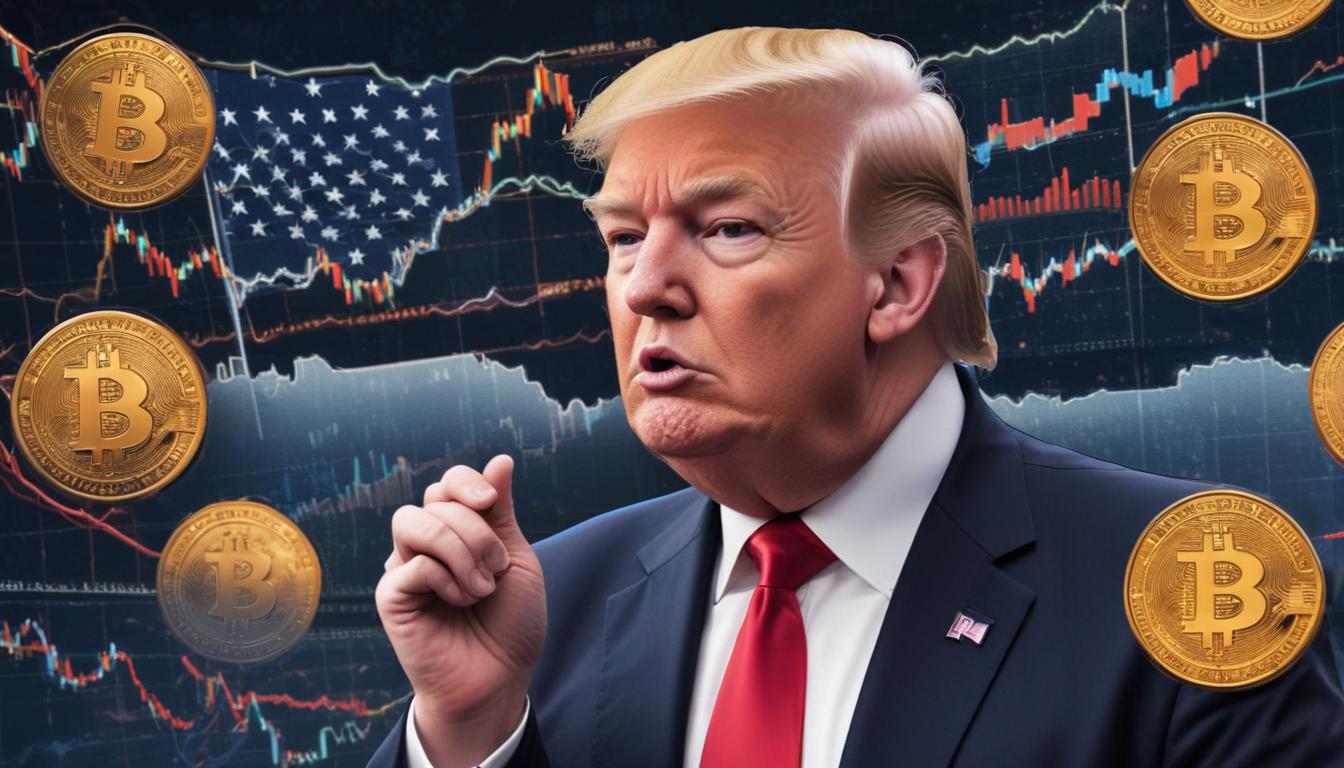
Trump's Tariff Tremors: A Crypto Market Earthquake
In early April 2024, the resurgence of Donald Trump's aggressive tariff policies rippled through global financial markets, triggering noticeable downturns in both traditional equities and cryptocurrency values. This section delves into the immediate market reactions to these renewed tariff measures, analyzing the resulting volatility and its broader impact on investor confidence.
Immediate Market Response: A Sharp Decline
The announcement of tariffs prompted a swift and decisive response from the financial markets. Cryptocurrency markets reacted strongly, experiencing substantial declines. Stock markets globally also saw significant single-day losses. The pervasive sense of uncertainty and fear among investors was palpable, amplified by initial confusion surrounding a potential 90-day pause on tariffs for some nations, a move that notably excluded China. The subsequent intensification of tariffs against China, reportedly reaching 145%, only heightened market anxiety and underscored the unpredictable nature of the trade landscape.
Read also: Solana (SOL) Under Pressure? FTX's Move & Token Unlock Impact! What You Need To Know.
Investor Sentiment: Gripped by Extreme Fear
Following the tariff announcements, market sentiment took a significant dive. The Fear and Greed Index, a vital gauge of investor sentiment, mirrored this dramatic shift, plummeting into "extreme fear" territory. This widespread apprehension highlighted the market's deep concerns about the potential economic repercussions of escalating trade tensions. The indefinite nature of the tariffs' duration and scope further fueled this negative sentiment, creating a climate of apprehension and caution among investors.
Divided Reactions: Strategic Calculation or Necessary Concession?
The 90-day tariff pause for select nations, while seemingly offering a chance for de-escalation, ignited debates regarding the underlying motivations behind this policy adjustment. Some analysts suggested the move was a strategic play by the Trump administration to exert pressure on trading partners, aiming for more favorable terms. Others considered it a response to growing pressure from business leaders and investors alarmed by the negative market reactions. Regardless of the intended purpose, the imposition of tariffs, particularly the increased tariffs targeting China, raised significant concerns about the long-term implications for American businesses engaged in international manufacturing and for the global economy at large.
Ripple Effects: From Main Street to Wall Street
The impact of these tariff policies extended far beyond the confines of Wall Street, reaching small businesses across America. Concerns about potential economic fallout from trade disruptions resonated throughout Main Street, reflecting a growing unease about possible adverse effects on business operations and employment rates. This underscored the interconnectedness of global markets and the potential for trade policies to significantly influence businesses of all sizes.
The market instability triggered by the tariff announcements underscored the fragile nature of investor confidence and the potential for sudden policy shifts to disrupt economic stability. The uncertainty further complicated the existing dynamics of both cryptocurrency and traditional markets, emphasizing the critical need for investors to proceed cautiously and maintain a long-term perspective.
Understanding the complex dynamics of the Trump administration's trade policies is crucial for making informed investment decisions in both traditional and cryptocurrency markets, as the unfolding narrative continues to significantly shape market trajectories.
Navigating the Crypto Tightrope: The Powell-Trump Conflict and its Market Impact
The ongoing feud between former President Donald Trump and former Federal Reserve Chair Jerome Powell casts a long shadow over the already volatile cryptocurrency market. Trump's repeated attempts to influence interest rate decisions and his reported efforts to remove Powell through the Supreme Court have created significant uncertainty, presenting both opportunities and risks for digital assets. This high-stakes power struggle introduces considerable unpredictability into the financial landscape.
Read also: Ripple vs. SEC: Settlement Imminent?! Get the Inside Scoop Now!
Trump's Pressure on the Fed: A Clash of Economic Philosophies
The conflict stems from Trump's persistent calls for lower interest rates, a stance he frequently articulated during periods of market volatility. He argued that lower rates would stimulate economic growth and counter market downturns. However, Powell, tasked with maintaining long-term price stability and overseeing the broader economic health, prioritized a more measured approach. This fundamental disagreement led to repeated public clashes, culminating in reports of Trump exploring extraordinary measures to remove Powell from his position. This unprecedented pressure on the independent Federal Reserve injected considerable uncertainty into financial markets worldwide.
Read also: Global Economy Under Pressure? How Fed Policy, Tariffs & China Impact Crypto Now!
Crypto's Tightrope Walk: Inflation, Regulation, and Uncertainty
The implications for the crypto market are multifaceted. A change in Fed leadership, particularly if the successor was more susceptible to political pressure, could lead to erratic monetary policy. While lower interest rates might temporarily boost crypto prices by making riskier assets more attractive, the long-term consequences could be detrimental. Increased inflation, a potential byproduct of significantly lower rates, would erode the purchasing power of fiat currencies, potentially making Bitcoin and other cryptocurrencies more appealing as stores of value. However, uncontrolled inflation is economically destabilizing, impacting all asset classes, including crypto.
Furthermore, the political maneuvering surrounding the Fed chair amplified uncertainty in the regulatory landscape. A change in leadership could dramatically alter perspectives on cryptocurrency regulation, potentially resulting in either more favorable or significantly more restrictive policies. This unpredictability makes it difficult for investors to assess the long-term viability of their digital asset holdings.
Crypto in a Politicized Environment: Understanding the Risks
The Powell-Trump conflict underscores the increasing susceptibility of financial markets, including the crypto market, to political influence. The potential for political actions to directly impact monetary policy and, consequently, crypto prices, emphasizes the need for investors to carefully analyze these intricate dynamics. The situation highlights the crucial interplay between political decisions and market volatility.
Read also: Solana (SOL) Under Pressure? FTX's Move & Token Unlock Impact! What You Need To Know.
Moreover, the conflict raises serious concerns regarding the independence of central banks and the risks of political interference in monetary policy. This power struggle sets a concerning precedent for future political interventions, potentially creating a far more volatile and unpredictable environment for all financial markets.
The Long-Term Outlook: Adaptability and Informed Decision-Making
While the immediate impact of the Powell-Trump conflict remains uncertain, its long-term consequences for the cryptocurrency market could be profound. The heightened awareness of the relationship between political decisions and market volatility might lead investors to favor assets perceived as less susceptible to political manipulation. This could benefit decentralized cryptocurrencies like Bitcoin, reinforcing their narrative as a hedge against political and economic uncertainty. However, it also underscores the urgent need for robust, transparent regulatory frameworks that protect the integrity of the crypto market and mitigate the risks associated with political influence.
In conclusion, the cryptocurrency market, despite its decentralized nature, is not immune to broader political and economic forces. Navigating this complex and evolving environment requires a deep understanding of these interwoven dynamics, a long-term perspective, and a commitment to vigilant, adaptable, and informed decision-making. The ongoing tension between political agendas and independent monetary policy will continue to shape the future of cryptocurrency, demanding careful analysis and strategic adjustments from investors.
90-Day Tariff Pause: Strategic Maneuver or Temporary Relief? Analyzing the Impact on Crypto
The 90-day pause on certain tariffs, announced amidst the market turmoil sparked by renewed trade policies, offered a brief respite. However, this temporary reprieve raises critical questions about its true nature: Is it a genuine de-escalation, a strategic ploy to gain negotiating leverage, or merely a superficial fix for deeper economic wounds? This analysis explores the implications of this 90-day pause, examining its potential short-term and long-term effects on market sentiment, investor confidence, and, crucially, the cryptocurrency market.
Decoding the Pause: Tactical Retreat or Calculated Strategy?
The decision to pause tariffs on certain countries while simultaneously escalating tariffs against China to a reported 145% paints a complex picture. This selective approach suggests a calculated strategy, potentially aimed at isolating China and applying pressure where leverage is perceived to be greatest. Offering temporary relief to some nations might be an attempt to force China into accepting more favorable trade terms. However, this tactic carries significant risks. Further escalation of trade tensions, exacerbated global economic uncertainty, and potential backfires if China remains unyielding, all pose considerable challenges.
Conversely, the pause might be viewed as a reaction to the considerable market downturn following the initial tariff announcements. The plunge in both stock and cryptocurrency markets, coupled with growing investor and business anxieties, may have prompted a reassessment of the administration's approach. The 90-day period could provide a window to assess the tariffs' economic impact and potentially renegotiate trade deals. Nevertheless, the continued aggressive stance toward China casts doubt on the sincerity of any de-escalation efforts.
Market Sentiment: A Glimmer of Hope Amidst Lingering Uncertainty?
While the 90-day pause offers temporary relief, it's unlikely to fully restore market confidence. Underlying uncertainty regarding future trade relations remains a primary concern for investors. The potential for renewed tariffs after the 90-day period, alongside the ongoing trade war with China, continues to cast a long shadow over market sentiment. This persistent uncertainty could dampen investor enthusiasm and limit potential gains for both traditional and cryptocurrency markets.
Moreover, the pause's selective nature creates an uneven playing field, potentially benefiting some sectors while leaving others vulnerable to continued trade pressures. This disparity could further distort markets and complicate investment decisions. The short-term nature of the relief raises questions about its long-term efficacy. A brief respite may prove insufficient to address underlying trade imbalances and structural issues contributing to global economic instability.
Cryptocurrencies: Navigating the Trade War's Crossfire
The cryptocurrency market, inherently sensitive to global economic uncertainty, remains vulnerable to the trade war's ripple effects. While the 90-day pause may provide a temporary reprieve, the long-term implications for cryptocurrencies are uncertain. Continued trade tensions and economic volatility could drive investors toward safe-haven assets, potentially benefiting Bitcoin's narrative as a hedge against instability. However, prolonged uncertainty could equally dampen investor enthusiasm for riskier assets, including cryptocurrencies.
Furthermore, the evolving regulatory landscape surrounding cryptocurrencies adds another layer of complexity. Increased regulation, particularly in response to market volatility and concerns about illicit activities, could significantly impact the growth and adoption of digital assets. The complex interplay of trade policy, monetary policy, and regulatory developments creates a challenging environment for cryptocurrency investors, highlighting the importance of comprehensive understanding of these interconnected dynamics.
Beyond the 90 Days: A Long-Term Perspective
The 90-day tariff pause, while offering a temporary reprieve, is just one chapter in the ongoing saga of global trade tensions. The underlying issues fueling the trade war remain unresolved, and the risk of renewed escalation persists. For cryptocurrency investors, navigating this uncertain landscape demands a long-term perspective, a deep understanding of interconnected global markets, and the adaptability to adjust to rapidly evolving circumstances.
The true measure of the 90-day pause will be its ability to facilitate genuine dialogue and progress toward a more stable and predictable trade environment. Whether this temporary reprieve signals a turning point toward de-escalation or merely represents a tactical maneuver in a protracted trade war remains to be seen. The cryptocurrency market, along with traditional markets, will continue to be influenced by the unfolding dynamics of global trade, emphasizing the importance of staying informed and adapting investment strategies accordingly. The cryptocurrency market's future trajectory hinges not only on technological advancements and regulatory developments but also on the broader geopolitical and economic landscape, including the resolution of ongoing trade disputes. This complex interplay underscores the need for a holistic understanding, not only of digital assets themselves, but also the external forces shaping their destiny.
Read also: Global Economy Under Pressure? How Fed Policy, Tariffs & China Impact Crypto Now!
The Future of Crypto Under Trump's Economic Policies: A Crystal Ball Gazing
Predicting the future trajectory of the cryptocurrency market remains a complex task, further complicated by the unpredictable nature of economic policies and geopolitical events. Considering former President Trump's past actions and stated intentions, we can extrapolate potential scenarios for the crypto landscape under his continued economic policies. Understanding these potential futures is critical for investors seeking to navigate the volatile crypto market amidst political and economic uncertainty. This analysis explores possible trajectories for crypto, considering market stability, investor sentiment, and the evolving regulatory environment under a renewed Trump administration.
Long-Term Market Stability: A Balancing Act
Trump's economic policies, characterized by aggressive tariffs and a willingness to challenge established norms, have the potential to create both opportunities and challenges for the long-term stability of the cryptocurrency market. These policies could create a boom-and-bust cycle, demanding a cautious approach to cryptocurrency investing.
- Tariff-Induced Volatility: The imposition of tariffs can lead to increased market volatility as businesses grapple with higher costs and disrupted supply chains. This volatility could extend to the cryptocurrency market, as investors seek safe-haven assets or react to broader economic uncertainty. The early April market downturn, triggered by renewed tariff announcements, serves as a reminder of the potential for tariff announcements to trigger market turbulence.
- Inflationary Pressures: Lowering interest rates, a recurring theme in Trump's criticisms of the Federal Reserve, can stimulate economic growth but also carries the risk of inflation. If inflation rises significantly, cryptocurrencies like Bitcoin, often touted as a hedge against inflation, could become more attractive to investors seeking to preserve their purchasing power. However, uncontrolled inflation can destabilize economies, creating a challenging environment for all markets, including crypto.
- Geopolitical Uncertainty: Trump's "America First" approach to trade and foreign policy can create geopolitical uncertainty, potentially driving investors towards decentralized assets like Bitcoin, perceived as being outside the control of any single government or institution. This could lead to increased adoption and price appreciation for certain cryptocurrencies.
Read also: Global Economy Under Pressure? How Fed Policy, Tariffs & China Impact Crypto Now!
Long-term market stability lies in finding a balance between stimulating economic growth and maintaining price stability. Trump's policies could create a boom-and-bust cycle, with periods of rapid growth followed by sharp corrections. Navigating this environment requires a cautious and informed approach to cryptocurrency investing.
Investor Behavior: Fear, Greed, and the Search for Safe Havens
Investor behavior is significantly influenced by the prevailing economic and political climate. Under Trump's economic policies, we can anticipate the following trends:
- Flight to Safety: Increased market volatility and geopolitical uncertainty could trigger a flight to safety, with investors seeking refuge in assets perceived as less risky. While some investors might turn to traditional safe havens like gold, others could view Bitcoin as a digital alternative, potentially driving up its price. This highlights Bitcoin's potential as an uncorrelated asset class.
- Increased Speculation: Trump's policies could also fuel speculation in the cryptocurrency market. The potential for rapid price swings, driven by tariff announcements or changes in monetary policy, could attract speculators seeking to profit from short-term market movements. This increased speculation might exacerbate the potential for volatility.
- Institutional Adoption: Despite the potential for volatility, a continued Trump administration might inadvertently accelerate institutional adoption of cryptocurrencies. As institutions seek to diversify their portfolios and hedge against economic uncertainty, they may allocate a portion of their assets to cryptocurrencies, providing a stabilizing force to the market. However, this would likely depend on the regulatory clarity afforded to the crypto space.
- Sentiment-Driven Swings: Investor sentiment can be expected to swing significantly in response to policy announcements and economic data. A period of economic optimism might encourage greater participation in the crypto market. Conversely, economic downturns or drastic policy shifts could trigger panic selling.
Understanding these potential shifts in investor behavior is critical for anticipating market trends and making informed investment decisions. It's important to approach the market with a clear strategy and avoid being swayed by short-term hype or fear.
The Regulatory Environment: Navigating Uncharted Waters
The regulatory environment for cryptocurrencies is constantly evolving, and Trump's policies could have a significant impact on its future direction.
- Potential for Deregulation: Trump's generally anti-regulatory stance could lead to a more hands-off approach to cryptocurrency regulation, potentially fostering innovation and growth. However, a lack of clear regulatory guidelines could also create uncertainty and increase the risk of illicit activities. A balanced approach is necessary to encourage innovation while protecting consumers.
- Focus on National Security: Concerns about national security and the use of cryptocurrencies for illicit activities could lead to increased scrutiny and regulation. The government might impose stricter know-your-customer (KYC) and anti-money laundering (AML) requirements on cryptocurrency exchanges and other service providers. Enhanced security measures are crucial to maintaining the integrity of the crypto space.
- Competition with the Dollar: If cryptocurrencies gain significant traction as alternative currencies, the government might take steps to protect the dominance of the U.S. dollar. This could involve imposing restrictions on the use of cryptocurrencies for certain transactions or even exploring the creation of a central bank digital currency (CBDC). The potential competition with the dollar is a significant consideration for policymakers.
- Impact on Innovation: The regulatory environment will play a crucial role in determining the pace of innovation in the cryptocurrency space. Overly burdensome regulations could stifle innovation and drive companies to other jurisdictions with more favorable regulatory climates. Striking the right balance between regulation and innovation is critical for long-term growth.
Navigating the regulatory landscape requires staying informed about the latest developments and engaging with policymakers to advocate for sensible regulations that foster innovation while protecting consumers.
Scenarios for the Future: From Bull Run to Crypto Winter
Considering the potential impacts of Trump's economic policies on market stability, investor behavior, and the regulatory environment, we can envision several possible scenarios for the future of the cryptocurrency market:
- The "Trump Pump": A scenario where Trump's policies lead to short-term economic stimulus and increased risk appetite, fueling a bull run in the cryptocurrency market. Lower interest rates, coupled with a weaker dollar, could drive investors towards alternative assets like Bitcoin. However, this boom could be followed by a sharp correction if inflation rises or the economic stimulus proves unsustainable.
- The "Safe Haven Surge": A scenario where geopolitical uncertainty and economic instability drive investors towards Bitcoin as a safe-haven asset. Increased adoption by institutional investors could provide a stabilizing force to the market, leading to more sustainable long-term growth. This surge would validate Bitcoin's role as a reliable store of value.
- The "Regulatory Squeeze": A scenario where increased regulatory scrutiny and restrictions stifle innovation and dampen investor enthusiasm, leading to a "crypto winter." This could occur if the government imposes overly burdensome regulations or takes steps to protect the dominance of the U.S. dollar. The impact would be a slowdown in market activity and innovation.
- The "Innovation Oasis": A scenario where a more hands-off regulatory approach fosters innovation and growth in the cryptocurrency space. New applications and use cases for blockchain technology could emerge, driving adoption and creating new opportunities for investors. However, this scenario also carries the risk of increased illicit activities and market manipulation.
These are just a few potential scenarios, and the actual future of the cryptocurrency market could be a combination of these factors. The key to success in this dynamic environment is to stay informed, adapt to changing circumstances, and maintain a long-term perspective.
Key Considerations for Investors
Given the potential for significant changes in the cryptocurrency market under Trump's economic policies, investors should consider the following:
- Diversification: Diversify your portfolio across different asset classes to mitigate risk. Don't put all your eggs in one basket.
- Risk Management: Assess your risk tolerance and invest accordingly. The cryptocurrency market can be highly volatile, so it's important to be prepared for potential losses.
- Due Diligence: Conduct thorough research before investing in any cryptocurrency. Understand the underlying technology, the team behind the project, and the potential risks and rewards.
- Stay Informed: Stay up-to-date on the latest developments in the cryptocurrency market, including regulatory changes and economic trends.
- Long-Term Perspective: Adopt a long-term perspective and avoid being swayed by short-term market fluctuations.
- Seek Professional Advice: Consider seeking advice from a qualified financial advisor who can help you develop a personalized investment strategy.
Conclusion: Navigating the Trump Effect
The future of the cryptocurrency market under Trump's economic policies is uncertain, but understanding the potential impacts on market stability, investor behavior, and the regulatory environment is crucial for making informed investment decisions. By staying informed, managing risk, and adopting a long-term perspective, investors can navigate the "Trump Effect" and potentially capitalize on the opportunities that arise in this dynamic and evolving market. The intertwining dynamics of trade policy, interest rates, and regulatory landscapes will continue to shape the destiny of cryptocurrencies, highlighting the need for investors to remain vigilant and adaptable amidst the ongoing political and economic tides.
Crypto's Tremors: Navigating Trump's Tariff & Fed Tensions
The resurgence of Trump's tariff policies and his conflict with former Fed Chair Powell have created significant uncertainty in cryptocurrency markets. This article analyzes the resulting volatility and provides insights for navigating this complex landscape.
Key Takeaways:
- Trump's tariffs caused immediate market declines in both traditional equities and crypto, highlighting market sensitivity to trade policy uncertainty.
- The conflict with Powell injected unpredictability into monetary policy, impacting investor sentiment and the attractiveness of riskier assets like crypto.
- While a temporary tariff pause offered slight relief, persistent uncertainty and the ongoing trade war with China necessitate a cautious, long-term investment strategy in crypto.
#Fed Powell Trump Conflict #Bitcoin Volatility 2024 #Trump tariffs crypto #Crypto Market Analysis #Crypto Investment Strategy