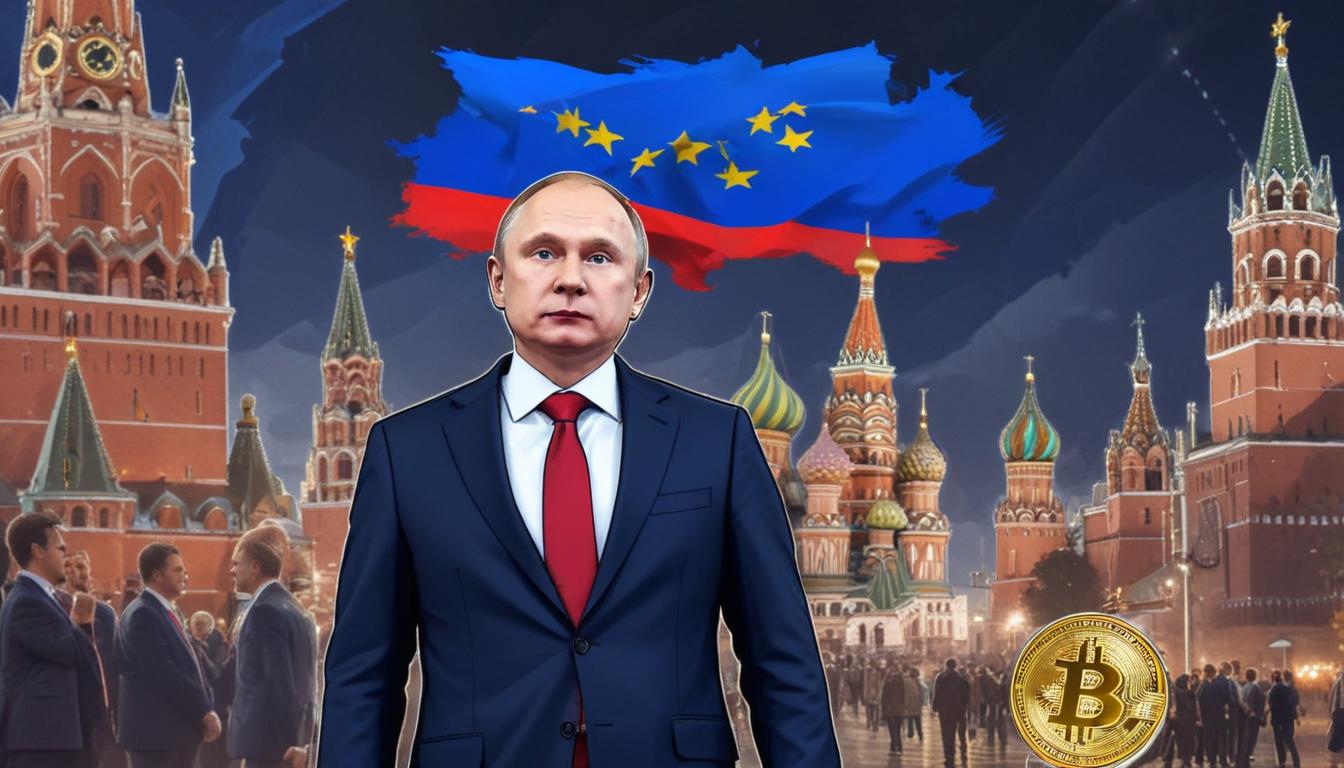
Deribit's Exodus from Russia: Navigating the Shifting Sands of Crypto Regulation
Deribit's recent withdrawal from the Russian market signals a significant shift in the cryptocurrency landscape, highlighting the growing interplay between geopolitics, regulation, and the future of digital finance. This move, driven by escalating EU sanctions, underscores the increasingly complex challenges faced by cryptocurrency exchanges operating within a globalized, yet increasingly fragmented, regulatory environment. Let's delve into the specifics of Deribit's decision, the underlying EU sanctions, and the broader implications for the crypto ecosystem.
The Trigger: EU Sanctions and Deribit's Response
Deribit, a leading cryptocurrency derivatives exchange headquartered in the Netherlands, recently announced the cessation of its services to Russian citizens and residents, unless they meet specific, stringent criteria. This decision comes as a direct response to amplified EU sanctions imposed in the wake of the ongoing conflict in Ukraine. These sanctions, designed to restrict Russia's access to international financial systems, including the burgeoning cryptocurrency market, prohibit European-based crypto companies from providing services to Russian individuals and businesses.
Deribit's announcement outlined specific conditions under which Russian users can retain access to the platform. These exceptions primarily cater to individuals holding dual citizenship in an EEA country or Switzerland, or those maintaining permanent residency in these regions. Significantly, Russian citizens residing in the UAE, a jurisdiction often perceived as crypto-friendly, are excluded, along with all Russian companies. This targeted approach reflects the intricate web of international sanctions and the difficult balancing act exchanges face between regulatory compliance and maintaining a global user base. It also highlights the far-reaching impact of these sanctions, extending their influence even to jurisdictions known for their progressive stance on digital assets.
The Ripple Effect: Implications for Russian Crypto Traders
Deribit's exit presents substantial challenges for Russian cryptocurrency traders, particularly those focused on derivatives trading. The platform's departure restricts access to a key venue known for its diverse derivatives offerings, limiting options for participation in the global crypto market. This reduced access compels Russian traders to explore alternative avenues, potentially pushing them towards decentralized exchanges (DEXs), centralized exchanges operating outside the purview of EU regulations, or peer-to-peer (P2P) trading.
This shift has profound implications. DEXs, while offering greater anonymity and decentralization, often present steeper learning curves for users and can be less user-friendly than established centralized exchanges. Centralized exchanges outside EU jurisdiction may lack the regulatory oversight and established reputation of platforms like Deribit, increasing the risk of scams and security breaches. The move towards P2P trading, while offering direct interaction between traders, can introduce complexities related to security and counterparty risk.
The migration away from established platforms like Deribit could lead to fragmentation within the Russian crypto trading landscape, potentially impacting trading volumes, market liquidity, and overall accessibility. It also raises concerns about the potential for increased volatility and price fluctuations as traders adapt to new platforms and navigate the complexities of alternative trading mechanisms.
The Broader Landscape: A Precedent for Future Regulatory Action?
Deribit's decision raises critical questions about the future trajectory of cryptocurrency regulation. This move sets a precedent that other major exchanges might follow, potentially triggering a broader trend of platforms distancing themselves from users in sanctioned regions. The possibility of other prominent platforms, such as Binance or Bybit, adopting similar measures adds a layer of uncertainty to the future of the crypto market. Such a trend could further isolate traders in sanctioned regions from mainstream cryptocurrency markets, accelerating the adoption of alternative trading mechanisms and potentially reshaping the global crypto landscape.
This development also highlights the evolving role of regulators in the crypto space. As governments grapple with the unique challenges presented by decentralized finance, the need for clear and consistent regulatory frameworks becomes increasingly apparent. The interplay between national security concerns, economic sanctions, and the decentralized nature of cryptocurrencies presents a complex puzzle for policymakers. Deribit's response to EU sanctions underscores the need for proactive engagement from regulators and industry stakeholders to navigate this evolving landscape and ensure the long-term stability and integrity of the cryptocurrency market.
Deribit's Strategic Calculus: Balancing Compliance and Competitiveness
From Deribit's perspective, withdrawing from the Russian market presents a complex strategic trade-off. While complying with EU sanctions is paramount, the move carries the inherent risk of losing a segment of its user base and trading volume. This raises questions about the long-term impact on Deribit's market position and its ability to compete with exchanges that continue to serve Russian clients, potentially operating in jurisdictions with less stringent regulatory oversight.
The decision also underscores the challenges faced by exchanges operating in a globally fragmented regulatory environment. Deribit's relocation to Dubai in 2023, initially aimed at navigating regulatory pressures, highlights the ongoing search for jurisdictions that offer a balance between innovation and oversight. However, the exclusion of Russian residents in Dubai from the platform demonstrates the far-reaching impact of sanctions and the complexities of operating within this evolving landscape.
A Glimpse into the Future: Navigating the Uncharted Waters of Crypto Regulation
Deribit's withdrawal from the Russian market serves as a crucial case study for the evolving intersection of geopolitics, regulation, and the future of cryptocurrency. The long-term consequences of this decision remain to be seen, but it undoubtedly marks a significant turning point. The evolving dynamics of this situation warrant continuous analysis as the implications for market access, regulatory compliance, and the future of crypto trading unfold. The increasing integration of cryptocurrencies into the global financial system necessitates proactive dialogue and collaboration between regulators, exchanges, and the broader crypto community to navigate these uncharted waters and ensure the responsible development and adoption of digital assets.## Decoding the Deribit Departure: A Deep Dive into the Impact on Russian Crypto Traders
Deribit's withdrawal from the Russian market, a direct consequence of intensifying EU sanctions, has sent shockwaves through the global cryptocurrency ecosystem. This wasn't just another exchange delisting; it was a seismic event revealing the intricate interplay between geopolitics, regulatory pressures, and the future of digital finance. For Russian cryptocurrency traders, the impact has been multifaceted, ranging from immediate access limitations to fundamental shifts in trading strategies and market perception. Let's dissect the implications in detail, examining the challenges faced, the adaptive responses, and the potential long-term ramifications.
Navigating the New Normal: Reduced Access and the Scramble for Alternatives
The most immediate consequence of Deribit's exit is the stark reduction in access for Russian traders, especially those experienced in the complexities of derivatives trading. Deribit, a prominent player known for its sophisticated offerings, was a familiar and trusted platform. Its withdrawal has forced a significant re-evaluation of trading strategies and a frantic search for viable alternatives. This isn't simply a matter of inconvenience; it's a fundamental shift in how Russian traders engage with the cryptocurrency market, potentially impacting their profitability and overall market participation.
The search for alternative platforms is fraught with challenges. Traders now face the difficult decision of choosing between various options, each presenting its own unique set of advantages and disadvantages. Centralized exchanges (CEXs) outside the EU's regulatory scope offer a familiar interface but may lack the robust security and regulatory oversight of established platforms, increasing the risk of scams and security breaches. Decentralized exchanges (DEXs), on the other hand, provide greater anonymity and resistance to censorship, but often come with a steeper learning curve, higher transaction fees, and potentially lower liquidity.
Peer-to-peer (P2P) trading also represents a significant alternative, offering direct interaction between traders and enhanced privacy. However, this method carries significant risks, including counterparty risk, the absence of dispute resolution mechanisms, and increased vulnerability to fraud. The choice of platform ultimately becomes a critical risk-management decision, with traders balancing the need for access and liquidity with the inherent security and regulatory risks of each option.
The International Financial Tightrope: Sanctions and the Shrinking Access to Global Markets
Deribit's withdrawal exacerbates the pre-existing challenges faced by Russian crypto traders in navigating the intricate web of international financial restrictions. Existing sanctions already limit access to traditional financial institutions, making cryptocurrencies a crucial tool for cross-border transactions and investments. Deribit's departure further constricts these avenues, adding another layer of complexity to an already challenging environment.
This tightening of restrictions impacts not only individual traders but also the broader Russian crypto market. The reduced access to global markets can stifle innovation, limit capital flows, and hinder the integration of the Russian crypto ecosystem into the global financial system. The long-term ramifications for economic growth and participation in the global cryptocurrency community are significant and require careful consideration. The challenges extend beyond simple trading; they impact access to crucial financial services, creating potential barriers for entrepreneurs, businesses, and the wider economy.
The reduced access also raises ethical concerns about financial inclusion. The digital divide can be exacerbated when individuals are denied access to essential financial tools, creating a potential for economic marginalization. The consequences of this exclusion extend beyond individual traders and impact the broader socio-economic fabric of the Russian population.
The Market Ripple: Assessing the Impact on Trading Volume and Liquidity
The exodus of Russian traders from Deribit has undeniably altered trading volumes and market liquidity. While the platform itself might experience a decline in activity, leading to wider spreads and potentially increased volatility, the ensuing migration to alternative platforms has introduced new dynamics. Other exchanges, particularly those outside EU regulatory purview, are likely to see surges in trading volume as Russian traders seek new homes for their assets.
This shift in trading patterns creates both opportunities and challenges. Increased trading volume can benefit some exchanges, attracting new users and increasing market share. However, the potential influx of Russian traders could also strain the resources and infrastructure of smaller platforms, potentially leading to technical issues and security concerns. The need for enhanced regulatory oversight and stricter security measures for platforms experiencing increased volume is paramount to preventing any potential abuses or market manipulation.
Furthermore, the increased volatility introduced by this dramatic shift can impact market stability and create a more challenging environment for all traders, both Russian and international. The need for careful risk management and informed decision-making in this volatile landscape is crucial for all participants in the global cryptocurrency market.
Beyond the Metrics: The Psychological Impact of Uncertainty and Trust Erosion
The impact of Deribit's withdrawal extends beyond the tangible consequences of reduced access and market volatility. The sudden loss of a major platform has eroded trust in centralized exchanges, fostering uncertainty among Russian crypto traders. This psychological impact can be just as significant as the practical challenges, influencing long-term trading patterns and the broader sentiment within the Russian crypto community.
The uncertainty can lead to increased risk aversion, with traders becoming more cautious and less inclined to invest in or trade cryptocurrencies. It could also drive a shift toward decentralized solutions or peer-to-peer trading, potentially increasing exposure to unregulated markets and higher risks. Understanding the emotional response to these events is crucial in assessing the long-term impact on the Russian crypto market and predicting future adoption trends.
The erosion of trust in centralized exchanges also highlights the importance of transparency and accountability in the cryptocurrency industry. Building trust requires demonstrable commitment to security measures, regulatory compliance, and ethical business practices. This is not merely a matter of reputation; it is a cornerstone of sustainable growth and adoption in the long term.
Adapting and Innovating: The Resilience of the Russian Crypto Community
Despite the formidable challenges, the Russian cryptocurrency community has demonstrated remarkable resilience and adaptability. The migration toward decentralized exchanges (DEXs), centralized exchanges outside EU jurisdiction, and peer-to-peer (P2P) trading represents a dynamic response to regulatory pressures and geopolitical tensions. This adaptability highlights the inherent flexibility and innovation within the cryptocurrency space, showcasing the ability of traders to find creative solutions to navigate complex hurdles.
The shift towards decentralized solutions, while risky, also reflects a broader trend toward greater autonomy and self-sovereignty in the financial realm. This movement could spur further innovation in the crypto space, potentially leading to the development of new technologies and trading strategies. The emergence of alternative financial systems and the potential for increased collaboration within the BRICS nations further underscores the long-term implications of Deribit's exit and the broader geopolitical context in which it occurred. This dynamic interplay between regulatory pressure and technological innovation will continue to shape the future of the Russian cryptocurrency market.
In conclusion, Deribit's withdrawal marks a watershed moment, underscoring the intricate relationship between geopolitics, regulation, and the cryptocurrency ecosystem. The impact on Russian traders is profound and multi-faceted, driving innovation and adaptation while simultaneously presenting significant challenges and uncertainties. The ongoing evolution of this situation requires close monitoring and analysis, as the future of the Russian crypto landscape unfolds in response to these complex and ever-shifting dynamics.## Navigating the Exodus: Russian Crypto Traders' Shift to DEXs and Offshore Exchanges
Deribit's departure from the Russian market, a direct consequence of escalating EU sanctions, has triggered a significant migration of traders seeking alternative platforms to continue their cryptocurrency activities. This exodus presents a complex landscape of opportunities and risks, particularly with the rise of decentralized exchanges (DEXs) and centralized exchanges operating outside the EU's regulatory reach. Here's a breakdown of this evolving situation and what it means for the future of crypto trading for Russian users.
DEXs: A Double-Edged Sword of Anonymity and Complexity
Decentralized exchanges, such as Uniswap and dYdX, have emerged as a potential haven for Russian traders seeking to circumvent restrictions. The allure of DEXs lies in their decentralized nature. Operating without a central authority, they facilitate direct peer-to-peer transactions, often through automated market makers (AMMs). This eliminates the need for Know Your Customer (KYC) procedures, offering a level of anonymity attractive to those facing sanctions. Imagine a financial system where your identity and location are irrelevant, and you can transact freely with anyone, anywhere. That's the promise of DEXs.
However, this very anonymity presents challenges. The absence of KYC/AML (Anti-Money Laundering) compliance raises concerns about illicit activities, attracting increased scrutiny from global regulators. Furthermore, DEXs present a steep learning curve for many. Managing private keys, navigating intricate smart contracts, and understanding the irreversible nature of blockchain transactions can be daunting. One wrong move, and your funds could be lost forever. This technical complexity creates a barrier to entry for less experienced traders, making user education crucial for wider DEX adoption.
Offshore Exchanges: A Tempting Mirage or a Treacherous Oasis?
Beyond the decentralized landscape of DEXs, Russian traders are also turning to centralized exchanges operating outside the EU's jurisdiction. These platforms, often located in regions with more permissive regulatory environments, offer a more familiar trading experience with a wider range of trading pairs, higher liquidity, and sophisticated trading tools. They offer a seemingly simpler alternative to the complexities of DEXs.
However, this apparent simplicity often masks significant risks. The lack of robust regulatory oversight in these jurisdictions can expose users to scams, hacks, and other vulnerabilities. Imagine depositing your funds on an exchange only to find it vanished overnight, with little recourse for recovery. This is a real risk in the unregulated world of offshore exchanges. Furthermore, the financial stability and long-term viability of these platforms are often questionable, creating uncertainty for traders. The potential for sudden regulatory changes or geopolitical events impacting these exchanges also demands careful consideration.
Balancing Act: The Future of Crypto Regulation
The migration of Russian traders underscores the ongoing tension between innovation and regulation in the crypto space. DEXs, while embodying the decentralized ethos of crypto, challenge regulators striving to maintain market integrity. Similarly, offshore centralized exchanges raise concerns about investor protection and financial stability.
This regulatory tightrope walk is likely to intensify. Regulators worldwide are grappling with how to balance the benefits of decentralized finance with the imperative of protecting consumers and preventing financial crime. The evolving regulatory landscape creates uncertainty for both traders and platforms. Will regulators crack down on DEXs, imposing KYC/AML requirements? Will offshore exchanges face increased scrutiny, forcing them to adopt stricter compliance measures? The answers to these questions will shape the future of crypto trading.
Choosing Your Path: A Guide for Russian Crypto Traders
Navigating this complex landscape requires careful consideration. Here's a checklist for Russian traders exploring alternative platforms:
-
Security: Scrutinize the platform's security protocols, track record of incidents, and community reputation. Remember, on a DEX, you are the custodian of your funds. Losing your private keys is like losing your wallet – the money is gone.
-
Regulation and Compliance: Understand the legal framework governing the platform. Is it registered anywhere? Does it adhere to any KYC/AML regulations? These factors impact user protection and the platform's long-term viability. Choosing a completely unregulated platform is like playing poker with an unknown dealer – you're trusting them with your money without any guarantees.
-
Fees and Costs: Compare trading fees, withdrawal fees, and any other associated costs. DEXs might advertise lower fees, but gas fees on certain blockchains can quickly eat into your profits. Do your homework and calculate the total cost of trading on each platform.
-
User Experience: Consider the platform's interface, ease of use, and available features. DEXs can be complex, requiring technical proficiency. Centralized exchanges typically offer a more streamlined experience but may lack the customization and control offered by DEXs.
-
Liquidity and Trading Volume: Sufficient liquidity and trading volume are essential for efficient trading. Low liquidity can lead to slippage, meaning you get a worse price than expected. Check the trading volume for your desired pairs before committing to a platform.
-
Community and Support: A strong community and responsive support team can be invaluable, especially when dealing with technical issues or navigating complex transactions. Look for platforms with active forums, social media presence, and readily available customer support.
The migration to alternative platforms marks a turning point in the Russian cryptocurrency landscape. Traders must adapt to new realities, carefully weighing the risks and rewards of each platform. Staying informed about regulatory developments and evolving market dynamics is crucial for navigating this uncharted territory and making informed decisions in the ever-changing world of cryptocurrency. This isn't just about finding a place to trade; it's about safeguarding your assets, understanding the risks, and participating responsibly in the future of finance.## Geopolitical Implications and the Future of Crypto: A Multipolar Market Emerges
Deribit's strategic withdrawal from the Russian market, a direct response to escalating EU sanctions, marks a pivotal moment, not just for the exchange itself, but for the entire global cryptocurrency landscape. This decision isn't merely about one exchange losing Russian clients; it's a case study in the intricate dance between geopolitics, regulation, and the future of decentralized finance. Let's unpack the far-reaching implications, exploring how this event reshapes the global crypto market and what it means for investors, traders, and regulators alike.
The EU Sanctions: Setting a Precedent for Global Crypto Regulation?
The EU's sanctions against Russian individuals and entities, forcing Deribit's hand, represent a significant escalation of regulatory pressure on cryptocurrency exchanges worldwide. This bold move sends a clear message: geopolitical tensions can directly and profoundly impact the regulatory landscape of cryptocurrencies. While Deribit's compliance showcases a cautious approach to navigating this complex legal terrain, the uncertainty remains: Will other major players like Binance or Bybit follow suit? This potential domino effect raises critical questions about the future of global crypto regulation and the very real possibility of a fragmented market.
This isn't just about compliance; it's about the fundamental principles of access and inclusivity within the crypto ecosystem. The EU's actions create a precedent that could embolden other nations to implement similar restrictions, resulting in a more fragmented and complex global regulatory framework. This fragmentation carries significant risks, potentially leading to increased market volatility and posing challenges for businesses operating across international borders. The implications are far-reaching, touching upon investor confidence, trading patterns, and the overall accessibility of the global crypto market. The key question remains: Will we witness a unified global regulatory approach to crypto, or will a fragmented system emerge, creating a more complex and potentially unstable environment?
Consider the implications for innovation. Stricter regulations can stifle development and limit the adoption of promising technologies. On the other hand, a lack of regulation can lead to increased risks for investors and the proliferation of fraudulent activities. Finding the right balance between fostering innovation and maintaining investor protection will be crucial in shaping the future of the crypto market.
The Evolution of Russian Crypto Trading: Decentralization and the Rise of P2P
The immediate impact on Russian crypto traders is a significant reduction in access to established, regulated exchanges. This situation is not simply an inconvenience; it's a disruption that fundamentally alters their engagement with the global crypto market. The immediate reaction is a natural pivot towards alternative solutions, primarily decentralized exchanges (DEXs) and peer-to-peer (P2P) trading platforms. This shift significantly accelerates the adoption of decentralized finance (DeFi) solutions within Russia.
The appeal of DEXs and P2P trading lies in their inherent resistance to centralized control and increased anonymity, particularly beneficial in a climate of heightened regulatory scrutiny. However, this move comes with its own set of risks. Increased reliance on DEXs exposes users to potential scams, security vulnerabilities, and a potentially less liquid market, requiring a higher degree of technical proficiency and risk management. P2P trading, while fostering direct interaction between traders, introduces complexities concerning security and counterparty risk. The need for robust security protocols and risk management strategies becomes paramount for users navigating this evolving landscape.
This increased reliance on decentralized and peer-to-peer systems could also impact Russia's ability to fully participate in the global crypto economy. Restrictions on access to established platforms can hinder the flow of capital and limit the benefits of cross-border transactions. The implications for the long-term development of the Russian crypto market are complex and warrant careful consideration. The need for education and support services becomes more critical as users navigate this new and less regulated environment. While potentially leading to the development of innovative tools and solutions, the increased complexity and associated risks remain a significant concern.
The BRICS Initiative: A Geopolitical Counterbalance to Western Dominance?
The ongoing geopolitical tension between Russia and the West, further exacerbated by sanctions, has spurred discussions about alternative financial systems. The BRICS nations, with their growing economic influence, are exploring the creation of a multipolar financial order. This pursuit potentially includes a BRICS-backed digital currency or a robust alternative payment system designed to reduce reliance on Western-dominated institutions. Russia's active participation in these initiatives signals a long-term strategy to maintain access to global finance while bypassing current regulatory pressures.
The success of a BRICS digital currency or a similar alternative could profoundly reshape the global crypto landscape. A viable alternative to existing cryptocurrencies could shift the balance of power and influence within the digital asset market. This potential shift could also drive the development of innovative financial technologies and regulatory frameworks, potentially influencing global standards and regulations. The implications for the global cryptocurrency ecosystem are far-reaching and warrant continuous observation and analysis. The rise of alternative financial systems could represent a significant challenge to the existing order, impacting everything from currency valuations to international trade and investment.
The development of a BRICS digital currency, however, also carries considerable challenges. The technical implementation, integration with existing financial systems, and potential for regulatory conflicts all need to be considered. The success of such an initiative would depend on a number of factors, including technological feasibility, international cooperation, and the overall political climate. The future of this endeavor remains uncertain, yet it presents an interesting dynamic shift in the global landscape.
Long-Term Implications for Deribit and the Competitive Landscape
Deribit's decision, while compliant with EU regulations, carries significant strategic risks. The loss of Russian users undeniably impacts its trading volume and market share. The long-term effects on Deribit's competitiveness depend on a complex interplay of factors, including the actions of rival exchanges, the broader evolution of the geopolitical climate, and the overall adoption of alternative trading platforms. To maintain its market position, Deribit might need to redirect its resources and marketing efforts towards regions less affected by sanctions or explore innovative revenue streams.
This situation highlights the delicate balance between regulatory compliance and business viability in the volatile cryptocurrency market. Failure to adapt to these geopolitical pressures could lead to further erosion of market share and a decrease in profitability. The exchange's ability to successfully navigate this complex landscape will largely depend on its capacity for innovation, adaptability, and its ability to maintain trust amongst its remaining user base. This situation underlines the critical importance of strategic foresight and flexibility in the dynamic world of cryptocurrency.
In conclusion, Deribit's exit from the Russian market serves as more than a simple business decision; it is a significant event reflecting the increasingly complex interplay between cryptocurrency, geopolitics, and global regulatory frameworks. The future will determine whether this event signifies a broader trend toward stricter sanctions on crypto exchanges or the emergence of alternative financial systems that challenge the existing world order. The long-term impact on the global cryptocurrency market, along with the strategies employed by major players and the adaptation of users in sanctioned regions, demands continuous, in-depth analysis. This is a story still unfolding, and its conclusions will shape the future of global finance.## Geopolitics, Sanctions, and Crypto: Deribit's Russian Exit and its Ripple Effects
Deribit's withdrawal from Russia, spurred by EU sanctions, highlights the growing impact of geopolitics on the crypto market. This pivotal event reveals the complex interplay between regulation, access, and the future of decentralized finance.
Key Takeaways:
- EU sanctions against Russia force major crypto exchanges to choose between compliance and serving Russian clients, potentially fragmenting the global crypto market.
- Russian traders are migrating to DEXs and offshore exchanges, seeking greater anonymity but facing increased risks like scams and security breaches. This highlights the crucial need for user education and risk management.
- The BRICS initiative's potential development of alternative financial systems could challenge Western dominance and reshape the global crypto landscape, offering a counterbalance to existing sanctions and regulation.
- Deribit's strategic decision showcases the challenges exchanges face balancing regulatory compliance with business viability in a volatile, globally fragmented market.
#Offshore Exchanges #Deribit #Sanctions Impact #Cryptocurrency Exchange #EU Sanctions #Market Volatility #DeFi #Crypto Regulation #BRICS #Geopolitics #Crypto Trading #Russia #Decentralized Exchanges (DEX)