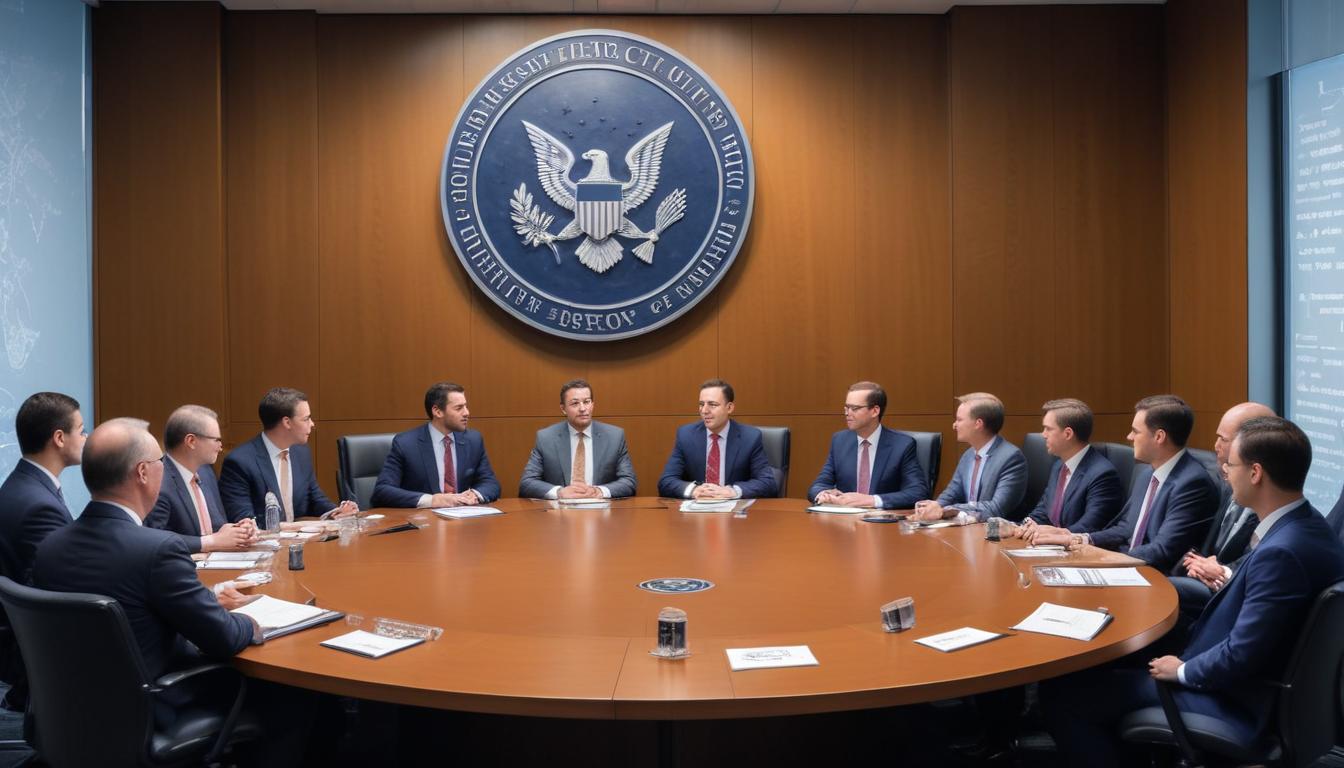
SEC's Crypto Custody Roundtable: Objectives, Key Participants, and Market Implications
The Securities and Exchange Commission's (SEC) crypto custody roundtable represents a pivotal moment in the evolving regulatory landscape of digital assets. This landmark event aims to foster a comprehensive dialogue on the secure and compliant handling of cryptocurrencies, reflecting the SEC's proactive engagement with the complexities of integrating this burgeoning asset class into the existing financial framework. The roundtable's significance extends beyond the immediate discussions, impacting market sentiment, investor confidence, and the future direction of crypto regulation.
Deep Dive into the SEC's Crypto Custody Roundtable Objectives
The SEC's primary objective is to address critical concerns surrounding the safekeeping of digital assets. This includes a thorough examination of the challenges faced by broker-dealers, digital asset custodians, and investment advisors responsible for safeguarding cryptocurrencies. The roundtable serves as a platform for industry leaders, regulators, and stakeholders to collaboratively establish best practices for crypto custody. Key discussion points are expected to encompass:
- Regulatory Compliance: Ensuring compliance with existing securities laws and regulations, while adapting to the unique characteristics of digital assets. This includes addressing issues around KYC/AML (Know Your Customer/Anti-Money Laundering) compliance and data privacy.
- Operational Risks: Identifying and mitigating operational risks inherent in crypto custody, such as cybersecurity vulnerabilities, insider threats, and system failures. Robust security measures and disaster recovery planning are key considerations.
- Investor Protection: Establishing mechanisms to safeguard investor assets and maintain market integrity. This necessitates transparent and auditable custody practices, minimizing the risk of theft or loss.
- Integration with Traditional Finance: Exploring how crypto custody can be seamlessly integrated into traditional financial infrastructure, facilitating broader institutional adoption and participation. This includes addressing interoperability between various blockchain networks and existing financial systems.
- Defining Custody Standards: Establishing clear and consistent standards for crypto custodians, ensuring they meet minimum requirements for security, risk management, and operational efficiency. This would involve defining key performance indicators (KPIs) and best practices for the industry.
Lee también: MicroStrategy & Bitcoin: Risky Bet or Genius Move? (2024 Update)
By addressing these critical issues, the SEC aims to cultivate a more secure, transparent, and reliable ecosystem for crypto custody, thereby fostering greater participation in the digital asset market. The roundtable's outcome will significantly shape the regulatory landscape and promote responsible innovation within the crypto space.
Key Participants and Their Roles in Shaping Custody Discussions
The SEC's roundtable convenes a diverse group of key players, each contributing unique expertise and perspectives to the crucial discussions surrounding crypto custody. Prominent participants include leading crypto custody providers, technology companies, and regulatory experts. Their insights will be instrumental in shaping a comprehensive and balanced understanding of the challenges and opportunities within the sector.
Fireblocks: As a leading provider of secure digital asset infrastructure, Fireblocks' participation highlights the crucial role of robust technology in institutional-grade custody. Their contributions are expected to focus on:
- MPC Technology: Demonstrating the advantages of Multi-Party Computation (MPC) technology for enhancing the security and control of private keys.
- Institutional Workflows: Showcasing how their platform facilitates seamless integration of digital assets into established institutional workflows.
- Compliance Frameworks: Sharing their experience in navigating complex regulatory requirements and adhering to industry best practices.
- Risk Management: Presenting strategies for mitigating risks associated with digital asset custody, including cybersecurity threats and operational vulnerabilities.
- Interoperability: Highlighting the importance of interoperability among diverse custody solutions and blockchain networks.
Fidelity Digital Assets: As a subsidiary of Fidelity Investments, Fidelity Digital Assets brings extensive experience from traditional finance to the crypto custody space. Their participation underscores the increasing institutional interest in digital assets and the need for robust, secure custody solutions. Key discussion points from Fidelity Digital Assets are likely to include:
- Institutional Custody Requirements: Defining the specific custody requirements of institutional investors, such as regulatory compliance, security, and scalability.
- Integration with Traditional Systems: Exploring how digital asset custody can seamlessly integrate with traditional financial systems and processes.
- Risk Management Frameworks: Sharing their proven approach to risk management, encompassing measures to protect against theft, loss, and unauthorized access.
- Operational Best Practices: Presenting best practices for managing digital assets in a secure and compliant manner.
- Regulatory Engagement: Emphasizing the importance of proactive engagement with regulators to shape the regulatory landscape and promote responsible innovation.
Other Key Participants: Beyond Fireblocks and Fidelity Digital Assets, the roundtable will feature representatives from other leading crypto custody providers, technology companies, and regulatory experts. This diverse group ensures a comprehensive exploration of the key issues in crypto custody, encompassing a wide range of perspectives and expertise. The inclusion of firms like Kraken, Anchorage Digital Bank, and WisdomTree underscores the breadth of industry involvement and the SEC’s commitment to a holistic approach.
The combined insights of these participants will be crucial in shaping the SEC’s understanding of crypto custody, ultimately informing the development of a clear and effective regulatory framework for the industry.
Shaping Regulatory Discussions: The Collaborative Role of Roundtable Participants
The presence of key industry players like Fireblocks and Fidelity Digital Assets reflects the SEC's collaborative approach to regulating the digital asset space. These participants actively contribute to shaping regulatory discussions, offering invaluable expertise and practical experience. Their roles encompass:
- Providing Technical Expertise: Companies like Fireblocks offer deep technical knowledge, helping regulators understand complex technologies such as MPC and hardware security modules (HSMs).
- Sharing Operational Insights: Custodians like Fidelity Digital Assets provide practical insights into the daily challenges of secure and efficient digital asset management, informing regulators about necessary operational considerations.
- Advocating for Industry Standards: Participants advocate for the adoption of industry-wide standards and best practices, promoting consistency and interoperability across the crypto custody ecosystem.
- Identifying Regulatory Gaps: By sharing their experiences navigating the current regulatory landscape, participants help identify ambiguities and gaps, leading to more effective regulations.
- Promoting Innovation: Participants contribute insights on emerging technologies and trends in crypto custody, encouraging regulators to adopt a forward-looking approach.
This collaborative engagement ensures the SEC's regulatory framework is informed, practical, and supportive of responsible innovation. The roundtable fosters vital dialogue and collaboration between regulators and industry, paving the way for a more secure, transparent, and compliant digital asset ecosystem. The leadership of figures like SEC Chair Gary Gensler, known for his focus on investor protection, further emphasizes the seriousness of these discussions and the intention to create sensible rules.
Market Adaptability and Transparency: The Long-Term Impact of SEC Engagement
The SEC's consistent engagement through events like this roundtable has historically fostered greater market adaptability and transparency among custodians. These interactions catalyze improvements in custody practices and the integration of digital assets into the broader financial system. This adaptability is critical for the sustainable growth of the crypto market. The SEC’s initiatives facilitate:
- Promoting Best Practices: Encouraging the adoption of industry best practices, enhancing security and risk management.
- Enhancing Transparency: Improving transparency in crypto custody operations, building trust and confidence among investors.
- Facilitating Innovation: Supporting innovation in crypto custody solutions, leading to more efficient and secure digital asset management.
- Attracting Institutional Investment: Creating a more secure and regulated environment, thereby attracting institutional investment.
- Reducing Regulatory Uncertainty: Providing clarity on SEC expectations for crypto custody providers.
- Fostering Collaboration: Promoting a shared understanding between regulators and industry participants.
The increased regulatory clarity and improved security resulting from these interactions are expected to drive significant industry growth and establish precedents for global frameworks. Trends observed after past engagements suggest that market participants are actively seeking regulatory signals, adjusting their strategies accordingly.
Concluding Remarks: A Collaborative Path Towards Responsible Crypto Custody Regulation
The SEC's crypto custody roundtable signifies a critical step towards establishing a clear and effective regulatory framework for the digital asset space. By facilitating open dialogue and bringing together key industry stakeholders, the SEC aims to foster a more transparent, secure, and reliable ecosystem for crypto custody. The expertise and insights shared during this roundtable will be instrumental in shaping the future of crypto regulation, promoting responsible innovation, and protecting investors. Continued collaboration between regulators and industry participants will be essential in navigating the challenges and opportunities in crypto custody, paving the way for mainstream adoption of digital assets. As the SEC continues its engagement with the crypto industry, the market is poised for further adaptation and innovation, ultimately benefiting both investors and the broader financial system.
Analyzing Bitcoin's Market Position Amidst Regulatory Discussions
Despite the regulatory uncertainty surrounding crypto, Bitcoin (BTC) maintains a significant market presence. Recent data indicates Bitcoin trading at approximately $26,000 (This figure is subject to change and should be verified with up-to-date market data) with a substantial market capitalization. While daily price fluctuations are common, the overall trend suggests a degree of underlying strength. Events like the SEC's crypto custody roundtable indirectly influence market sentiment. Clear regulations emerging from such discussions could encourage institutional investment, potentially positively impacting Bitcoin's long-term value.
Moreover, increased clarity in custody solutions could bridge the gap between crypto assets and traditional financial systems. This integration would likely boost institutional confidence and investment, fostering further expansion and setting global standards for crypto frameworks. Therefore, the outcome of the SEC's initiatives holds significant interest for Bitcoin investors and the broader crypto community. The SEC's commitment to addressing custody issues through events like the roundtable signals its intent to create a more stable and regulated environment – a crucial element for the continued growth and mainstream adoption of cryptocurrencies like Bitcoin.
Potential Conflicts of Interest: SEC's Engagement with Trump-Supporting Firms
The Securities and Exchange Commission (SEC) operates as a critical neutral arbiter within the financial ecosystem. Its interactions with cryptocurrency firms, especially those displaying overt political affiliations, warrant rigorous scrutiny. Maintaining public trust and ensuring fair, unbiased regulation hinge on this vigilance. This section examines potential conflicts of interest arising from SEC meetings with firms like Ondo Finance—a known supporter of Donald Trump—and analyzes the broader implications for crypto regulation.
Examining the Ties: Ondo Finance and Trump's Inauguration Fund
The SEC's crypto task force meeting with Ondo Finance representatives raises significant questions regarding potential conflicts of interest. Ondo Finance's $1 million donation to Donald Trump's inauguration fund casts a shadow over the agency's commitment to impartial regulation. The meeting's discussion points, particularly concerning "issuing and selling wrapped, tokenized versions of publicly traded US securities," further amplify these concerns.
The involvement of Davis Polk & Wardwell, a law firm representing Truth Social (Donald Trump's social media platform) in launching crypto-linked exchange-traded funds (ETFs), adds another layer of complexity. This creates a direct link between political interests and the burgeoning crypto market. The SEC's engagement with a firm simultaneously representing a politically affiliated entity pursuing crypto ventures necessitates a critical examination of the agency's impartiality.
The potential for Davis Polk & Wardwell to leverage its relationship with Truth Social to influence SEC decision-making regarding crypto ETFs is a legitimate concern. Maintaining the independence of regulatory processes is paramount; any perception of political sway undermines this principle. This situation underscores the critical need for transparency and robust ethical guidelines to prevent any actual or perceived bias in the SEC's regulatory approach.
Potential Conflicts of Interest: A Comprehensive Analysis
The convergence of political affiliations and regulatory engagement presents several potential conflicts of interest demanding careful consideration:
-
Perception of Bias: The most immediate concern is the potential for the public and market participants to perceive bias in the SEC's regulatory decisions. Even in the absence of actual bias, the appearance of impropriety erodes trust and undermines the integrity of the regulatory process.
-
Unequal Enforcement: Firms with political connections may receive more lenient treatment or face less stringent enforcement actions compared to their unaffiliated counterparts. This creates an uneven playing field and distorts market dynamics.
-
Policy Influence: Political connections could unduly influence the SEC's policy decisions on crypto regulation, prioritizing specific political interests over the broader public good.
-
Information Advantage: Firms with close ties to political figures or regulatory bodies might gain access to privileged information, providing them with an unfair market advantage.
-
Erosion of Public Trust: Perceptions of political influence in regulatory decisions erode public trust in the SEC and the integrity of the financial system.
Mitigating Conflicts: Ensuring Fair and Unbiased Crypto Regulation
To mitigate potential conflicts of interest stemming from the SEC's engagement with politically affiliated firms, several key measures must be implemented:
-
Enhanced Transparency: The SEC should publicly disclose all meetings and communications with firms and individuals possessing known political affiliations or having made substantial political contributions. This fosters greater transparency.
-
Independent Review: An independent ethics review should be conducted, focusing on the identification and management of conflicts of interest. This ensures accountability and strengthens safeguards.
-
Clear Regulatory Standards: The SEC should establish clear, objective regulatory standards for crypto assets, irrespective of the firms' political affiliations. This ensures a level playing field for all market participants.
-
Robust Enforcement: The SEC must vigorously enforce its regulations against all firms, regardless of political connections. This demonstrates the agency's commitment to impartiality and deters attempts to circumvent the rules.
-
Public Education: The SEC should proactively educate the public about its efforts to ensure fair and unbiased crypto regulation. This builds trust and reinforces the integrity of the financial system.
-
Comprehensive Disclosures: Crypto firms should be mandated to provide comprehensive disclosures regarding political donations, lobbying activities, and affiliations with political figures. This enhances transparency and allows for better monitoring of potential conflicts.
-
Internal Firewalls: The SEC should create robust internal firewalls to prevent information flow between officials involved in regulatory decisions and those with political connections. This protects the decision-making process from undue influence.
-
Stakeholder Engagement: The SEC must engage with a diverse range of stakeholders, including industry representatives, to ensure that regulatory decisions are balanced and reflect the interests of all parties.
Lee también: MicroStrategy & Bitcoin: Risky Bet or Genius Move? (2024 Update)
SEC's Evolving Stance and the Influence of Former Officials
The appointment of former commissioner Paul Atkins, a Trump appointee, as SEC chair adds another layer to this analysis. While Atkins hasn't yet acted on his proposed crypto agenda, his past affiliations warrant monitoring to ensure his decisions are based on objective criteria, free from political influence.
The SEC's decision to drop a complaint against Hex founder Richard Heart, alongside its announcement to halt investigations against firms like Ripple, Coinbase, and Kraken (all of which have supported Trump), further fuels concerns about potential political influence. While the SEC claims these decisions are merit-based, the timing and pattern raise legitimate questions about impartiality.
Market Reaction and the Future Regulatory Outlook
Market reactions to the SEC's evolving crypto regulatory stance will be heavily influenced by perceptions of fairness and transparency. Impartial actions and consistent standards will likely result in positive market responses. Conversely, perceptions of bias or political influence could erode investor confidence and trigger market instability.
The future regulatory outlook for crypto remains uncertain. The SEC's actions in the coming months will be pivotal in shaping the industry's trajectory. Prioritizing transparency, impartiality, and consistent enforcement is crucial for fair, effective crypto regulation that promotes long-term market health. This is further explored in our previous analysis of the SEC's evolving stance.
Balancing Innovation and Regulation: A Necessary Equilibrium
The SEC faces the challenge of balancing crypto market regulation with the need to foster innovation. Overly restrictive regulations could stifle innovation and drive crypto activity elsewhere. Conversely, a lack of regulation exposes investors to fraud and abuse.
A flexible, adaptive regulatory approach tailored to the specific risks and opportunities of different crypto assets and activities is necessary. This approach should be based on clear, objective criteria and applied consistently across all market participants. The SEC's willingness to engage with industry stakeholders is key to developing effective and practical regulations. This crucial balance is further discussed in our comprehensive guide to navigating the regulatory landscape.
International Cooperation: A Global Imperative
Cryptocurrency is a global phenomenon requiring international cooperation for effective regulation. The SEC should collaborate with international counterparts to share information, coordinate enforcement, and develop consistent regulatory standards. This prevents regulatory arbitrage and ensures appropriate oversight regardless of location.
Conclusion: Safeguarding Integrity in Crypto Regulation
The SEC's engagement with Trump-affiliated firms raises valid concerns about potential conflicts of interest. Enhanced transparency, recusal policies, independent reviews, clear regulatory standards, and robust enforcement are crucial to mitigating these risks and ensuring objective decision-making, free from political influence. Maintaining the integrity of the regulatory process is vital for public trust and a healthy, sustainable crypto market. The SEC's decisions will significantly impact not only the crypto industry but also the broader financial system and public confidence. A commitment to ethical principles and transparent practices is the cornerstone of effective crypto regulation that safeguards the interests of all stakeholders.
Decoding Market Reactions and Projecting the Future of Crypto Regulation
The Securities and Exchange Commission's (SEC) shifting approach to cryptocurrency regulation, highlighted by events such as the crypto custody roundtable and its interactions with entities possessing political affiliations, is sending shockwaves throughout the digital asset realm. These developments significantly shape investor sentiment and drive proactive adjustments within the crypto industry. Successfully navigating this dynamic environment hinges on understanding immediate market reactions and anticipating the trajectory of future regulatory changes.
How SEC Actions Immediately Impact the Crypto Market
The cryptocurrency market, inherently volatile, displays heightened sensitivity to regulatory news, particularly announcements and actions emanating from regulatory bodies like the SEC. Potential regulatory frameworks, enforcement actions, or even discussions like the crypto custody roundtable often instigate rapid price fluctuations and shifts in trading volumes.
- Volatility: Stricter regulation or enforcement actions commonly trigger temporary price declines as investors reassess their risk exposure. Conversely, indications of regulatory clarity or a more permissive approach can invigorate market confidence, sparking price rallies.
- Trading Volume Surge: Regulatory announcements frequently coincide with increased trading activity as investors realign their portfolios based on perceived risks and emerging opportunities. The increased activity is a sign that investors are actively recalibrating their investment strategies in real-time.
- Evolving Market Sentiment: The overall market sentiment, whether bullish or bearish, is significantly molded by regulatory developments. Regulatory ambiguity fosters a risk-averse climate, while clear guidelines cultivate greater confidence. For example, positive sentiment often follows the approval of new financial products, as seen with the Bitcoin ETFs.
- Sector-Specific Repercussions: The effects of regulatory news can vary across crypto sub-sectors. For example, stablecoin-related news might disproportionately impact stablecoin projects, while custody-related announcements could significantly affect exchanges and custody providers. This emphasizes the need for nuanced understanding of each sector's regulatory sensitivities.
- Correlation Dynamics: The correlation between crypto and traditional financial markets can fluctuate based on regulatory actions. Heightened regulatory scrutiny might cause a divergence, while greater regulatory acceptance could strengthen the correlation, indicating a gradual integration of crypto into mainstream finance.
For example, the SEC's rigorous enforcement against unregistered securities offerings has often led to sell-offs in affected tokens, demonstrating the direct impact of regulatory actions on specific assets. Conversely, the approval of Bitcoin ETFs has channeled significant capital into the market, boosting overall sentiment and driving wider acceptance of crypto as a legitimate asset class.
Long-Term Implications for Crypto Custody Solutions
The SEC's intensifying focus on crypto custody is poised to redefine how digital assets are stored and secured, impacting custody providers, exchanges, and institutional investors.
- Heightened Regulatory Oversight: Crypto custody providers are anticipated to face increased regulatory scrutiny, emphasizing security, risk management, and compliance. Custody solutions that do not align with regulatory standards risk becoming obsolete.
- Increased Compliance Burdens: Meeting evolving regulatory standards will likely escalate compliance costs for custody providers. This could potentially drive consolidation in the industry as smaller players struggle to meet the new demands, favoring larger, more established firms.
- Demand for Institutional-Grade Solutions: The need for institutional-grade custody solutions offering superior security and regulatory adherence is anticipated to rise. Institutions require assurances that their digital assets are managed with the same rigor and oversight as traditional assets.
- Standardization Initiatives: The SEC's drive to establish clear custody standards could foster greater standardization of custody practices across the crypto industry. Standardization would reduce complexity and enhance interoperability.
- Bolstered Investor Confidence: A more regulated and secure crypto custody environment could boost investor confidence, drawing more institutional and retail investors into the market, fostering growth and stability.
The active participation of established entities like Fireblocks and Fidelity Digital Assets in discussions with the SEC underscores the increasing relevance of institutional-grade custody solutions. These firms are likely to be instrumental in shaping the regulatory framework and promoting best practices in crypto asset management.
Tokenized Securities: Navigating the Regulatory Landscape
The SEC's dialogue with firms such as Ondo Finance regarding tokenized securities highlights the rising interest in this novel asset class. However, tokenized securities introduce unique regulatory hurdles that demand careful consideration.
- Security Classification: The SEC's determination of whether tokenized assets should be classified as securities is paramount. Classifying them as securities would subject them to existing securities laws and regulations, with significant implications for issuers and investors.
- Registration Mandates: Issuers of tokenized securities might need to register their offerings with the SEC, potentially incurring significant costs and facing regulatory complexities. Compliance would necessitate substantial investments in legal and compliance infrastructure.
- Securities Law Compliance: Tokenized securities must adhere to various securities laws related to disclosure, trading, and custody, adding compliance layers for issuers. Adherence to these laws is essential for investor protection and market integrity.
- Regulatory Ambiguity: The absence of explicit regulatory guidance on tokenized securities creates uncertainty for issuers and investors, potentially hindering market expansion. Regulatory clarity is critical for fostering innovation and attracting broader participation.
- Potential for Market Transformation: Despite regulatory challenges, tokenized securities offer the potential to revolutionize capital markets by enhancing efficiency, transparency, and accessibility, opening up new opportunities for investors and issuers alike.
The SEC's engagement with firms involved in tokenized securities indicates a willingness to explore this technology's potential. However, the agency is expected to proceed cautiously, emphasizing investor protection and ensuring market integrity as it navigates this evolving landscape.
Addressing Potential Conflicts of Interest in Crypto Regulation
The SEC's interactions with firms having ties to political figures have raised concerns about potential conflicts of interest and the imperative for fair and impartial regulation.
- Erosion of Public Trust: Perceptions of bias or political influence can erode trust in the SEC, undermining the credibility of the regulatory process. Transparency and impartiality are crucial for maintaining public confidence.
- Uneven Enforcement: There is a risk that firms with political connections might receive lenient treatment or face less stringent enforcement actions compared to those without such affiliations, creating an uneven playing field.
- Market Distortions: Political influence could distort market dynamics, fostering an unfair competitive environment and hindering innovation. Fair competition is essential for a healthy and sustainable market.
- Investor Hesitation: Concerns about conflicts of interest can create uncertainty for investors, discouraging market participation and potentially leading to capital flight.
- Reputational Risks: The SEC's reputation can be damaged by perceptions of bias, diminishing its effectiveness as a regulator and potentially undermining its ability to enforce regulations effectively.
Mitigating these risks requires the SEC to prioritize transparency, impartiality, and consistent enforcement. Implementing enhanced disclosure requirements, recusal policies, and independent reviews can help ensure that the agency's decisions are grounded in objective criteria, free from political influence.
Future Regulatory Scenarios and Potential Impact
Predicting the future regulatory landscape for crypto is challenging. However, several potential scenarios could substantially impact the market.
- Comprehensive Regulatory Framework: The SEC could develop a comprehensive regulatory framework for crypto assets, providing clarity and certainty for market participants. This scenario could attract greater institutional investment and foster market stability, paving the way for wider adoption.
- Intensified Enforcement Activity: The SEC could escalate its enforcement actions against crypto firms, targeting unregistered securities offerings, fraud, and other violations. This scenario could lead to increased market volatility and a flight to quality, favoring established and compliant entities.
- Global Regulatory Harmony: The SEC could collaborate closely with international counterparts to establish consistent regulatory standards for crypto assets. This could prevent regulatory arbitrage and ensure that crypto activities are appropriately overseen, regardless of their location, fostering a more level global playing field.
- Embracing Technological Innovation: The SEC could embrace technological innovation, such as regulatory sandboxes and blockchain-based compliance tools, to facilitate crypto asset regulation. This could foster innovation, reduce compliance costs, and promote a more efficient regulatory process.
- Maintaining Status Quo: The SEC could maintain its current regulatory approach, characterized by a combination of enforcement actions and limited guidance. This could prolong regulatory uncertainty and hinder market growth, discouraging long-term investment.
The SEC's actions in the coming months will be pivotal in shaping the crypto industry's future. Market participants must closely monitor regulatory developments and adapt their strategies accordingly.
Adapting to the Shifting Regulatory Landscape: Strategies for Market Participants
Given the inherent uncertainty surrounding crypto regulation, market participants must proactively adapt to the evolving landscape.
- Prioritize Compliance: Adhere to existing regulations and prepare to adapt to new rules and guidelines as they are issued, demonstrating a commitment to responsible market participation.
- Foster Transparency: Maintain transparent and ethical business practices to build trust with regulators and investors, enhancing credibility and fostering long-term relationships.
- Implement Risk Management Frameworks: Establish robust risk management strategies to mitigate the potential risks associated with regulatory uncertainty, protecting assets and ensuring business continuity.
- Engage in Advocacy: Communicate with regulators and policymakers to advocate for clear and balanced regulations that foster innovation while safeguarding investors, contributing to a more constructive regulatory environment.
- Diversify Portfolios: Reduce exposure to specific assets or sectors particularly vulnerable to regulatory changes by diversifying crypto holdings, mitigating potential negative impacts.
- Continuous Education: Stay informed about regulatory developments and understand the legal and compliance requirements for crypto assets, empowering informed decision-making and proactive adaptation.
- Collaborate with Peers: Work with other industry participants to develop best practices and promote responsible innovation, collectively advancing the industry's interests and establishing common standards.
- Cultivate Flexibility: Prepare to adapt business models and strategies as the regulatory landscape evolves, ensuring agility and resilience in the face of changing market dynamics.
By adopting these strategies, market participants can navigate the evolving regulatory landscape and position themselves for sustained success. The focus should remain on developing sustainable and compliant businesses that contribute to the crypto industry's growth and maturity.
Final Thoughts: Vigilance as the Key to Navigating Regulatory Uncertainty
The SEC's evolving stance on crypto regulation, marked by increased scrutiny, potential conflicts of interest, and the ongoing development of regulatory frameworks, presents both challenges and opportunities for the digital asset market. Market participants can navigate this uncertainty and contribute to the responsible growth of the crypto industry by closely monitoring regulatory developments, prioritizing compliance, and advocating for clear and balanced regulations. The future of crypto regulation hinges on the SEC's commitment to transparency, impartiality, and a balanced approach that fosters innovation while protecting investors. As the SEC continues to shape the regulatory landscape, the market's ability to adapt and innovate will be crucial for long-term success. Vigilance, staying informed, and proactively responding to the ever-changing dynamics of the regulatory environment are paramount for success.
Navigating the SEC's Crypto Crossroads: Key Takeaways
The SEC's evolving crypto stance, marked by the custody roundtable and scrutiny of politically-affiliated firms, significantly impacts the market. Understanding these shifts is crucial for navigating this dynamic landscape.
Key Takeaways:
- SEC Actions Drive Volatility: Regulatory actions (or even discussions) trigger immediate price swings and increased trading volume in the volatile crypto market.
- Crypto Custody Under Scrutiny: The SEC's focus on crypto custody will increase regulatory oversight, compliance costs, and demand for institutional-grade solutions.
- Tokenized Securities Face Uncertainty: The classification of tokenized securities as securities will significantly impact issuers and investors, requiring compliance with securities laws and potentially hindering market expansion.
- Conflicts of Interest Demand Transparency: The SEC's interactions with politically-affiliated firms highlight the need for transparency and impartiality in regulation to prevent market distortions and maintain public trust.
- Adaptability is Key: Market participants must prioritize compliance, foster transparency, manage risks, engage with regulators, and maintain flexibility to thrive in this evolving environment.