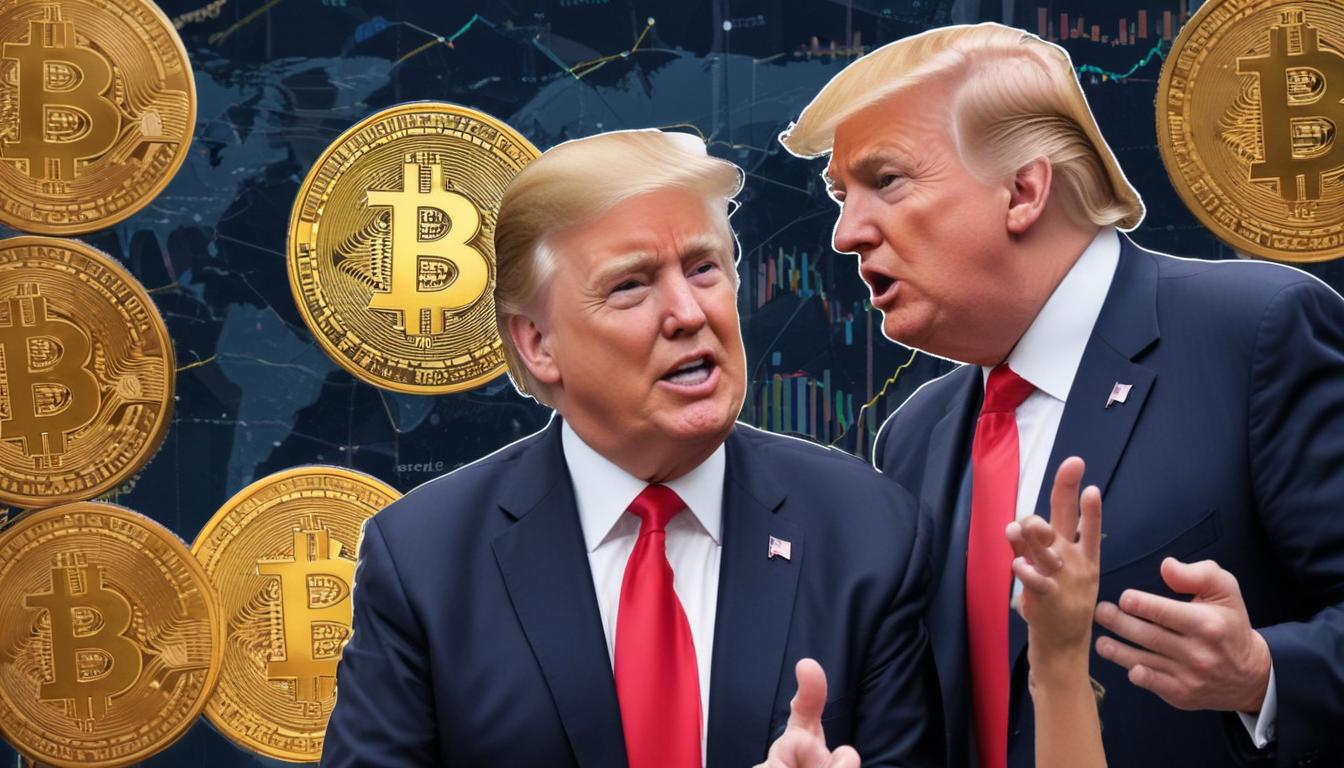
Decoding the Trump-Era Tariffs: Bitcoin's Response to Macroeconomic Uncertainty
The cryptocurrency market, while often touted for its decentralization and independence, isn't immune to the tremors of macroeconomic events. Bitcoin's price, in particular, frequently reflects the broader economic climate. A compelling case study demonstrating this interconnectedness is the era of Donald Trump's presidency and his controversial trade protectionist policies. This section delves into the significant impact of Trump's tariffs, focusing on the steel and aluminum levies, analyzing their ripple effect on Bitcoin's price volatility, and exploring the interwoven dynamics of global market anxieties and cryptocurrency valuations.
The imposition of these tariffs, particularly the 25% surcharge on steel and aluminum imports, didn't just create ripples; it unleashed a tsunami across global markets. The immediate reaction wasn't limited to the US; it sent shockwaves through Canada and Mexico, two major trading partners, and extended its reach to Japan and beyond, threatening to destabilize long-established global trade balances. This wasn't about localized economic disruption; it was about a profound shift in the perceived stability of the international trading system.
The uncertainty fueled by this policy shift was palpable. The fear of escalating trade wars, the anticipation of retaliatory tariffs, and the looming threat of widespread global trade disruption created a climate of risk aversion unprecedented in recent memory. This uncertainty wasn't just a sentiment; it was a concrete market force, impacting investors' decisions across asset classes, including the previously seemingly insulated world of cryptocurrencies.
This period of heightened uncertainty directly impacted Bitcoin's price. Reports at the time documented a significant drop in Bitcoin's value following the tariff announcements, a clear indication of the market's negative response. While Bitcoin did eventually recover, this initial downturn underscores the cryptocurrency market's sensitivity to significant macroeconomic events. The absence of clear, upward-trending market catalysts further contributed to a cautious investor sentiment, leading to a sustained period of increased price volatility.
This event revealed several key insights into Bitcoin's behavior within a turbulent macroeconomic environment. First, it demonstrably highlighted the direct correlation between global market anxieties and Bitcoin's price. The uncertainty generated by these trade policies didn't remain confined to traditional asset classes; it cascaded into the cryptocurrency market, impacting investor behavior and price movements. Second, the reaction highlighted—or perhaps, solidified—Bitcoin's perception as a risk-on/risk-off asset. During periods of elevated economic uncertainty, investors' risk appetite either increases or decreases, influencing their allocation of capital toward higher-risk investments. In this case, the initial market response indicated that Bitcoin was initially perceived as a higher-risk asset during the period of increased uncertainty surrounding the trade policies.
The decline in Bitcoin's price, while significant, was often described by seasoned analysts as an 'emotional market reaction.' This nuanced perspective suggests that the price movement wasn't necessarily driven by a fundamental shift in Bitcoin's underlying value proposition. Instead, it was a short-term response to the perceived increase in risk in the broader global market. The subsequent price recovery highlights the market's inherent resilience, suggesting that Bitcoin's long-term price trajectory isn't solely determined by short-term macroeconomic shocks. However, these shocks undoubtedly influence the degree and pace of price volatility, making risk management a crucial aspect of any cryptocurrency investment strategy.
The options markets further corroborated this period of heightened uncertainty. The downward trend observed in Bitcoin options, particularly as we approached April of that year, supported the analysis of increasing investor caution. This indicated that market participants were actively hedging against potential further price declines, anticipating a continuation of the prevailing uncertainty and market volatility. The convergence of heightened macroeconomic anxieties and a relative scarcity of positive market catalysts created a potent environment for risk aversion, shaping investor behavior across diverse asset classes.
Furthermore, the market's pronounced sensitivity to announcements and statements from key figures like then-Federal Reserve Chairman Jerome Powell underscores the deep interconnectedness of seemingly disparate parts of the global macroeconomic landscape. The interaction between trade policy decisions and interest rate expectations, especially concerning inflation, underlines the complex relationship between macroeconomic developments and Bitcoin's price movements. The anticipation surrounding upcoming inflation data, for instance, was frequently cited as a crucial determinant of market sentiment and a key factor influencing price predictions, highlighting the crucial role of inflation expectations in shaping investor behaviour within the crypto-sphere.
In conclusion, the period surrounding the implementation of Trump's steel and aluminum tariffs offers a valuable real-world case study illustrating the profound impact of macroeconomic events on Bitcoin's price. The market's response—characterized by an initial price drop, followed by a period of increased volatility and cautious investor sentiment—clearly demonstrates Bitcoin's sensitivity to broader economic uncertainty. While Bitcoin's price isn't entirely immune to such macroeconomic shocks, the subsequent market recovery underscores the need to consider both short-term emotional responses and long-term fundamental factors when analyzing Bitcoin's price volatility. This nuanced understanding is paramount for navigating the complexities of the cryptocurrency market and making informed investment decisions, especially given the ongoing global economic uncertainty and the evolving stance of central banks in the years following the Trump administration. The interconnectedness between trade policies, interest rate decisions, and inflation expectations remains a key driving force in shaping the constantly evolving dynamics of today's market.
This analysis serves as a critical framework for understanding Bitcoin's potential behavior within the macroeconomic landscape of 2024 and beyond, particularly considering the ongoing global economic instability and the evolving policy stances of central banks worldwide. The interplay between trade policies, interest rate decisions, and inflation expectations will continue to be a powerful force influencing market trends and investor behavior, making a comprehensive understanding of these macroeconomic factors essential for successful navigation of the ever-changing cryptocurrency market. Remember, informed decisions are built on a foundation of detailed analysis and a keen understanding of the complex forces shaping global financial markets.## The Federal Reserve's Influence on Bitcoin: Interest Rates, Inflation, and the 2024 Outlook
The Federal Reserve (the Fed), under the stewardship of Chairman Jerome Powell, wields considerable power over the global economy, and its actions significantly impact Bitcoin's price volatility. Understanding this complex relationship is paramount for navigating the often-turbulent cryptocurrency market, especially given the uncertainties surrounding the 2024 macroeconomic climate. This analysis delves into the intricate mechanisms through which Federal Reserve policy influences Bitcoin, exploring both the direct and indirect effects.
Interest Rates: The Fed's Primary Lever and Bitcoin's Risk Appetite
The Fed's primary tool for managing inflation is the manipulation of interest rates. Raising rates increases borrowing costs, dampening economic activity and potentially curbing inflation. Conversely, lowering rates stimulates economic growth. This directly impacts the overall investment landscape, profoundly influencing investor risk appetite.
Bitcoin, frequently categorized as a "risk-on" asset, tends to thrive during periods of economic expansion and investor optimism. When the Fed lowers rates to bolster the economy, this often translates to heightened risk tolerance among investors, potentially directing capital flows into Bitcoin and other higher-risk assets. This phenomenon is driven by a search for higher returns, where the potential for greater rewards outweighs the perceived risk. However, the inverse is also true. When the Fed raises rates to combat inflation, investors often retreat to safer, more conservative investments like government bonds, leading to decreased demand and potential price corrections in Bitcoin. This flight to safety is a natural reaction to higher risk-free returns and reduces the attractiveness of higher-risk investments like Bitcoin.
The market's reaction to Jerome Powell's pronouncements – particularly regarding future interest rate decisions – provides a compelling case study. Statements suggesting a more "hawkish" stance (indicating a preference for higher rates) can trigger immediate sell-offs in Bitcoin, reflecting a rapid shift in investor sentiment from risk-on to risk-off. Conversely, "dovish" statements (suggesting lower rates or a pause in tightening) can boost market confidence and lead to price increases. The mere anticipation surrounding these announcements significantly contributes to Bitcoin's inherent volatility, highlighting the market's extreme sensitivity to the Fed's signals.
Consider the impact of unexpected rate hikes. If the market anticipates a 0.25% increase but the Fed unexpectedly announces a 0.5% hike, the shockwave can be felt immediately in the cryptocurrency markets. This underscores the importance of not only understanding the Fed's actions but also anticipating their potential deviations from market expectations. It also showcases the market's inherent reaction to uncertainty; unexpected shifts disrupt pre-existing investment strategies, often leading to short-term volatility as investors recalibrate their positions.
This isn't simply about the absolute level of interest rates; the change in rates, and the anticipated change, are equally if not more crucial. A steady, predictable increase might be less disruptive than unpredictable fluctuations, even if the final rate is the same. This predictability is valuable for investors, allowing them to adjust their strategies accordingly. In the absence of predictable behavior, investors tend to react more dramatically to any perceived shift in policy.
Inflation: A Double-Edged Sword for Bitcoin
Inflation data, another key focus of the Federal Reserve, profoundly impacts market sentiment towards Bitcoin and other assets. High inflation erodes the purchasing power of fiat currencies, potentially boosting Bitcoin's appeal as an inflation hedge. This stems from Bitcoin's fixed supply of 21 million coins, offering a theoretical protection against the inflationary pressures of traditional currencies. This limited supply, in contrast to the potentially limitless printing of fiat currency, provides a crucial counterpoint to the inherent risk of inflation-driven currency devaluation.
However, the relationship is far from straightforward. High inflation can also fuel economic uncertainty and instability, prompting investors to seek safer havens, potentially causing Bitcoin price declines. The market's response to inflation data is highly contingent on the context, expectations, and prevailing market sentiment. If inflation data exceeds expectations, it could trigger a sell-off as investors anticipate aggressive interest rate hikes by the Fed to combat the inflationary pressures. Conversely, if inflation shows signs of cooling down, it could bolster confidence in Bitcoin's long-term value proposition, leading to increased demand.
The interplay between inflation expectations and interest rate decisions complicates the situation further. If the market anticipates persistent high inflation, the Fed might be compelled to maintain or even increase interest rates, impacting Bitcoin's price negatively, even if Bitcoin is perceived as an inflation hedge. This is because the overall dampening effect on risk appetite, brought about by higher rates, can override the benefits of Bitcoin as an inflation hedge in the short term.
Furthermore, the perception of Bitcoin as an inflation hedge itself is subject to market interpretation. The effectiveness of any hedge relies on investor confidence. A period of unexpectedly high inflation might temporarily erode this confidence, leading to a sell-off even if the long-term inflation-hedge argument remains valid. This highlights the dynamic and often unpredictable relationship between macroeconomic indicators and Bitcoin’s valuation.
Navigating Potential Scenarios in 2024 and Beyond
The Federal Reserve's future course of action will significantly influence Bitcoin's price trajectory. Several scenarios are possible:
-
Scenario 1: Persistent Inflation and Aggressive Rate Hikes: Continued aggressive rate hikes to combat persistent inflation could exert significant downward pressure on Bitcoin. Investors may shift towards less volatile assets, leading to decreased demand and a potential prolonged bear market. This scenario assumes that the negative impact of higher interest rates and reduced risk appetite outweighs the potential benefits of Bitcoin as an inflation hedge.
-
Scenario 2: Gradual Inflation Decline and Rate Stabilization: A gradual decrease in inflation, coupled with interest rate stabilization, could lead to renewed interest in risk-on assets like Bitcoin. This might trigger a bull market rally, fueled by increased investor confidence and capital inflows into the cryptocurrency market. This positive scenario hinges on the market's belief that inflation is under control and economic growth is sustainable.
-
Scenario 3: Unexpected Economic Downturn: A sharp economic downturn, regardless of the Fed's actions, could lead to unpredictable Bitcoin price swings. Bitcoin might be viewed as a safe haven during times of heightened uncertainty, potentially increasing demand. However, it's equally plausible that investors would liquidate Bitcoin holdings to cover losses in other markets, resulting in a sell-off. This scenario underscores the inherent uncertainty associated with economic downturns and their unpredictable impact on various asset classes, including cryptocurrencies.
-
Scenario 4: Stagnation and Volatility: If the Fed fails to effectively manage inflation while simultaneously preventing a significant economic downturn, we might witness prolonged economic stagnation and heightened market volatility. Bitcoin's price would likely remain extremely sensitive to news regarding inflation, interest rates, and the broader macroeconomic environment, exhibiting significant price swings without a clear directional trend. This scenario paints a picture of a market characterized by uncertainty and erratic price movements, making risk management paramount for investors.
These scenarios illustrate the pivotal role the Federal Reserve plays in shaping Bitcoin’s price trajectory. While various factors, such as technological advancements, regulatory developments, and overall market sentiment, undoubtedly influence Bitcoin's price, the Fed's actions regarding interest rates and inflation remain a primary driver of macroeconomic uncertainty, directly impacting the cryptocurrency's price volatility. Consequently, closely monitoring the Federal Reserve's actions, including Jerome Powell's statements and economic data releases, is crucial for informed decision-making in this complex and dynamic environment.
Conclusion: A Holistic Approach to Bitcoin Investment
The Federal Reserve's influence on Bitcoin's price is undeniable. The intricate interplay between interest rate decisions, inflation data, and market sentiment creates a challenging and volatile landscape for Bitcoin investors. While Bitcoin's long-term potential may remain somewhat independent of short-term macroeconomic fluctuations, understanding the Fed's role is paramount for successfully navigating the market's unpredictable nature and effectively managing risk in 2024 and beyond. The interconnectedness highlighted here underscores the need for a holistic approach to Bitcoin price analysis, considering both its intrinsic characteristics and the broader macroeconomic forces shaping global financial markets. A sophisticated understanding of these interconnected forces is essential for informed decision-making and effective risk mitigation in the ever-evolving cryptocurrency market.## Predicting Future Trends: A Macroeconomic Perspective on Bitcoin
The previous sections meticulously dissected the impact of specific macroeconomic events—the Trump-era trade wars and the Federal Reserve's interest rate maneuvers—on Bitcoin's volatile price. Synthesizing these analyses provides a robust framework for forecasting 2024 trends, acknowledging the inherent unpredictability of the cryptocurrency market. While myriad factors influence Bitcoin's price, a macroeconomic lens reveals key indicators and potential scenarios based on diverse economic outcomes. Let's delve into the intricate dance between global economics and the king of crypto.
Bitcoin's Macroeconomic Pulse: Key Indicators for 2024
Several interconnected macroeconomic indicators will significantly shape Bitcoin's trajectory in 2024. These aren't isolated variables; they interact dynamically, necessitating astute observation and analysis. Ignoring any one of these could lead to a skewed understanding of the overall market climate.
-
Inflation: The Persistent Threat: Global inflation rates, especially in major economies like the US and the Eurozone, remain a critical determinant. Persistent high inflation could push investors towards Bitcoin as a hedge against currency devaluation. The scarcity of Bitcoin, with a fixed supply of 21 million coins, offers a stark contrast to the potentially limitless printing of fiat currencies. This inherent deflationary characteristic makes it an attractive option for investors seeking to protect their purchasing power in an inflationary environment. However, aggressive central bank responses—like steep interest rate hikes—could stifle risk appetite, potentially triggering Bitcoin price declines. The divergence between anticipated and actual inflation figures will be particularly impactful, creating market volatility as expectations are recalibrated. A sudden jump in inflation, higher than predicted, can spook the market, triggering a sell-off. Conversely, if inflation consistently comes in lower than expected, this can bolster investor confidence.
-
Interest Rate Decisions: The Fed's Tightrope Walk: Central bank interest rate decisions directly influence investor sentiment and capital allocation. Higher interest rates generally favor safer, less volatile assets, potentially diverting investment away from Bitcoin. Why? Because higher rates increase the attractiveness of low-risk bonds, essentially creating a risk-free alternative that competes for investor capital. Conversely, lower interest rates or pauses in tightening could stimulate risk appetite and lead to increased Bitcoin demand. The timing and magnitude of these adjustments will be meticulously scrutinized. Unexpected rate hikes or cuts can induce dramatic market swings, as investors react to unforeseen changes in monetary policy. The communication strategy employed by central banks is also key. Clear and transparent communication can help to mitigate some of the volatility associated with these decisions.
-
Economic Growth: A Global Barometer: The global economy's health significantly influences Bitcoin's performance. Robust economic growth usually correlates with increased risk tolerance and investor confidence, potentially benefiting Bitcoin. Conversely, economic downturns or recessions could cause investors to liquidate Bitcoin holdings to offset losses in traditional markets, leading to price declines. Analyzing GDP growth forecasts and economic leading indicators (such as consumer confidence indices and manufacturing PMI) will provide crucial insights into the overall health of the global economy, which will, in turn, influence investor behavior in the cryptocurrency market.
-
Geopolitical Uncertainty: The Wild Card: Geopolitical events—international conflicts, trade disputes, or political instability—introduce significant market uncertainty. This uncertainty frequently spills over into the cryptocurrency market, impacting Bitcoin's price through risk aversion. Think of the impact of the war in Ukraine on global energy prices and supply chains—these events directly impact investor sentiment and can lead to increased volatility in cryptocurrency markets. Monitoring geopolitical tensions and their potential economic repercussions is paramount.
-
Regulatory Landscape: Navigating the Legal Maze: Regulatory developments concerning cryptocurrencies, both domestically and internationally, significantly influence Bitcoin's price. Clearer regulatory frameworks could potentially attract institutional investment and stabilize the market. Conversely, ambiguous or overly restrictive regulations could dampen investor confidence and lead to price declines. The regulatory landscape is constantly evolving, and this uncertainty can be a significant factor influencing market prices. Consider the different approaches taken by the US and China toward the regulation of cryptocurrencies; this difference alone introduces a degree of uncertainty into the global market.
2024 Bitcoin Price Scenarios: A Crystal Ball with a Crack
Based on the observed interplay between macroeconomic indicators and Bitcoin's past price movements, several plausible scenarios can be envisioned for 2024. These are potential scenarios, not definitive predictions—the inherent volatility of the cryptocurrency market demands this caveat. Understanding these potential scenarios allows investors to develop more robust and resilient investment strategies.
-
Scenario 1: Persistent Inflation and Aggressive Rate Hikes (The Bear Market Scenario): If inflation remains stubbornly high and central banks maintain aggressive interest rate hikes, Bitcoin could face considerable downward pressure. Investors might favor safer assets, leading to reduced demand and a prolonged bear market. However, Bitcoin's inflation-hedging narrative might partially offset these negative impacts, depending on the severity and persistence of inflation. The strength of Bitcoin as an inflation hedge will depend on the market's perception of this, which can vary over time. In this scenario, the importance of risk management and a long-term perspective cannot be overstated.
-
Scenario 2: Inflation Eases, Rates Stabilize, Moderate Growth (The Goldilocks Scenario): A gradual decline in inflation, coupled with interest rate stabilization and sustained economic growth, could produce a relatively stable Bitcoin market. Price movements would still be volatile, but less dramatically so than in more extreme scenarios. This scenario represents a more optimistic outlook, indicating a period of market stability and sustainable growth.
-
Scenario 3: Unexpected Economic Downturn or Geopolitical Crisis (The Black Swan Event): A significant global recession—triggered by a banking crisis or a major geopolitical event—could result in unpredictable price swings. Bitcoin might be viewed as a safe haven asset, attracting investment during extreme uncertainty. However, widespread market panic could trigger a sell-off, regardless of Bitcoin's perceived risk profile. This scenario emphasizes the need to prepare for unforeseen and unpredictable events. Diversification, stress testing investment strategies, and an understanding of various market risk scenarios are crucial to navigate this event.
-
Scenario 4: Regulatory Clarity and Institutional Adoption (The Bull Market Scenario): Significant regulatory clarity in major jurisdictions, coupled with accelerated institutional adoption, could fuel a bull market. This scenario assumes positive regulatory developments outweigh negative impacts from other macroeconomic factors. The pace and extent of institutional adoption and regulatory clarity will determine the strength and duration of such a rally. Increased institutional involvement often brings greater stability and liquidity to the market.
Navigating the Unpredictable: Informed Decisions in a Volatile Market
Predicting Bitcoin's price with certainty is impossible. The cryptocurrency market is a complex interplay of macroeconomic, technological, and regulatory factors. However, by closely monitoring key macroeconomic indicators and considering the outlined potential scenarios, investors can make more informed decisions and effectively manage risk. The information presented serves as a framework for assessing potential market developments. Continuous monitoring and adaptation are essential for navigating the ever-evolving cryptocurrency landscape. The inherent volatility of Bitcoin underscores the importance of a long-term perspective and a robust risk management strategy. Remember, successful crypto investing relies on understanding the bigger picture, staying informed, and adapting your strategy to the constantly changing market dynamics. This analysis provides a roadmap for the journey, but the journey itself requires vigilance, research, and a healthy dose of patience.## Bitcoin's Price Volatility: A Macroeconomic Perspective
This article analyzes Bitcoin's price fluctuations in relation to major macroeconomic events, providing investors with insights for navigating the 2024 market. Understanding these connections is crucial for informed decision-making.
Key Takeaways:
- Global inflation and central bank interest rate decisions significantly impact Bitcoin's price, influencing investor risk appetite and capital flows.
- Economic growth, geopolitical uncertainty, and regulatory developments also affect Bitcoin's volatility, creating various market scenarios.
- For 2024, potential scenarios range from prolonged bear markets due to high inflation and aggressive rate hikes, to bull markets driven by regulatory clarity and institutional adoption; investors must consider a range of possibilities.
#Geopolitical Risk #Trump Tariffs #Inflation #Bitcoin Price Prediction 2024 #Cryptocurrency Investment #Federal Reserve #Macroeconomic Factors #Interest Rates #Bitcoin volatility