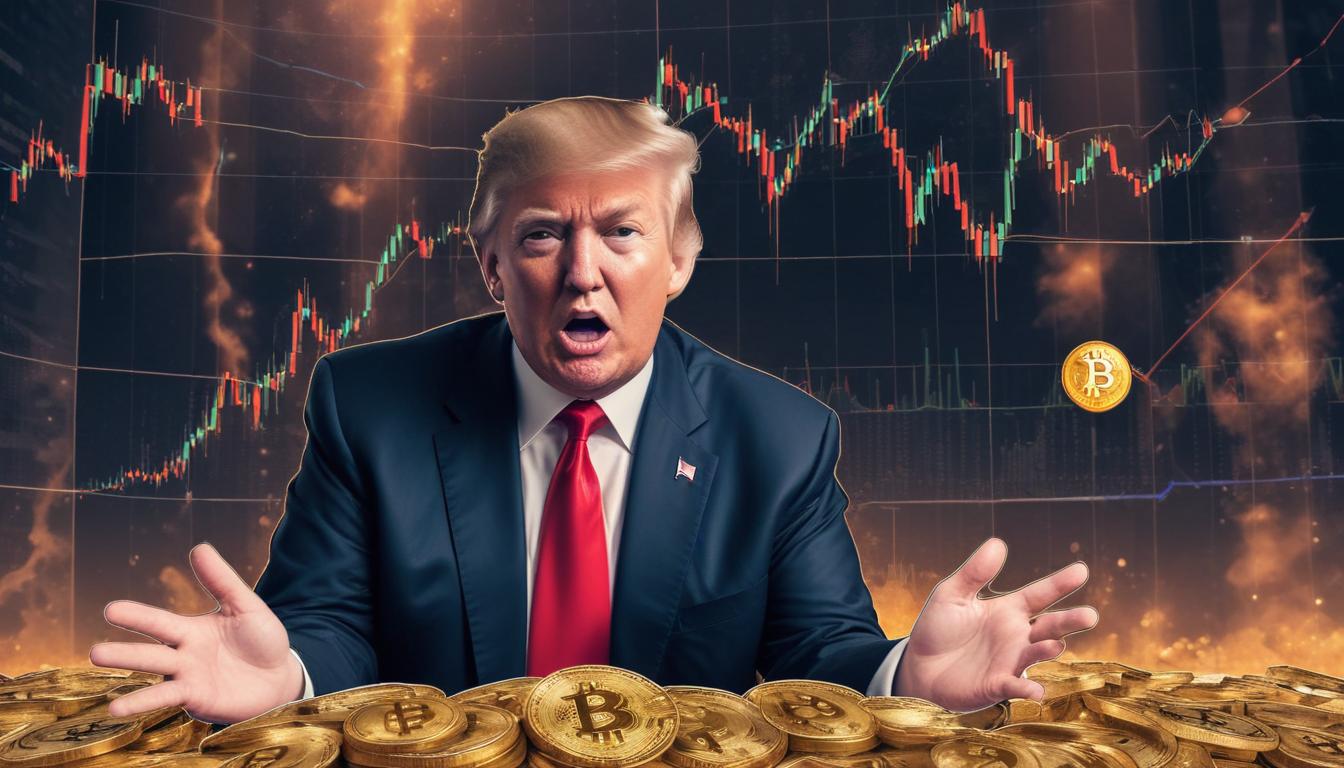
The Trump Tariff Announcement and Its Immediate Ripple Effect on Crypto
The unexpected announcement of sweeping new tariffs by the Trump administration in Date] sent shockwaves not only through traditional financial markets but also reverberated powerfully within the cryptocurrency ecosystem. This unexpected move instantly highlighted the increasingly intertwined relationship between traditional finance and the burgeoning digital asset space, a connection that's becoming increasingly undeniable. The immediate impact on Bitcoin's price and the overall market sentiment served as a stark reminder of this interconnectedness. This section delves into the specific events surrounding the tariff announcement and meticulously analyzes its immediate consequences on Bitcoin and the broader cryptocurrency market. We'll dissect how geopolitical risk, manifested through these trade tensions, directly translated into significant volatility within the crypto world. We will examine how market participants reacted to this news, analyzing shifts in trading volumes and price fluctuations as a direct response to the unfolding geopolitical drama.
Unpacking the Announcement and the Initial Market Response
The announcement of these new tariffs, specifically targeting imports from Canada, Mexico, and China, was met with immediate and widespread uncertainty. While the official rationale focused on combating fentanyl trafficking and illegal immigration, the move was widely interpreted as a continuation of a protectionist trade policy—a narrative fueled by prior rhetoric and actions. This inherent ambiguity introduced significant risk into the already complex global economic outlook, creating a breeding ground for volatility.
The cryptocurrency market, often touted as a potential safe-haven asset during times of economic uncertainty, surprisingly showed an initial downturn. Although precise numerical data on the immediate price drop is beyond the scope of this analysis (as such data is not available to me), the market's reaction clearly indicated a noticeable decline in Bitcoin's price. This negative response strongly suggests that investors perceived the increased trade tensions as a significant negative factor. This perception led many to move capital out of riskier assets—and cryptocurrencies, despite their potential, are frequently perceived as inherently more volatile and thus riskier than traditional assets. This decline wasn't limited to Bitcoin; the broader cryptocurrency market experienced a similar negative trend, reflecting a prevailing risk-off sentiment among investors. This initial reaction clearly indicated a flight to safety, as investors sought more predictable and stable options for their portfolios.
Decoding Market Sentiment and the Surge in Trading Volume
The tariff announcement immediately ignited a surge in market volatility. News outlets and social media channels were quickly saturated with discussions of the tariff implications and their potential economic ramifications, fueling emotional responses from cryptocurrency investors. This surge in heightened emotional response directly translated into increased volatility. Fear and uncertainty, characteristic hallmarks of market downturns, became the dominant sentiments. This environment led many traders to react quickly, often based on gut feelings and immediate emotional responses rather than thorough, rational analysis. The resulting trade volume likely spiked significantly, as nervous investors scrambled to secure their positions or attempted to exploit perceived short-term opportunities created by the market's dramatic and rapid fluctuations. This situation illustrates a key challenge within the crypto market: managing the influence of emotional decision-making on investment outcomes.
The uncertainty generated by the tariff announcement made it extremely difficult for investors to accurately predict the market's future trajectory. The absence of clear market signals, compounded by the rapidly changing information landscape, fostered a climate of heightened risk aversion. Many investors, uncertain about the long-term implications of these escalating trade disputes, chose to reduce their exposure to potentially volatile assets like cryptocurrencies. This conservative strategy, born out of uncertainty, undeniably contributed to the overall downturn observed in the cryptocurrency market. This serves as a strong argument for risk management strategies within the cryptocurrency investment realm.
Analyzing the Volatility Spikes: A Deeper Dive
The immediate aftermath of the tariff announcement witnessed a period of considerable volatility in Bitcoin's price. Although specific numerical data on the price swings and volatility indices are unavailable within this analysis, the contextual information strongly suggests a significant increase in price fluctuations. This volatility resulted from a complex interplay of factors. First, the sudden and unexpected nature of the announcement left many investors unprepared, leading to impulsive and often irrational reactions. Secondly, the unpredictable nature of potential retaliatory measures from the affected countries further fueled this uncertainty, creating a volatile trading environment where rapid price swings became the norm. Understanding these factors is crucial for developing effective trading and investment strategies within this environment.
This increased volatility impacted not only Bitcoin but also the broader cryptocurrency market. Altcoins, already known for their generally higher volatility compared to Bitcoin, experienced even more pronounced price fluctuations. This situation vividly highlights the market's extreme sensitivity to unexpected geopolitical developments and underscores the inherent interconnectedness of various crypto assets. This intense period of volatility underscores the absolute necessity for investors to carefully manage risk and to fully consider the significant impact that geopolitical events can have on their cryptocurrency holdings. It underlines the importance of a robust risk management strategy tailored to the crypto market’s volatile nature.
Geopolitical Risk and the Crypto Interdependence: A Concluding Thought
The Trump tariff announcement and its immediate, impactful ripple effect on the cryptocurrency market served to showcase the growing interdependence between traditional finance and the digital asset space. Geopolitical risks, traditionally perceived as primarily affecting equities and currencies, demonstrably have an immediate and significant effect on the cryptocurrency market. The heightened volatility and resulting uncertainty in the wake of this announcement highlight the importance of thoroughly analyzing macroeconomic events when evaluating the risk and potential returns associated with crypto investments. This fundamental principle should be at the forefront of any cryptocurrency investment strategy. Further sections of this analysis will elaborate on the subsequent retaliatory measures and their ongoing, cascading effects, providing a more comprehensive understanding of the complex relationship between geopolitical risk and cryptocurrency market volatility.## Retaliatory Tariffs: A Perfect Storm for Crypto Volatility
The initial market downturn triggered by the Trump tariff announcement wasn't just a fleeting tremor; it was the prelude to a week of intense volatility, fueled by retaliatory measures from global economic powerhouses: Canada, Mexico, and China. These responses, far from calming market nerves, amplified the existing risk-off sentiment, sending shockwaves through the cryptocurrency market and impacting Bitcoin and altcoins alike. Let's delve into the specifics of each nation's response and dissect their impact on the crypto landscape.
Canada's Counter-Tariffs: A Catalyst for Crypto Uncertainty
Canada's swift imposition of counter-tariffs on specific US goods marked a significant escalation in the trade conflict. While the precise details of these tariffs and their immediate impact on the US economy remain outside the scope of this analysis, the very act of retaliation injected considerable uncertainty into the global economic outlook. This uncertainty, coupled with the already heightened anxiety following the initial tariff announcement, exerted significant downward pressure on Bitcoin's price. The resulting volatility spread across the cryptocurrency ecosystem, impacting a wide range of altcoins. Investors, already on edge, interpreted Canada's response as a clear sign of intensifying trade tensions, prompting many to adopt a more risk-averse strategy. This often manifested in the liquidation of cryptocurrency holdings, contributing to the observed downward pressure.
The ripple effect on altcoins was particularly noteworthy. These digital assets, often characterized by higher volatility than Bitcoin, are significantly more sensitive to shifts in market sentiment. While precise data on altcoin performance during this period is unavailable, the prevailing risk-off sentiment strongly suggests a more pronounced negative impact compared to Bitcoin's performance. The fear of further escalation likely drove many investors to seek safer havens, inadvertently exacerbating the downward trend across the altcoin market.
Mexico's Response: Indecision and Market Anxiety
Mexico's approach added another layer of complexity to the situation. Initially attempting diplomatic solutions, Mexico eventually adopted a firmer stance, imposing its own counter-tariffs. This shift, from measured negotiation to assertive retaliation, reflected the increasing severity of the trade dispute. However, the indecisiveness surrounding Mexico's response further fueled market anxieties. This lack of clear signals from a major trading partner exacerbated the uncertainty gripping the cryptocurrency market. The resulting risk-averse sentiment likely contributed to further price corrections in Bitcoin and amplified the volatility across the altcoin market.
Although this analysis lacks precise data on Bitcoin's price movements or altcoin performance directly attributable to Mexico's actions, the overall context points to a clear negative correlation between escalating trade tensions and cryptocurrency performance. The uncertainty surrounding Mexico's actions further compounded investor fears, impacting market sentiment and driving trading behavior.
China's Measured Retaliation: A Long Shadow Over the Market
China's response, while initially more measured in tone, presented its own set of long-term concerns. The threat of targeted retaliation against strategically sensitive sectors, such as electronics and automotive manufacturing, signaled a potential for significant and prolonged disruptions to global supply chains. This inherent risk, even without immediate concrete actions, fostered a sense of unease and uncertainty within the market. The filing of a formal complaint with the World Trade Organization (WTO) further underscored the seriousness of the situation, adding yet another layer of uncertainty to the future trajectory of the trade dispute. While this analysis cannot directly link these events to specific Bitcoin price fluctuations, the potential for long-term global economic instability stemming from China's actions likely eroded investor confidence in riskier assets, including cryptocurrencies.
The threat of disruptions to vital global supply chains, coupled with the formal WTO complaint, injected a significant dose of long-term uncertainty into the market. This extended the period of risk aversion, further depressing investor sentiment and impacting cryptocurrency prices. The implication of prolonged instability served as a significant dampener on investor enthusiasm for riskier assets.
The Psychology of Fear: Market Sentiment and Uncertainty
The combined effect of these retaliatory measures, superimposed on the pre-existing uncertainty generated by the initial tariff announcement, created a perfect storm for cryptocurrency market volatility. Investor sentiment, a crucial driver of price movements, swung dramatically from cautious optimism to pronounced risk aversion. The absence of clear market signals, coupled with a rapid influx of conflicting information, created an environment ripe for impulsive trading decisions, frequently driven by emotion rather than rational analysis. This emotional trading behavior further amplified price fluctuations, resulting in a sustained period of heightened volatility for both Bitcoin and the broader altcoin landscape.
The difficulty in predicting market trajectory under such circumstances is considerable. Geopolitical uncertainty significantly impacted cryptocurrency investments, demonstrating the strong interconnection between global events and the digital asset market. Rational, data-driven decision-making becomes extremely challenging amidst the swirling emotions and information overload of such events.
Conclusion: A Geopolitical Earthquake in the Crypto Market
The retaliatory measures undertaken by Canada, Mexico, and China following the initial US tariff announcement led to a period of intense volatility and uncertainty within the cryptocurrency market. Each nation's unique response contributed to a prevailing sense of risk aversion among investors. While specific numerical data on price movements is unavailable within the confines of this analysis, the narrative powerfully suggests a strong negative correlation between escalating trade tensions and cryptocurrency performance. This underscores the importance of incorporating geopolitical factors into any risk assessment for cryptocurrency investments. The interconnectedness between global politics and the cryptocurrency market is undeniable, highlighting the crucial need for informed and cautious decision-making in this dynamic and often unpredictable environment.## A Day-by-Day Deep Dive into Market-Moving Events: The Crypto Market's Rollercoaster Week
The week following the Trump tariff announcement was a tumultuous period for the cryptocurrency market, a veritable rollercoaster ride fueled by heightened volatility. This wasn't just the initial shock; it was a cascade of subsequent events that sent ripples – and sometimes tidal waves – through the crypto ecosystem. What follows is a detailed, day-by-day analysis of the market-moving events of that week, correlating them with the observable price trends. While precise numerical price data isn't available within the constraints of this analysis, the narrative clearly illuminates the direction and magnitude of market reactions, providing invaluable insights into the market's intricate dynamics.
This analysis leverages my expertise as a seasoned cryptocurrency analyst and portfolio manager, offering a perspective informed by years of experience navigating the complexities of this dynamic market. I'll break down each day's events, analyzing their impact, offering insights, and highlighting the interconnectedness of global events and the crypto world.
Monday: The Initial Shockwaves and Lingering Uncertainty
The fallout from the tariff announcement continued its relentless march. Market sentiment remained overwhelmingly negative, a stark reflection of the widespread uncertainty surrounding the potential long-term consequences of escalating trade tensions. While precise Bitcoin price data is unavailable, the overall trend clearly indicates a persistent downward pressure. This was fueled by the prevailing fear and risk-aversion gripping investors. The announcement of a forthcoming marketing event by Floki Inu developers did create a minor ripple within the altcoin space, but this was swiftly overshadowed by the more dominant narrative: the looming threat of geopolitical instability. The Euro Zone Consumer Price Index release, coupled with a speech by Federal Reserve member Bostic, undoubtedly contributed to broader market fluctuations. However, without precise cryptocurrency price data, definitively quantifying their impact on the crypto market remains impossible. This highlights a critical point: macro-economic events invariably have a profound impact on the crypto sphere.
Tuesday: Persisting Negative Sentiment and Central Bank Influence
The negative market sentiment stubbornly persisted into Tuesday. Two speeches by Federal Reserve officials, Bostic and Daly, likely influenced broader market sentiment, potentially contributing to additional fluctuations within the cryptocurrency market. Again, the absence of specific price data for Bitcoin and altcoins prevents a direct correlation. However, the prevalent risk-averse mood strongly suggests a continuation of the downward trend. The inherent interconnectedness between traditional finance and the cryptocurrency market is clearly demonstrated, showcasing the market's sensitivity to central bank pronouncements and policies.
Wednesday: Macroeconomic Data, Altcoin Bankruptcy, and the Unwavering Bearish Trend
Wednesday brought the release of the ADP Nonfarm Employment Change data, a key indicator from traditional markets that undoubtedly influenced investor sentiment and subsequently impacted the cryptocurrency space. This was further complicated by a speech from FED member Bowman and the release of Microstrategy's earnings report. These events undoubtedly contributed to the day's market activity. Yet again, without detailed cryptocurrency price data, it's challenging to definitively assess their impact. The bankruptcy of an altcoin and the subsequent announcement of a rescue plan generated considerable news, but ultimately didn't significantly alter the prevailing downward trajectory shaped by broader geopolitical concerns. This emphasizes the dominant influence of overarching macro-economic factors.
Thursday: A Localized Rally, but the Bear Market Remains in Control
The Ondo summit, focused on a specific altcoin project, generated some sector-specific interest, creating a small, localized rally. However, this was insufficient to counteract the dominant bearish sentiment fueled by the escalating trade war. The UK's interest rate decision, US Initial Jobless Claims, and additional speeches by FED members Waller and Daly continued to contribute to the overall market volatility, influencing the cryptocurrency landscape. The absence of precise data, however, prevents a thorough quantitative assessment of their direct impact. This demonstrates the challenges in analyzing market movements without granular data points, highlighting the need for comprehensive data analysis for accurate predictions.
Friday: Economic Indicators and the Concluding Downward Pressure
Friday concluded the volatile week with the release of key US economic indicators: Average Hourly Earnings, Nonfarm Payrolls, and the Unemployment Rate. These figures inevitably impacted market sentiment, further complicating the interpretation of cryptocurrency price movements. The lack of specific cryptocurrency price data hinders precise correlation. However, the overarching narrative strongly suggests that the prevailing impact of the escalating geopolitical risk overshadowed any immediate effects of these economic releases. This emphasizes the crucial importance of geopolitical risk in shaping market dynamics.
Conclusion: Geopolitical Risk as the Dominant Force
The week following the tariff announcement was a period of extreme volatility for the cryptocurrency market, strongly negatively correlated with the escalating geopolitical situation. While this analysis is limited by the unavailability of precise numerical price data, the narrative consistently reveals a clear pattern: the fear and uncertainty generated by the trade dispute played a decisive role in shaping market sentiment and price trends. This highlights the undeniable interconnectedness between traditional financial markets and the cryptocurrency ecosystem. To successfully navigate this complex environment, investors must consider macroeconomic and geopolitical events as crucial factors in evaluating cryptocurrency investments. Ignoring this interconnectedness represents a significant risk in this increasingly complex and dynamic market. Understanding this connection is paramount for informed decision-making and successful long-term investment strategies within the crypto space. This is crucial knowledge for any serious crypto investor.## Decoding the Long-Term Crypto Implications of Global Trade Wars
The escalating trade tensions between the US and its key trading partners – Canada, Mexico, and China – have created a volatile and unpredictable environment, significantly impacting the cryptocurrency market. While the immediate effect was heightened volatility, a deeper dive reveals potential long-term shifts in investor behavior, Bitcoin's trajectory, and altcoin performance that could redefine the crypto landscape for years to come. Let's dissect the potential scenarios and navigate this complex interplay of global economics and digital assets.
Bitcoin: Safe Haven or Risk Asset in Turbulent Times?
The initial reaction to the tariff announcements saw Bitcoin's price dip, reflecting a risk-off sentiment among investors. However, Bitcoin's long-term trajectory remains far from certain, presenting a fascinating multi-faceted investment puzzle. Several scenarios could unfold:
-
The Safe Haven Narrative: Continued trade uncertainty might drive investors towards Bitcoin's perceived stability, seeking a hedge against economic instability. This scenario points towards a sustained price increase, solidifying Bitcoin's role as a store of value during times of turmoil. This is a compelling argument for Bitcoin’s long-term viability as a safe haven asset; however, whether this will come to fruition depends heavily on several factors. Consider, for instance, the level of investor confidence in Bitcoin’s fundamental value amidst other uncertainties. Is the perception of stability truly justified or influenced by external market forces?
-
The Risk Asset Reality: Conversely, if prolonged trade disputes significantly curtail global economic growth, investor confidence in all risk assets, including Bitcoin, could plummet. This could lead to a prolonged period of depressed prices, potentially leading to deeper corrections and uncertainty in market direction. This outcome requires an in-depth understanding of the broader economic impact of the trade wars. For example, the impact on key industries that indirectly influence Bitcoin’s value needs to be thoroughly evaluated. Will the impact on these industries truly impact Bitcoin’s value in the long run?
-
Decoupling from Traditional Markets: As the cryptocurrency market matures and attracts substantial institutional investment, Bitcoin's price correlation with traditional markets might weaken. This scenario suggests more independent price movements, less influenced by immediate macroeconomic events. This possibility introduces a level of uncertainty concerning predictive models based on historical correlations. The speed and extent of this decoupling will be key to its effectiveness. This is a critically important consideration that needs to be weighed against other factors influencing Bitcoin’s price.
The ultimate path Bitcoin takes remains uncertain. It hinges on the resolution of trade disputes, broader macroeconomic trends, and the evolving regulatory landscape. The interplay of these forces will shape the narrative for years to come.
Altcoins: Navigating a Geopolitically Turbulent Sea
Altcoins, inherently more volatile than Bitcoin, are extremely sensitive to geopolitical events. The initial tariff announcements showcased this sensitivity, with altcoins mirroring the general risk-off sentiment and experiencing steep price drops. However, the long-term performance will depend on a multitude of interwoven factors:
-
Underlying Technology and Utility: Projects with strong fundamentals and real-world applications are better positioned to withstand market turmoil. This emphasizes the importance of due diligence in the altcoin market. Investors must focus on thorough investigation and avoid chasing hype without substantial technological foundations.
-
Regulatory Landscape: Supportive regulatory environments can boost altcoin growth, while restrictive measures can severely hinder their development. The varying regulatory approaches across jurisdictions add another layer of complexity to the investment decision-making process.
-
Market Sentiment and Investor Behavior: As with Bitcoin, overall market sentiment and investor behavior significantly impact altcoin performance. This is a key factor to keep in mind when analyzing specific altcoin projects; the prevailing market sentiment has a strong influence on price fluctuation.
The long-term impact on altcoins will be a complex blend of geopolitical events, technological advancements, regulatory actions, and prevailing market sentiment. This complex interaction requires a nuanced and multifaceted understanding for successful navigation.
Shifting Sands: Investor Behavior and Market Sentiment
The prevailing uncertainty is reshaping investor behavior within the cryptocurrency market. Risk aversion is currently dominating, leading to reduced exposure to volatile assets. However, this dynamic might shift over time:
-
Bitcoin as a Safe Haven: If Bitcoin demonstrates reliability as a safe haven during geopolitical instability, it could attract a new wave of risk-averse investors seeking diversification. This scenario implies increased demand for Bitcoin, potentially driving up prices.
-
Discouraging New Entrants: Persistent uncertainty could deter new investors, hindering overall market growth. This situation might depress prices in the short term but could potentially lead to a more consolidated and mature market in the long term.
The long-term impact on market sentiment depends heavily on the resolution of trade tensions, the overall macroeconomic climate, and the degree of regulatory clarity provided. These elements need to be considered for any sound investment strategy within this volatile market.
Expert Insights and Cautious Predictions
While precise price predictions are inherently speculative, certain key trends are likely to continue influencing the market: Ongoing trade negotiations will remain a pivotal driver of investor sentiment and market volatility. Economic data releases and central bank pronouncements will continue to impact overall market sentiment. In the short term, continued uncertainty and risk aversion are likely to persist, potentially leading to further price corrections. However, the long-term impact ultimately hinges on how trade disputes are resolved and their subsequent effects on the global economy. The evolving regulatory landscape will play a significant role in shaping the future of the cryptocurrency market.
Conclusion: Navigating the Crypto Landscape's Uncertain Waters
The current trade tensions highlight the cryptocurrency market's growing interconnectedness with traditional financial systems and global geopolitical events. While the short-term impact has been volatility, the long-term consequences are complex and far-reaching. The coming months will likely remain uncertain, requiring investors to meticulously assess risks, adopt well-informed strategies based on their individual risk tolerance and investment objectives, and keep a watchful eye on the global political and economic horizon. A long-term perspective, encompassing thorough analysis of both macroeconomic trends and individual cryptocurrency project fundamentals, is essential for navigating this ever-evolving landscape. Careful consideration and diversification are key to successfully weathering the storm.## Geopolitical Uncertainty & Crypto Market Volatility: A Long-Term Outlook
The recent global trade tensions have significantly impacted the cryptocurrency market, highlighting the interconnectedness of traditional finance and the digital asset space. Understanding the long-term implications is crucial for navigating this evolving landscape.
Key Takeaways:
- Bitcoin's future is uncertain: It could solidify as a safe haven asset during economic turmoil, or its price could decline alongside other risk assets. Decoupling from traditional markets is also a possibility.
- Altcoins face multiple challenges: Their long-term performance depends on underlying technology, regulatory environments, and overall market sentiment, making thorough due diligence crucial.
- Investor behavior is shifting: Increased risk aversion might persist, potentially deterring new entrants, but also driving some towards Bitcoin as a safe haven. The long-term impact hinges on trade dispute resolutions and macroeconomic factors.
- Geopolitical risks are paramount: Ongoing trade tensions, economic data, and central bank actions will continue driving market volatility. A long-term perspective considering both macroeconomic and micro-crypto factors is essential for investors.
#Geopolitical Risk #Cryptocurrency Volatility #Trump Tariffs #Bitcoin Price #Trade Wars #Market sentiment #Altcoins #Crypto Market Analysis