SEI's Breakout from the Downtrend: A Deep Dive into Technical Analysis and Market Sentiment
The cryptocurrency market is a volatile beast, constantly shifting its moods and presenting traders with both incredible opportunities and significant risks. Recently, the SEI token has caught the eye of many analysts and traders alike, exhibiting signs of a potential trend reversal after breaking free from a prolonged downtrend. But is this a genuine shift in market dynamics, or merely a fleeting corrective impulse before a return to bearish territory? Let's delve into the technical indicators and market sentiment to uncover a more complete picture.
Unpacking SEI's Breakout: A Technical Perspective
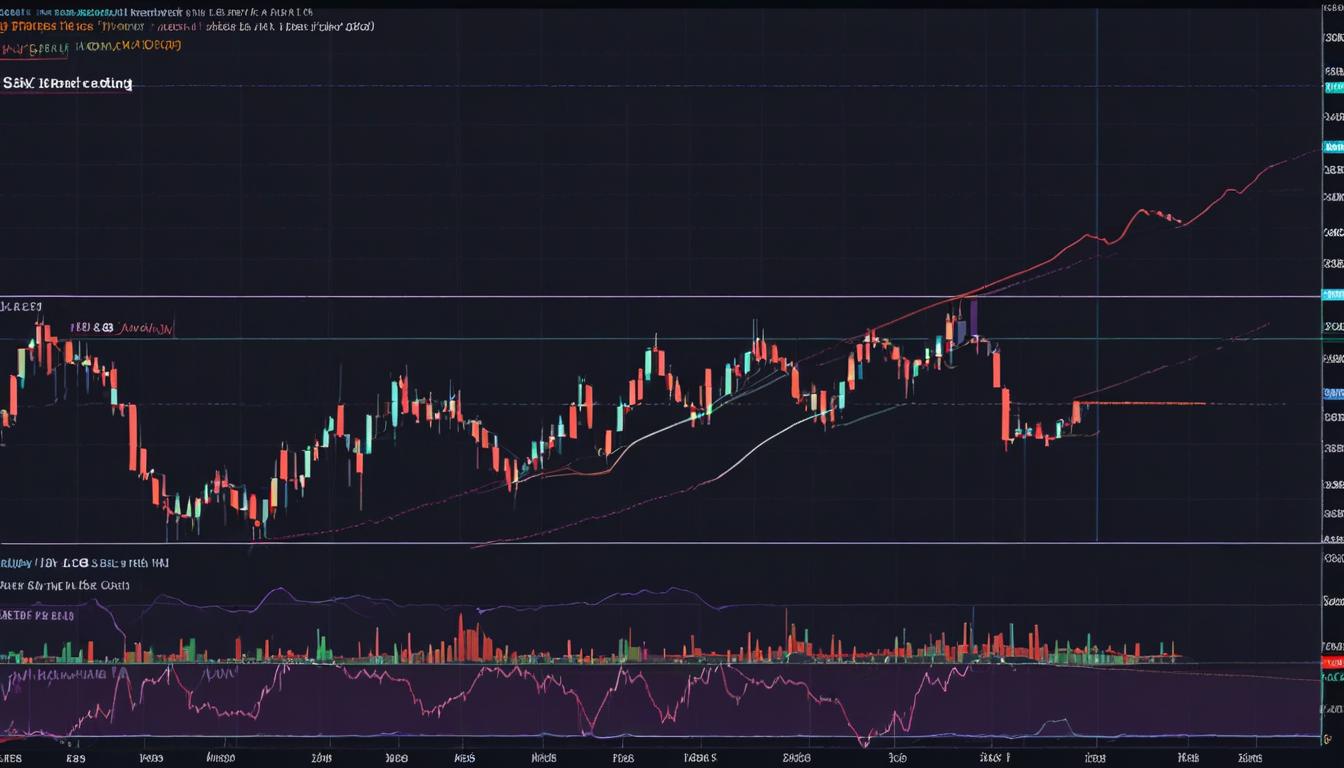
SEI's recent price action tells a compelling story. For an extended period, the token was locked in a clear descending trendline, a visual representation of persistent bearish pressure. This downward trajectory was punctuated by a series of lower highs and lower lows, a classic bearish pattern that instilled caution in many investors. However, the recent breakout above this crucial trendline marks a pivotal moment, suggesting a potential shift in market sentiment and the emergence of renewed buying pressure.
This breakout wasn't a random event; it was reinforced by several key technical indicators. Firstly, the price firmly established itself above a previously identified support level. This support level acted as a floor for the price, preventing further downward movement and signaling a possible rejection of lower prices. The successful penetration of this level indicated a significant increase in buying interest, suggesting that the bears' grip was weakening.
Further bolstering the bullish narrative is SEI's ascent above its 20-day moving average (MA). This dynamic indicator is frequently used by traders as a gauge of short-term momentum and serves as a dynamic support and resistance level. A move above the 20-day MA often suggests that the short-term trend is shifting towards bullish territory. This breach, coupled with the breakout from the descending trendline and the recovery above the support level, provides a powerful confluence of bullish signals.
The initial momentum, however, needs careful scrutiny. While these indicators point towards a potential trend reversal, we must remain cautious. Is this a genuine shift, or simply a temporary correction before the bearish trend resumes? The answer lies in observing how SEI performs as it encounters subsequent resistance levels.
Bullish Confirmation and the Crucial Retest of the EMA20
The initial breakout wasn't just a fleeting event; it was confirmed by a strong bullish candlestick pattern. This pattern, characterized by a significant price increase and a strong close above the opening price, provided visual validation of the short-term bullish momentum. Even more significantly, this bullish candlestick closed decisively above the 1-day Exponential Moving Average (EMA20).
The EMA20, being highly responsive to recent price changes, is a valuable tool for identifying short-term trend shifts. Its breach provides further evidence that the short-term momentum is undeniably bullish. But the true test of this bullish momentum came in the form of a retest. After the initial surge, SEI's price naturally pulled back, retesting the EMA20. This retest is a typical phenomenon after a breakout, serving as a confirmation of the new support level established by the EMA20.
The crucial element here is that SEI held above the EMA20 during this retest. This demonstrates that the buying pressure was strong enough to prevent a price drop below this key dynamic support. While this is encouraging, the journey is far from over. The sustainability of this bullish trend will ultimately be determined by how SEI fares against the more significant resistance levels that lie ahead.
Navigating the Resistance: Key Hurdles on SEI's Upward Trajectory
Despite the encouraging signals, the road to a confirmed bullish trend is paved with challenges. Several key resistance levels stand in SEI's path, each presenting a potential hurdle that could stifle its upward momentum. Overcoming these resistance levels is crucial for validating the bullish narrative and establishing a more sustainable upward trend.
The most immediate and significant resistance level is approximately $0.3294. This price point holds special significance because it previously acted as a support level before transforming into a resistance zone. This "support-turned-resistance" phenomenon is a common occurrence in technical analysis, reflecting a shift in market sentiment. Breaking above this level would signal a significant shift in momentum, as it would demonstrate the ability of buying pressure to overcome the resistance from previous buyers who are now looking to sell near their entry price for profit. Failure to overcome this resistance, however, could lead to a rejection and a subsequent downward retracement.
Beyond the immediate resistance at $0.3294 lies an even more formidable challenge: the 1-day EMA200, currently situated around $0.3962. The EMA200 is a widely respected long-term trend indicator. SEI's current position significantly below this EMA underscores the prevailing bearish macro trend. A successful break above the EMA200, accompanied by a sustained price action above it, would be a game-changer, signaling a potential long-term bullish reversal. Conversely, a rejection at the EMA200 would likely reinforce the bearish outlook and potentially trigger a renewed downward movement.
The Corrective Impulse: A Potential Bearish Scenario
Despite the bullish signs, it's crucial to consider the possibility that the current upward movement is merely a corrective impulse within a larger bearish trend. A corrective impulse is a temporary counter-trend move that occurs within the context of a dominant trend. In this case, SEI's rally could be a temporary retracement of previous losses before resuming its downward trajectory.
One possible explanation for this corrective impulse is the filling of an imbalance from early February. Market imbalances occur when there's a significant disparity between buyers and sellers, leading to rapid price swings. As the price moves to fill this imbalance, it might create the illusion of a stronger bullish trend than is actually present. Therefore, we must interpret the recent price action with caution, acknowledging the possibility that the upward movement is merely a temporary corrective phase.
Cautious Optimism: Avoiding Overconfidence
While the recent price action is encouraging, we must avoid overconfidence. The price remains below critical resistance levels, making it premature to declare a definitive macro bullish trend. Patric H. from CryptelligenceX, a respected voice in the crypto analysis community, accurately pointed out that SEI recently swept its August 2024 lows before bouncing back. This "liquidity sweep" triggered stop-loss orders from traders, contributing to the recent price reversal. While encouraging, this event doesn't necessarily signal a fundamental shift in market sentiment.
CryptelligenceX’s observation underscores the complexity of identifying sustainable trend reversals. The recent price action serves as a compelling case study in the nuances of altcoin trend changes, highlighting the importance of cautious analysis and the dangers of prematurely concluding a sustained bullish move based solely on initial price movements.
Strategic Trading Opportunities: Capitalizing on Volatility
The uncertainty surrounding SEI's long-term outlook doesn't negate the presence of trading opportunities. The key resistance levels discussed above offer potential shorting opportunities for traders who believe the upward movement is unsustainable. Conversely, a successful breakout above these resistance levels could trigger long positions for those anticipating further gains. This dynamic presents opportunities for both bullish and bearish strategies, making it a truly exciting period for active traders.
However, it’s crucial to emphasize that this is a trader's market, characterized by short-term price fluctuations and inherent volatility. Traders must exercise caution, utilizing appropriate risk management techniques such as stop-loss orders and carefully managing position sizes to mitigate potential losses. The market's inherent volatility could lead to sudden reversals, emphasizing the importance of careful risk management and a well-defined trading strategy.
Market Sentiment: A Divided Outlook
The current market sentiment towards SEI is distinctly mixed. Bullish traders are energized by the recent breakout and the potential for further gains, while others remain skeptical, pointing to the significant resistance levels and the possibility of a corrective impulse. This division reflects the complexity of the situation and the need for careful analysis before drawing definitive conclusions.
The short-term outlook is cautiously optimistic, contingent upon SEI maintaining its upward momentum and successfully reclaiming higher territory. However, a mid-term bullish trend requires a definitive break above the $0.3294 level. This would signal stronger commitment from buyers and increase the likelihood of sustained upward movement.
The long-term outlook remains bearish until SEI decisively surpasses the EMA200. A successful break and retest of this level would confirm a macro bullish shift, potentially signaling a significant change in the long-term trend. Until then, SEI remains a trader's market, offering both long and short opportunities at critical price points. Traders must diligently monitor resistance levels to gauge whether SEI can sustain its upward movement or face rejection at key barriers.
Conclusion: A Cautious Approach to SEI's Potential
SEI's breakout from its downtrend and its ability to overcome initial resistance levels are compelling arguments for a potential bullish reversal. However, the sustainability of this trend hinges entirely on its ability to conquer key resistance zones and establish a firm foothold above the EMA200. Until this occurs, caution is advised. Traders should remain vigilant, carefully monitoring price action, volume, and market sentiment to capitalize on both long and short opportunities while effectively managing risk. The volatile nature of the cryptocurrency market demands a balanced and informed approach, ensuring that traders can navigate the challenges and capitalize on the potential rewards.## Decoding SEI's Resistance: Identifying Price Reversal Zones
Following SEI's impressive escape from its downtrend, the immediate question on every trader's mind is: can this bullish momentum last? The answer, as it often does in the crypto world, lies in how SEI navigates a series of key resistance levels. These aren't just arbitrary numbers on a chart; they represent critical zones where buying pressure will be tested, and potential price reversals could occur. Understanding these levels is absolutely vital for anyone looking to trade SEI effectively. Think of them as the gates that SEI must conquer to prove its bullish strength. Fail to break through, and the bears could seize control once again.
Mapping SEI's Resistance Landscape: Key Levels to Watch
As SEI strives to carve out a sustained upward path, several well-defined resistance levels stand tall, acting as potential roadblocks to further gains. These resistance zones aren't plucked from thin air; they are price levels where selling pressure is anticipated to overpower buying interest, potentially triggering a price reversal. Successfully breaching these zones is paramount to validating the bullish momentum and clearing the path toward new highs. The tug-of-war between buyers and sellers at these critical price points will dictate SEI's short- to mid-term trajectory. It's a battleground where fortunes are won and lost.
The first significant resistance level to keep a close eye on sits around $0.3294. As previously mentioned, this price point previously served as a support level before morphing into a resistance zone. This "support-turned-resistance" phenomenon is a common and powerful concept in technical analysis, signaling a change in market sentiment. Imagine a floor that suddenly becomes a ceiling. The psychology behind this level is significant. Traders who initially bought at this price may now be eager to sell to break even, thereby amplifying the selling pressure. A decisive push above $0.3294 would represent a notable victory for the bulls, indicating that buying demand is robust enough to absorb the existing supply and pave the way for further appreciation. It would be a clear signal that the market's perception of SEI is shifting.
Another pivotal resistance level looms just below the 1-day EMA200 (Exponential Moving Average), currently hovering around $0.3962. The 200-day EMA is a widely recognized and respected long-term trend indicator. Its current position considerably above SEI’s price underscores the prevailing bearish macro trend. This EMA often acts as a dynamic resistance level, meaning that the price tends to encounter increased selling pressure as it approaches this moving average. Think of it as a magnet pulling the price back down. A rejection at the EMA200 could lead to the formation of a lower high, further cementing the bearish outlook and potentially sparking a renewed downtrend. Conversely, a successful reclaiming of the EMA200, coupled with sustained trading above it, would mark a major turning point, potentially signaling the dawn of a long-term bullish trend. SEI’s ability to convincingly pierce through and maintain its position above the EMA200 is, therefore, a key determinant of its long-term prospects. This is the line in the sand – cross it, and the narrative changes dramatically.
Price Reversal Showdowns: Analyzing Resistance Reactions
The presence of these resistance levels naturally introduces the possibility of price reversals, where SEI's upward momentum stalls, and the price retraces downward. These potential reversals aren't mere hypotheticals; they are rooted in the fundamental principles of supply and demand and the behavior of market participants at key price levels. A sound understanding of these potential scenarios is crucial for effective risk management and making well-informed trading decisions. Without this understanding, you're essentially trading blind.
Imagine SEI approaching the $0.3294 resistance level and encountering a wall of selling pressure. A rejection could unfold, manifesting as a failure to break through the resistance, followed by a downward price movement. Traders who are shorting SEI may perceive this as an opportunity to bolster their positions, anticipating further declines. The magnitude of the downward retracement would hinge on the strength of the selling pressure and the presence of any underlying support levels. A breach below the immediate support level could trigger a test of lower support zones, potentially erasing a significant portion of the recent gains. This is where stop-loss orders become your best friend.
Similarly, a rejection at the 1-day EMA200 could ignite a more substantial price reversal. Given the long-term significance of the EMA200, a failure to overcome this level would be interpreted as a bearish signal by many traders. This could trigger a cascade of selling, potentially driving the price back down to previous lows or even lower. The EMA200 rejection scenario underscores the critical importance of patience and confirmation. Traders shouldn't assume that SEI will automatically slice through this level. Instead, they should patiently await clear evidence of sustained buying pressure before committing to long positions. It’s about playing the probabilities, not making assumptions.
Let’s illustrate with a hypothetical scenario: Suppose SEI approaches the $0.3294 resistance. If we observe a significant increase in sell orders in the order book right before hitting that level, alongside a decrease in buying volume, it's a good indication that the resistance will hold. Conversely, if we see the buy orders stacking up and a surge in buying volume, the probability of a breakout increases.
The Influence of Market Winds: How External Factors Sway Price Action
The overall market conditions exert a significant influence on the likelihood and severity of potential price reversals at resistance levels. Favorable market conditions, such as a broad-based crypto rally or positive news specific to SEI, could provide the tailwind needed to propel the price past resistance. Conversely, unfavorable market conditions, such as a market-wide correction or negative news concerning SEI, could exacerbate selling pressure and increase the likelihood of a rejection. The crypto market is rarely an isolated ecosystem; it’s interconnected.
For example, if Bitcoin, the leading cryptocurrency, experiences a significant downturn, it could drag down the entire crypto market, including SEI. In this scenario, even if SEI has robust underlying fundamentals, it may struggle to overcome resistance levels due to the prevailing bearish sentiment. It's like swimming against the tide. Conversely, if Bitcoin embarks on a strong rally, it could lift the entire market, providing SEI with the momentum needed to break through resistance and reach new highs. A rising tide lifts all boats, as the saying goes.
Furthermore, news and events specific to SEI can also significantly impact its price action. Positive news, such as a major partnership announcement or a successful product launch, could attract new buyers and drive the price higher. Think of it as fuel being added to the fire. Conversely, negative news, such as a security breach or regulatory concerns, could trigger selling pressure and lead to a price reversal. Keeping abreast of the news is just as important as analyzing the charts.
Consider this scenario: SEI is about to test the $0.3294 resistance. Simultaneously, a major exchange announces support for SEI trading pairs. This positive news could inject significant buying pressure, increasing the likelihood of a breakout. Conversely, if rumors circulate about regulatory scrutiny of SEI, it could dampen the enthusiasm, making a rejection at resistance more probable.
Volume and Order Book Insights: Unveiling Hidden Market Dynamics
In addition to price levels and market conditions, monitoring volume and order book activity can provide valuable insights into the potential for price reversals at resistance levels. Volume refers to the number of SEI tokens traded during a specific period. A surge in volume as the price approaches a resistance level can indicate heightened interest and a potential battle between buyers and sellers. It's like a crowd gathering before a big event.
If the volume is predominantly on the buying side, it suggests that buyers are aggressively trying to overcome the resistance. This increases the likelihood of a breakout. It’s a sign of conviction. Conversely, if the volume is predominantly on the selling side, it suggests that sellers are actively defending the resistance. This increases the likelihood of a rejection and a price reversal. It’s a defensive stand.
The order book, which displays the pending buy and sell orders at various price levels, can also provide clues about the potential for a reversal. A large number of sell orders clustered around a resistance level indicates strong selling pressure and a higher probability of rejection. Conversely, a thin order book with few sell orders suggests that the resistance may be weaker and easier to overcome. Analyzing the order book depth and the concentration of buy and sell orders can provide a more nuanced understanding of the market dynamics at play. It's like peering behind the curtain to see what the big players are planning.
Imagine the following: As SEI approaches the $0.3294 resistance, you notice a massive sell wall forming in the order book – a huge number of sell orders clustered right at that price point. This is a strong indication that the resistance will be difficult to break. Conversely, if the order book is relatively thin above the resistance, with only a few sell orders, it suggests that a breakout is more likely.
Trading Resistance: Navigating the Breakout vs. Reversal Dilemma
Trading resistance levels necessitates a disciplined approach and a comprehensive understanding of risk management. There are two primary strategies for trading resistance levels: breakout trading and reversal trading. Each strategy caters to a different expectation of how the price will react at the resistance level.
Breakout trading involves anticipating a break above the resistance level and entering a long position once the breakout is confirmed. This strategy is predicated on the assumption that a successful breakout will lead to further price appreciation. To confirm a breakout, traders typically look for a sustained price movement above the resistance level, accompanied by a surge in volume. This surge in volume validates the strength of the breakout. Stop-loss orders should be strategically placed below the resistance level to limit potential losses in case the breakout fails. Think of it as having a safety net.
Reversal trading involves anticipating a rejection at the resistance level and entering a short position. This strategy is based on the assumption that the resistance will hold, and the price will retrace downward. To identify potential reversal signals, traders often use technical indicators such as candlestick patterns, oscillators, and moving averages. These indicators help to pinpoint potential turning points. Stop-loss orders should be placed above the resistance level to limit potential losses in case the price unexpectedly breaks above the resistance.
Both breakout trading and reversal trading carry inherent risks. Breakout trading can be susceptible to false breakouts, where the price briefly breaks above the resistance before quickly reversing. This can trigger your stop-loss and leave you on the wrong side of the trade. Reversal trading can be risky if the resistance level is eventually broken, leading to significant losses. Therefore, it's crucial to employ proper risk management techniques, such as setting stop-loss orders and carefully managing position size, to protect your capital. It’s about staying in the game long-term.
Let’s consider an example: You're eyeing a potential breakout trade at the $0.3294 resistance. You wait for the price to break above the resistance with strong volume, confirming the breakout. You then enter a long position, placing your stop-loss just below the resistance level. Alternatively, if you're anticipating a reversal, you might look for bearish candlestick patterns forming near the resistance, confirming your short entry and placing your stop-loss just above the resistance.
Patience and Confirmation: The Cornerstones of Successful Trading
In the volatile realm of cryptocurrency trading, patience and confirmation are paramount virtues. It's often tempting to jump into a trade prematurely, based on incomplete information or gut feelings. However, a more prudent approach is to wait for clear confirmation of a trend or pattern before committing capital. Rushing in can lead to costly mistakes.
When trading resistance levels, patience entails waiting for the price to approach the resistance level and observing the market's reaction. It means resisting the urge to rush into a trade based solely on anticipation. Confirmation entails seeking evidence that supports your trading thesis. This evidence could include a sustained price movement above the resistance level, a surge in volume, or a confluence of confirming technical indicators. By waiting for confirmation, traders can significantly mitigate the risk of being caught on the wrong side of a trade. It's about letting the market show its hand before you make your move.
Let's say you believe SEI will break the $0.3294 resistance. Instead of entering a long position right before it hits the resistance, wait for it to break above, retest the previous resistance as a support level, and then confirm the bounce with strong volume. This confirmation minimizes the risk of a false breakout.
Conclusion: Conquering Resistance for Sustained Gains
Successfully navigating key resistance levels is critical for SEI to sustain its potential bullish trend. These levels pose significant hurdles that will test the strength of the buying pressure and the determination of the bulls. While a breakout above these levels could pave the way for further gains, a rejection could lead to a price reversal and a renewed downtrend. Traders and investors must diligently monitor these levels, analyze market conditions, and employ appropriate risk management strategies to capitalize on SEI's next move. As SEI tackles these resistance zones, its ability to overcome these challenges will ultimately determine whether its recent breakout marks the beginning of a sustained uptrend or merely a temporary pause in a longer-term bearish cycle. The battle for SEI’s future is being waged at these critical price points. Stay informed, be patient, and trade wisely.## Decoding SEI's Market Dynamics: Sentiment, Volume, and the Road Ahead
The recent breakout of SEI from its established descending trendline has sparked a flurry of activity and ignited a complex interplay of market sentiment, trading volume, and future price projections. While the price action undeniably hints at a potential bullish reversal, seasoned crypto analysts like myself know that declaring a sustained upward trend prematurely would be a grave error. A nuanced analysis, considering all contributing factors, is crucial before making any investment decisions. Let's delve into the intricate details to craft a more comprehensive perspective on SEI's short-term and long-term prospects.
Gauging Market Sentiment: A Tale of Two Sides
The market sentiment surrounding SEI is currently a fascinating dichotomy, reflecting the inherent volatility of the cryptocurrency landscape. The successful breach of the descending trendline and the subsequent rally have undeniably energized bullish traders, injecting a surge of optimism into the market. Social media platforms and online forums echo this enthusiasm, overflowing with positive commentary. Many traders, myself included, point to the potential for further gains, supported by the technical indicators discussed in detail in the previous section. The successful retest of the 20-day EMA further reinforces this short-term bullish momentum, indicating a strengthening of support at this level. This is a crucial factor to consider. Remember, the 20-day EMA is a highly sensitive indicator reflecting recent price changes; its retest as support is a robust sign of short-term strength.
However, this wave of bullish sentiment is far from universal. A significant contingent of market participants remains cautiously skeptical, correctly highlighting several key resistance levels that could easily stifle any further upward movement. The persistent fact that SEI remains below the all-important 200-day EMA underscores the overarching bearish macro trend. This perspective suggests that the recent rally might merely be a corrective impulse within a larger, predominantly bearish context. This interpretation challenges the narrative of a full-blown trend reversal. The skepticism is especially prevalent among veteran analysts who, like myself, emphasize the potential for a significant price retracement if these crucial resistance levels are not decisively overcome.
This cautious outlook is further fuelled by the recognition that the current price action could be simply filling an imbalance from earlier in the year, a phenomenon previously discussed in detail earlier in this analysis. Therefore, as a professional analyst, I must emphasize the critical importance of considering both sides of the sentiment spectrum, acknowledging that a truly robust and accurate analysis requires a balanced perspective, accounting for both the fervent optimism and the justified skepticism. Ignoring either camp would be a critical flaw in any assessment.
Deciphering Trading Volume: A Window into Market Strength
Analyzing trading volume provides invaluable insights into the strength and, perhaps more importantly, the sustainability of SEI's recent price movement. While precise numerical volume figures are beyond the scope of this immediate analysis (detailed volume data is usually accessed through dedicated trading platforms), observing the general trend relative to price fluctuations reveals critical information. The initial breakout from the descending trendline undoubtedly saw a significant surge in trading volume, suggesting robust participation and undeniably strong buying pressure. This observation aligns perfectly with the bullish candlestick patterns described earlier in the article. But it's crucial to remember that merely observing an initial volume spike doesn't guarantee sustained momentum. Maintaining this upward trajectory necessitates consistent, high-volume trading, especially as SEI approaches and attempts to breach those key resistance levels.
Any decrease in trading volume during subsequent price increases would serve as a powerful warning sign, indicating a weakening of buying pressure and an escalating risk of a price reversal. Conversely, the sustained high volume alongside continued price appreciation would significantly bolster the bullish argument, demonstrating concrete market conviction and a strong underlying demand for the token. Therefore, a seasoned analyst, such as myself, emphasizes the importance of carefully monitoring volume fluctuations in conjunction with price action to truly gauge the health and long-term viability of this upward trajectory. A decline in volume paired with price increases is a red flag demanding caution, while the opposite scenario – sustained high volume alongside price increases – is a powerful confirmation of a bullish trend. While precise volume numbers are unavailable in this context, the general trend of volume relative to price changes remains an exceptionally crucial element in this analysis.
Factors Shaping SEI's Future Trajectory: A Multifaceted Approach
Several crucial factors will undoubtedly influence SEI's future price movements, impacting both the short-term and long-term trajectory. First and foremost, the ability to successfully navigate those key resistance levels is paramount. The $0.3294 level and the 200-day EMA represent critical barriers. Consistently overcoming these resistance levels, supported by sustained high volume, would powerfully suggest a genuine shift towards a more firmly established, long-term bullish trend. Failure to do so, however, significantly increases the probability of a price retracement, possibly even a return to the previous downtrend. This is a critical juncture where the strength of the bullish momentum will be definitively tested.
Secondly, the overall cryptocurrency market conditions play an undeniable role. A broad-based crypto market rally would undoubtedly provide significant tailwinds for SEI, increasing the likelihood of a successful breakout above the mentioned resistance levels. Conversely, a market-wide correction could severely impede SEI's upward momentum, even if the token displays internal strength. The interconnected nature of the cryptocurrency market cannot be overstated; SEI's performance is intricately linked to the broader market sentiment and overall health of the crypto space. As a seasoned analyst, I closely monitor the wider market trends to understand their influence on individual tokens.
Thirdly, and finally, specific news and events directly related to SEI, including partnerships, product developments, or regulatory announcements, will have a direct and often immediate impact. Positive news will undoubtedly attract further investment and fuel price appreciation, while negative news could trigger significant selling pressure and potentially sharp price drops. Therefore, staying informed about both the general cryptocurrency market environment and all SEI-specific developments is essential for informed decision-making and formulating accurate price predictions. Neglecting any of these elements would lead to an incomplete and potentially misleading analysis.
Navigating the Outlook: Short-Term Cautious Optimism, Long-Term Uncertainty
The short-term outlook for SEI appears cautiously optimistic, contingent upon the maintenance of the current upward momentum. Successfully breaking above the $0.3294 resistance level, coupled with sustained high volume, significantly increases the likelihood of further short-term gains. However, failure to clear this crucial resistance could easily result in a short-term price correction, or even a disheartening return to previous support levels. This highlights the importance of risk management and setting appropriate stop-loss orders.
The long-term outlook is considerably less certain, heavily reliant on SEI's ability to definitively overcome the 200-day EMA. A sustained break above this level, accompanied by strong volume, would powerfully suggest a bullish macro trend reversal. However, until this critical level is decisively cleared and then convincingly retested as support, the macro trend remains bearish. This underscores the significance of this resistance level and how its breach is crucial for changing the overall market sentiment surrounding SEI. A sustained long-term bullish trend hinges entirely on breaking and holding above the 200-day EMA. Failure to do so significantly raises the probability of a prolonged period of price consolidation, or even a frustrating return to the previous downtrend. The market remains inherently volatile, and both scenarios possess a reasonable probability.
In conclusion, while SEI's recent breakout offers grounds for cautious short-term optimism, the long-term trajectory remains heavily dependent on its capacity to overcome significant resistance levels and maintain sustained trading volume amidst the ever-evolving market conditions and SEI-specific news. Continuous monitoring of price action, volume, market sentiment, and all relevant announcements is absolutely crucial for making well-informed decisions concerning SEI. This necessitates a diligent approach and a commitment to staying informed about the multifaceted factors impacting this token's performance. Remember, in the dynamic world of cryptocurrency, constant vigilance is key.## SEI Token: Breakout or Bear Trap? Analyzing Technicals and Sentiment
The recent SEI token price surge raises questions: is this a genuine bullish reversal or a temporary correction? This analysis examines technical indicators and market sentiment to provide a clearer picture.
Key Takeaways:
- SEI broke a descending trendline, supported by key technical indicators (above support, 20-day MA).
- A successful retest of the EMA20 confirms short-term bullish momentum, but major resistance at ~$0.3294 and the EMA200 (~$0.3962) needs to be cleared for long-term confirmation.
- Market sentiment is mixed; while bullish traders celebrate the breakout, skepticism remains due to the potential for a corrective impulse within a larger bearish trend. Volume is crucial; sustained high volume alongside price increases would support the bullish case.
#EMA200 #Altcoin analysis #trading strategy #SEI token #Price Prediction #Market sentiment #Technical Analysis #Cryptocurrency #Breakout #Crypto Trading #Resistance Levels