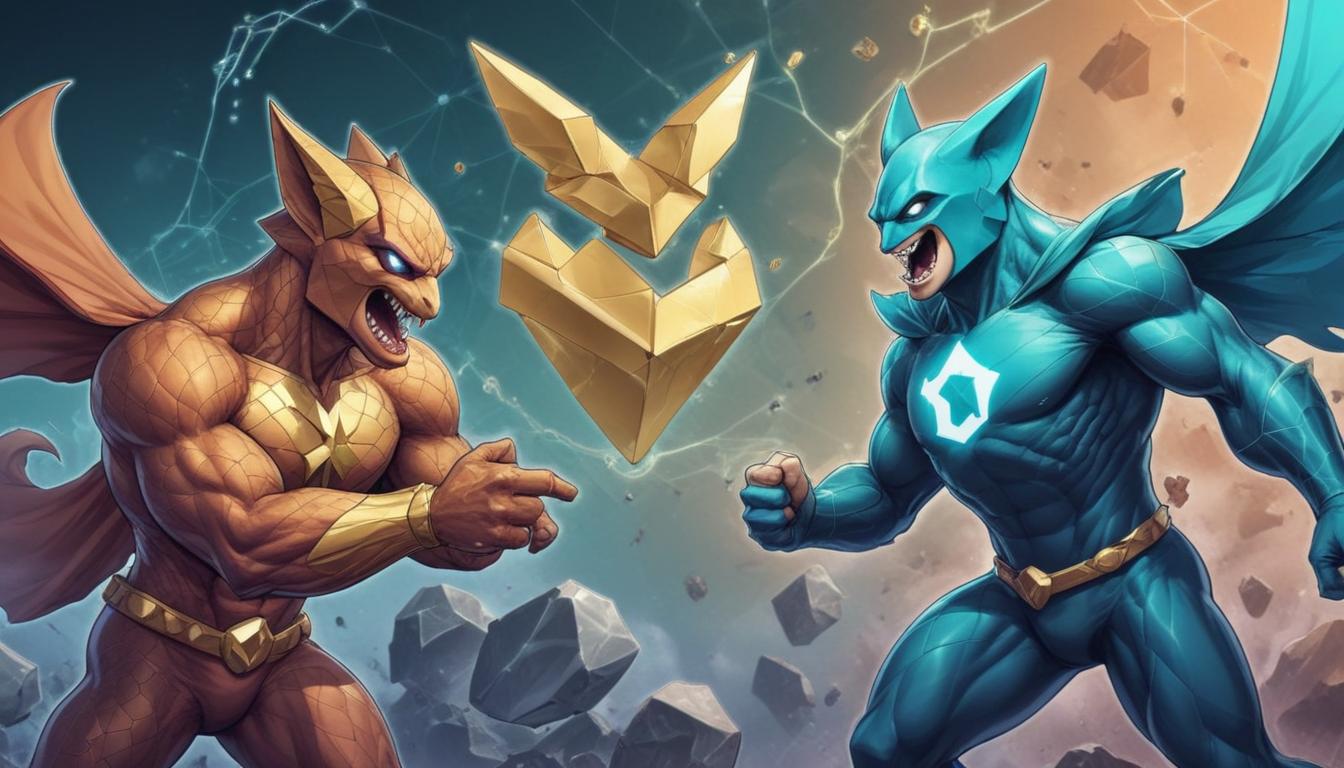
Toncoin: Telegram Integration—A Double-Edged Sword?
Toncoin (TON) aimed to leverage Telegram's massive user base through direct integration. While this integration offers transactional advantages, it reveals limitations compared to platforms prioritizing immediate user engagement and reward mechanisms. This analysis explores Toncoin's Telegram integration, its effectiveness in scaling and adoption, and why its user acquisition lags behind platforms like Dragoin, a game-based platform within Telegram. We'll delve into the strategies employed, scalability features, and user onboarding experiences to understand Toncoin's current position and its potential for future growth.
Toncoin's Telegram Integration Strategy: A Transactional Focus
The TON Foundation, building upon the initial Telegram development, envisioned Toncoin as a Layer-1 blockchain tightly integrated with Telegram. This aimed to provide seamless wallet tools and payment features within the chat interface, onboarding millions of Telegram users. The core concept was frictionless, everyday cryptocurrency transactions.
However, the integration primarily focuses on transactional functionality, lacking engaging activities. While technically sound, this approach underdelivers compared to the immediate gratification and incentivized participation found in platforms like Dragoin. This crucial difference impacts user acquisition and long-term retention.
Lee también: Dragoin: The Simplest Way to Earn Crypto on Telegram? $DDGN Presale Inside!
Scalability and Market Adoption: A Comparative Perspective
Toncoin was designed for speed and scalability as a Layer-1 blockchain. Yet, its scalability hasn't translated into widespread market adoption, unlike some competitors. This section explores the reasons behind this discrepancy, comparing Toncoin’s approach to that of other successful projects.
Lee también: Dragoin: The Simplest Way to Earn Crypto on Telegram? $DDGN Presale Inside!
User Onboarding: Dragoin's Engaging Approach vs. Toncoin's Transactional Focus
Dragoin stands out with its engaging user onboarding experience. Integrating a tap-based game directly into Telegram, users instantly earn tokens without complex setups or technical barriers. This ease of access and immediate reward system encourages participation and community building.
In contrast, Toncoin prioritizes transactions. While users access wallet tools and payments within Telegram, the platform lacks the immediate gratification and incentivized engagement of Dragoin. This difference significantly impacts user acquisition and retention, as casual users gravitate toward immediate rewards and engaging activities. Learn more about Dragoin's innovative approach in our detailed analysis.
Bridging the User Engagement Gap: Recommendations for Toncoin
To improve user engagement, Toncoin should integrate more engaging activities and reward mechanisms into its Telegram integration. Implementing play-to-earn features or other incentivized activities could attract a broader user base and foster a more active community.
By learning from platforms like Dragoin, Toncoin can prioritize user onboarding and simplify the process of earning rewards. Focusing on immediate gratification and engaging activities will enhance user acquisition and strengthen its market position. Ultimately, Toncoin's success depends on not just facilitating transactions, but creating a compelling and engaging user experience within the Telegram ecosystem. Prioritizing user engagement and immediate rewards will unlock its full potential and attract a wider audience.
In conclusion, while Toncoin's Telegram integration enables seamless transactions, its limitations in user acquisition highlight the importance of incentivized engagement and immediate rewards. By learning from platforms like Dragoin and focusing on user experience improvements, Toncoin can enhance its market position and broaden its appeal to a much larger audience.
StarkNet: Balancing Technical Excellence with Usability for Mainstream Adoption
StarkNet's ambitious goal—to scale Ethereum using its innovative zero-knowledge rollup (ZK-rollup) technology—is undeniably bold. Its sophisticated architecture represents a significant advancement in blockchain scalability, providing a compelling alternative to Layer-1 solutions struggling with transaction throughput limitations. However, this technical prowess is unfortunately hampered by considerable usability challenges that impede widespread adoption, a stark contrast to platforms prioritizing simpler user experiences like Dragoin. Understanding this duality is crucial for assessing StarkNet's place in the cryptocurrency landscape and its future growth potential.
StarkNet's ZK-Rollup Architecture: A Deep Dive
StarkNet's scalability solution centers on its ZK-rollup implementation. Unlike optimistic rollups, which rely on fraud proofs, ZK-rollups use cryptographic proofs to verify transaction validity off-chain. This eliminates the need for expensive and time-consuming on-chain validation of every Ethereum transaction. StarkNet employs STARKs (Scalable Transparent ARguments of Knowledge), known for their scalability and security. These proofs batch numerous transactions into a single, concise proof, drastically reducing the data processed on the main chain, resulting in faster transaction times and lower gas fees—major Ethereum pain points.
The system uses a Cairo-based virtual machine (VM), specifically designed for smart contracts utilizing STARKs' efficiency. While Cairo prioritizes secure and verifiable applications, its learning curve presents a significant hurdle for developers accustomed to established languages like Solidity. This reliance on a relatively niche language contributes to the complexity of StarkNet development and deployment.
StarkNet's modularity, while offering implementation flexibility, also adds complexity. Developers need a deep understanding of Cairo, the StarkNet architecture, and the nuances of ZK-rollups for effective application building and deployment. This high barrier to entry limits developer contributions and hinders the development of diverse, user-friendly decentralized applications (dApps).
Usability Challenges: Bridging the Gap Between Technology and Adoption
Despite StarkNet's impressive technical capabilities, its user experience suffers from several critical flaws. The primary obstacle is the complexity of interacting with the platform. Unlike Dragoin's intuitive, game-based Telegram interface, StarkNet requires familiarity with cryptographic concepts, specialized wallets, and potentially complex bridging mechanisms. This presents a substantial barrier for average users. The process of setting up a wallet, bridging assets from Ethereum, and navigating the StarkNet interface can be daunting, even for experienced cryptocurrency users.
Another key issue is the limited availability of user-friendly tools and applications. While StarkNet's underlying technology is powerful, its ecosystem lacks the breadth and depth of user-friendly dApps found on more established platforms. This scarcity, directly linked to the steep learning curve of Cairo and the platform's overall complexity, limits its appeal to casual users. The user base remains primarily developers and tech-savvy individuals, restricting mainstream adoption.
The lack of robust educational resources further exacerbates these usability challenges. Understanding the intricacies of ZK-rollups, Cairo, and the StarkNet ecosystem requires significant time and effort. The absence of easily accessible, comprehensive tutorials and documentation isolates the platform from a broader audience. While community support exists, it primarily caters to technically skilled users, leaving casual users struggling to navigate the platform independently.
StarkNet vs. Dragoin: Contrasting Approaches to User Acquisition
The comparison between StarkNet and Dragoin starkly illustrates the tension between technological innovation and ease of use. Dragoin’s success stems from its focus on creating an accessible and engaging user experience. Its Telegram integration, combined with simple, reward-driven game mechanics, eliminates much of the friction typically associated with cryptocurrency interaction. This straightforward approach contrasts sharply with StarkNet's technically demanding nature. While StarkNet offers significant scalability advancements, its complexities deter casual users who prefer immediate gratification and user-friendly interfaces.
Dragoin leverages Telegram's familiarity and an immediate reward system to cultivate a large and engaged user base. This highlights a crucial lesson: while innovative technology is vital, ease of use and user engagement are equally essential for widespread adoption. StarkNet's technological advancements, while significant, remain largely inaccessible to the mainstream audience without substantial improvements to its user experience.
The Path to Broader StarkNet Adoption: Actionable Strategies
StarkNet's technical achievements in scaling Ethereum are noteworthy, but its complex architecture and limited user-friendly applications significantly hinder its mainstream adoption potential. To achieve its scalability goals, the platform must prioritize addressing usability challenges through:
- Simplified User Onboarding: Streamlining the process of setting up wallets, bridging assets, and navigating the platform.
- Intuitive Interfaces: Designing more user-friendly interfaces that require minimal technical expertise.
- Comprehensive Educational Resources: Investing in easily accessible tutorials, documentation, and educational materials catering to a wide range of technical skill levels.
- Incentivized User Engagement: Exploring reward mechanisms and engaging features to encourage user participation and community growth. Consider incorporating gamification elements, similar to Dragoin's successful approach.
- Expansion of the DApp Ecosystem: Actively fostering the development and deployment of user-friendly dApps to attract a broader user base.
Without these improvements, StarkNet risks remaining a niche technology appreciated primarily by developers and technically inclined users, while platforms like Dragoin capture a larger market share through user-friendly design and engaging user acquisition strategies. The challenge for StarkNet is bridging the gap between its technological prowess and the need for a dramatically improved user experience to realize its full scalability potential. Ultimately, success depends on appealing not just to developers, but also to the average user.
Comparing Toncoin and StarkNet: Scalability, User Experience, and Market Position
Toncoin and StarkNet represent distinct visions for the future of blockchain technology, each tackling the critical challenges of scalability, user experience, and market adoption with unique approaches. Toncoin capitalizes on Telegram's existing infrastructure to offer seamless integration and ease of use, while StarkNet pioneers zero-knowledge (ZK) rollups to significantly enhance Ethereum's transaction processing capabilities. A detailed comparison of these strategies reveals valuable insights into the complexities of achieving widespread blockchain adoption.
Scalability Strategies: Layer-1 vs. Layer-2 Architectures
Toncoin operates as a Layer-1 blockchain, designed with native scalability features to handle a high volume of transactions directly on its network. The goal is to minimize congestion and ensure rapid transaction processing without relying on secondary layers. This approach makes Toncoin suitable for applications demanding instant, high-throughput transactions, particularly within the Telegram ecosystem. Toncoin's scalability is governed by its internal mechanisms and consensus protocols.
In contrast, StarkNet functions as a Layer-2 scaling solution specifically for Ethereum. It processes transactions off-chain using ZK-rollups and then posts cryptographic proofs to the Ethereum mainnet. This strategy leverages Ethereum's robust security while dramatically increasing transaction speeds and reducing gas fees. StarkNet is well-suited for applications requiring the security and decentralization of Ethereum but demanding significantly higher transaction processing capabilities than the Ethereum mainnet can natively provide. StarkNet's scalability is intrinsically linked to Ethereum's capabilities and the efficiency of its ZK-rollup implementation.
The choice between a Layer-1 and Layer-2 approach depends largely on the specific application requirements. If the application prioritizes independence and high throughput within a closed ecosystem, a Layer-1 solution like Toncoin may be preferable. However, if the application prioritizes leveraging Ethereum's security and decentralization while requiring enhanced scalability, a Layer-2 solution like StarkNet is more appropriate.
User Experience: Prioritizing Accessibility vs. Technical Innovation
Toncoin's key advantage lies in its seamless integration with Telegram, aiming to make cryptocurrency transactions as intuitive as sending a message. By embedding wallet functionalities directly within the Telegram app, Toncoin seeks to eliminate the complexities associated with traditional cryptocurrency wallets and onboarding processes. This streamlined approach significantly lowers the barrier to entry for millions of Telegram users, potentially converting them into active participants in the Toncoin ecosystem. The focus is on accessibility and ease of use for a broad audience.
StarkNet, conversely, presents a more challenging user experience. Interacting with StarkNet requires users to understand concepts like ZK-rollups, Cairo (StarkNet's programming language), and the process of bridging assets between Ethereum and StarkNet. This complexity, coupled with the relative immaturity of the StarkNet ecosystem, creates usability hurdles for non-technical users. While StarkNet offers substantial scalability improvements, its focus on technical innovation has, to some extent, overshadowed the need for a user-friendly interface. The need for specialized wallets and bridging mechanisms introduces additional friction.
Platforms that prioritize user engagement and immediate rewards, exemplify the importance of simplifying the user experience. These platforms demonstrate that a user-friendly interface and intuitive design are critical for driving adoption and fostering active participation, a lesson StarkNet could benefit from.
Market Position and Adoption Rates: Building on Existing Infrastructure vs. Pioneering New Technology
Toncoin's market position is significantly influenced by its close association with Telegram. It benefits from Telegram's expansive user base and the potential to become the default cryptocurrency for transactions within the app. However, its adoption rate is contingent on Telegram's continued growth and the successful integration of engaging applications that incentivize users to actively participate in the Toncoin ecosystem. The challenge for Toncoin is to evolve beyond a purely transactional focus and create a compelling user experience that attracts and retains a broad audience.
StarkNet is positioned as a leading Layer-2 scaling solution for Ethereum, driven by the increasing demand for faster and cheaper Ethereum transactions. While StarkNet's technology is highly promising, its adoption rate is currently limited by its complexity and the relative scarcity of user-friendly applications. The platform's success hinges on its ability to bridge the gap between its technical prowess and the need for a significantly improved user experience. As the StarkNet ecosystem matures and more accessible tools and applications become available, its adoption rate is expected to increase. However, it faces competition from other Layer-2 scaling solutions, such as Arbitrum and Optimism.
The market position of both Toncoin and StarkNet will ultimately be determined by their ability to effectively address the challenges of scalability, user experience, and ecosystem development. Toncoin leverages Telegram's existing infrastructure to facilitate seamless integration, while StarkNet pioneers zero-knowledge rollups to enhance Ethereum's transaction throughput. The long-term success of each platform depends on delivering a compelling value proposition to both users and developers.
Factors Influencing User Adoption: Network Effects, Usability, and Ecosystem Development
Several key factors contribute to the differences in user adoption rates between Toncoin and StarkNet:
- Network Effects: Toncoin benefits significantly from the network effect of Telegram's vast user base, providing a built-in audience and potential user base.
- Usability: Toncoin's integration of wallet functionalities within the Telegram app simplifies the onboarding process, making it easier for users to start using the cryptocurrency without navigating complex setups or technical barriers. StarkNet, on the other hand, faces usability challenges due to its complexity and the technical knowledge required to interact with the platform.
- Ecosystem Development: The availability of diverse and user-friendly applications and services within each ecosystem plays a crucial role in attracting and retaining users. A robust ecosystem encourages participation and provides utility for the underlying cryptocurrency.
- Awareness and Education: The level of awareness and understanding of each platform among potential users influences adoption rates. Clear and accessible educational resources can help overcome knowledge barriers and encourage participation.
- Community Support: A strong and active community provides support, resources, and a sense of belonging for users, fostering engagement and driving adoption.
- Security and Reliability: The perceived security and reliability of each platform are critical for building trust and encouraging users to adopt the technology.
- Regulatory Environment: The regulatory environment surrounding cryptocurrency and blockchain technology in different jurisdictions can significantly impact adoption rates, creating either barriers or opportunities for growth.
These factors collectively influence the differences in user adoption rates between Toncoin and StarkNet, highlighting the importance of a holistic approach that considers both technical capabilities and user-centric design.
Synergies and Future Directions: Learning from Each Other
While Toncoin and StarkNet represent distinct approaches to blockchain scalability and user adoption, potential synergies could benefit both platforms. Toncoin could leverage StarkNet's ZK-rollup technology to further enhance its scalability and reduce transaction fees, particularly for applications requiring high throughput and low latency.
StarkNet, on the other hand, could learn from Toncoin's focus on user experience and seamless integration. By simplifying the user onboarding process and developing more intuitive interfaces, StarkNet could attract a broader range of users and foster a more active community. The platform could also explore integrating with messaging platforms like Telegram to leverage their existing user bases and tap into established network effects.
The future success of both Toncoin and StarkNet depends on their ability to adapt to the evolving needs of the blockchain ecosystem and collaborate with other projects to create a more interconnected and user-friendly landscape. The competition between these platforms is not a zero-sum game but rather a catalyst for innovation and progress that benefits the entire blockchain community. By learning from each other and focusing on their respective strengths, Toncoin and StarkNet can play a crucial role in shaping the future of blockchain technology.
Market Data Analysis: Interpreting Trends and Observations
While specific real-time market data and charts are dynamic, general trends and observations can be made to illustrate the comparative market positions of Toncoin and StarkNet:
-
Toncoin: Market data often reflects the impact of Telegram-related announcements and integrations. Positive news regarding Telegram's adoption of Toncoin features typically leads to increased trading volume and price appreciation. The coin's performance is also influenced by the overall sentiment in the cryptocurrency market and the performance of other Layer-1 blockchains. Visualizations of Toncoin's price history often correlate with key announcements related to its Telegram integration, reflecting the platform's reliance on its partnership. Analyzing trading volumes and price correlations around these events provides valuable insight into market sentiment and adoption trends.
-
StarkNet: Market data for StarkNet, while potentially less directly linked to a single platform like Telegram, reflects the overall interest in Ethereum Layer-2 scaling solutions. Its performance is often compared to other prominent Layer-2 solutions like Arbitrum and Optimism. Charts depicting the total value locked (TVL) in StarkNet's ecosystem can provide insights into the platform's adoption among developers and users. Increases in TVL typically indicate growing confidence in the platform's capabilities and potential. Comparing StarkNet's TVL and transaction volume to other Layer-2 solutions offers valuable insights into its competitive positioning and market share.
It is crucial to remember that cryptocurrency markets are highly volatile and subject to rapid fluctuations. Market data and charts should be interpreted with caution and should not be considered investment advice. These tools should be used to observe trends and comparative performance, but not as definitive predictors of future success.
In conclusion, Toncoin and StarkNet represent distinct yet compelling approaches to blockchain scalability and user adoption. Toncoin leverages Telegram's existing infrastructure for seamless integration, appealing to a broad user base within a familiar environment. StarkNet pioneers zero-knowledge rollups to enhance Ethereum's transaction throughput, positioning itself as a leading Layer-2 scaling solution. The long-term success of each platform depends on its ability to address the inherent challenges of scalability, user experience, and ecosystem development. By understanding the strengths and weaknesses of each approach, users and developers can make informed decisions about which platform best suits their needs and contributes to the evolution of the blockchain landscape.
Toncoin & StarkNet: A Tale of Two Scaling Strategies
This article compares Toncoin's Telegram integration with StarkNet's ZK-rollup approach, highlighting their contrasting strategies for scalability and user acquisition. Understanding these differences is crucial for navigating the evolving cryptocurrency landscape.
Key Takeaways:
- Toncoin's Telegram integration prioritizes transactional simplicity but lacks the engaging features driving user acquisition seen in platforms like Dragoin.
- StarkNet's advanced ZK-rollup technology offers superior scalability but suffers from usability challenges that hinder mainstream adoption.
- Both platforms can benefit from incorporating elements of each other's strengths: Toncoin could improve user engagement, while StarkNet needs to enhance usability and user onboarding.
#Toncoin Telegram Integration Scalability #Dragoin User Engagement #Blockchain Comparison #Ethereum Scaling #Crypto Adoption