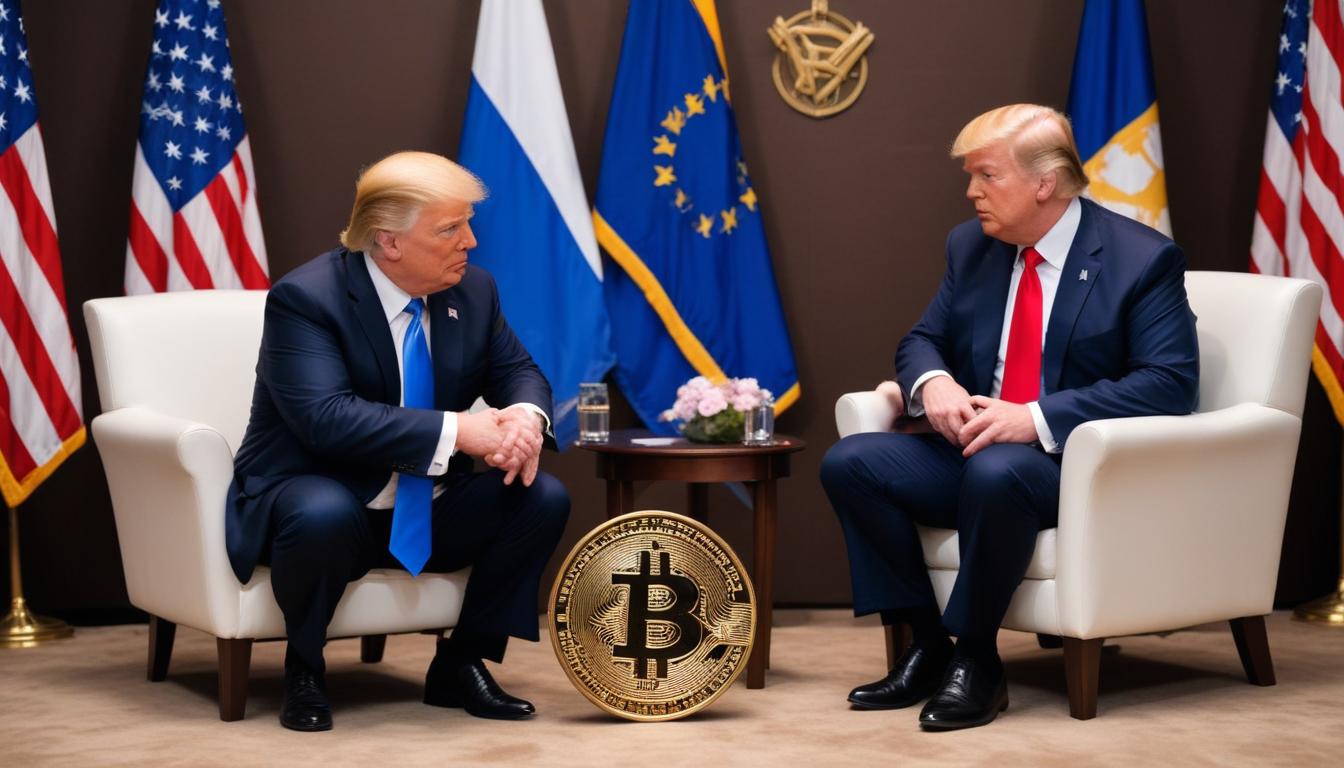
The Trump-Bukele Summit: Geopolitics Trumped Bitcoin
The April 14th, 2023, meeting between Donald Trump and Salvadoran President Nayib Bukele at the White House presented a fascinating juxtaposition: two leaders known for their pro-Bitcoin stances, yet a summit conspicuously omitting any discussion of cryptocurrency. A closer look reveals a prioritization of immediate geopolitical concerns over longer-term crypto strategies. This analysis delves into the key topics discussed, highlighting the emphasis on immigration, security, and trade agreements between the US and El Salvador, and examining the concrete outcomes and agreements reached. The absence of Bitcoin from the agenda raises crucial questions about the strategic considerations influencing this high-profile meeting.
Lee también: Trump's Tariffs & Crypto: Did Bitcoin Benefit? A Volatility Deep Dive!
Immigration and Security: A Pressing Bilateral Agenda
The summit's primary focus was undeniably on bilateral security and immigration—issues deeply intertwined for both nations. Trump, reiterating his emphasis on combating illegal immigration, proposed a significant initiative: transferring American criminals to Salvadoran prisons. This proposal aimed to alleviate overcrowding in the US prison system while simultaneously strengthening security measures. A subsequent $6 million agreement encompassed expanding prison capacity within El Salvador to accommodate the increased number of deportees. This concrete initiative demonstrates a commitment to addressing immediate security concerns. The strategic partnership formed around this initiative highlights the tangible, short-term goals dominating the summit’s discussions.
Lee también: Bitcoin Treasuries: West Virginia's Bold Bet & State Crypto Strategies!
Trade and Economic Relations: Prioritizing Immediate Pragmatism
Trade, particularly within the context of the ongoing US-China trade war and its impact on American industries (notably automotive manufacturing), dominated economic discussions. The focus was squarely on short-term economic pragmatism and mitigating the immediate impacts of trade tensions. Agreements reached aimed to boost US-El Salvador economic ties through readily implementable trade solutions, prioritizing tangible outcomes over the potentially more complex long-term implications of Bitcoin integration. This pragmatic approach, prioritizing immediate economic benefits, showcases a deliberate decision to defer discussions about potentially more disruptive technologies.
Lee también: Bitcoin's Untapped Potential: Repealing SAB 121 & More!
The Absence of Bitcoin: A Strategic Omission
The conspicuous absence of Bitcoin from the summit's agenda, despite both leaders' previously stated support for the cryptocurrency, is noteworthy. While Bukele has made El Salvador a global leader in Bitcoin adoption, and Trump's proposed strategic Bitcoin reserve for the United States further demonstrates an interest in the asset, the April 14th meeting prioritized tangible and immediate issues. The pressing nature of immigration, security, and trade concerns likely overshadowed discussions surrounding cryptocurrency, which, while transformative, remains a subject of ongoing development and regulatory uncertainty. The urgency of the immediate geopolitical challenges may have driven a strategic decision to omit Bitcoin from the formal discussions. Furthermore, El Salvador's IMF agreement, requiring a review of its Bitcoin policy and reduced public sector involvement in cryptocurrencies, adds another layer of complexity. This agreement, coupled with Trump's focus on national solutions and skepticism towards international institutions, may have influenced the decision. Trump's anti-establishment stance, while seemingly aligned with Bukele's pro-Bitcoin stance on the surface, could have also influenced this omission. His focus on national interests and skepticism toward international organizations might have led him to prioritize more traditional diplomatic approaches.
Lee también: Trump's Crypto Silence: Bitcoin Plunged! Expert Analysis & Future Outlook
The summit, while marked by significant agreements on immigration, security, and trade, notably avoided any discussion of Bitcoin. While the reasons behind this omission are multifaceted and require further analysis, it is clear that the immediate and tangible geopolitical challenges took precedence over longer-term technological considerations. The long-term implications of this omission for the global crypto landscape remain to be seen. The omission might represent a strategic recalibration in light of broader global economic and political considerations. Further research is needed to gain a complete understanding of the forces that shaped the summit's agenda.
Bitcoin's Role in the Agendas of Trump and Bukele: A Comparative Analysis
The April 2023 meeting between Donald Trump and Salvadoran President Nayib Bukele at the White House presented a striking juxtaposition: two leaders known for their pro-Bitcoin stances, yet a summit conspicuously devoid of any cryptocurrency discussion. This apparent incongruity demands closer examination. Understanding their individual histories with Bitcoin and the context of the summit is crucial to evaluating whether Bitcoin's omission was a calculated decision or a mere oversight.
Lee también: Trump's Crypto Shock: Day One Executive Order? Exclusive Analysis!
Nayib Bukele's Bitcoin Embrace: A National Strategy
El Salvador's adoption of Bitcoin as legal tender in 2021 was a globally unprecedented move, executed at a rapid pace. This wasn't merely symbolic; it represented a multifaceted national strategy. Bukele aimed to boost financial inclusion, attract foreign investment, and position El Salvador as a leader in the burgeoning digital economy, bypassing traditional financial systems often perceived as opaque and controlled by established interests. His consistent promotion of the Chivo wallet, the government-backed digital wallet, and active public engagement cemented Bukele's image as a pro-Bitcoin leader. This highlights the significance of the cryptocurrency within Bukele's national agenda. While challenges related to volatility and regulatory hurdles have undoubtedly emerged, Bukele's commitment to Bitcoin remains a defining feature of his presidency.
Lee también: CA's Crypto Bill: A Game Changer? Unpacking California's Digital Asset Revolution!
Donald Trump's Bitcoin Stance: A Shifting Landscape
Donald Trump's position on Bitcoin is more nuanced. While he hasn't explicitly endorsed Bitcoin as legal tender, his past statements and the proposal of a 2024 executive order suggesting the creation of a strategic Bitcoin reserve for the United States, potentially utilizing confiscated Bitcoin, indicate a significant interest in the cryptocurrency’s potential as a national asset. This proposal, while lacking specifics, garnered attention and drew both support and criticism from other politicians and regulators. This positions Trump's stance as potentially more open to the disruptive potential of cryptocurrencies, particularly considering his well-documented skepticism toward established financial institutions. However, the lack of further public pronouncements on Bitcoin, especially following his meeting with Bukele, remains striking.
Lee también: Bitcoin's Untapped Potential: Repealing SAB 121 & More!
The Trump-Bukele Summit: A Curious Omission
The juxtaposition of Bukele's overt Bitcoin advocacy and Trump's implicit support is striking. The summit's focus on immigration, security, and trade, while understandable given immediate geopolitical realities, leaves unanswered questions regarding Bitcoin's complete omission. Was it a conscious decision to prioritize more "traditional" diplomatic concerns, thereby avoiding potentially contentious debates surrounding Bitcoin regulation and international implications? Or did the complexities surrounding Bitcoin's role in El Salvador's IMF agreement and potential disagreements on its broader international implications contribute to its absence?
Lee también: Bitcoin's Untapped Potential: Repealing SAB 121 & More!
The lack of discussion isn't trivial; it represents a missed opportunity for collaboration on a technology with global implications. Both leaders could have explored potential synergies between their pro-Bitcoin stances and its role in fostering economic development. The silence raises concerns about the potential impact on future bilateral relations and the broader adoption of cryptocurrency on the global stage.
Potential Explanations for Bitcoin's Absence: Beyond the Obvious
While the prioritization of security and trade offers a partial explanation for Bitcoin's omission from the Trump-Bukele summit, it does not fully account for its complete absence. Both leaders have shown public support for Bitcoin, albeit to varying degrees. The reasons behind this absence remain speculative, ranging from a conscious decision to prioritize more immediate issues to the complexities of international cooperation in the rapidly evolving world of cryptocurrencies. The ongoing development of Bitcoin's regulatory landscape and the intricate interplay of geopolitical relations, economic development strategies, and the still-evolving regulatory framework for cryptocurrencies further complicates matters. The unanswered questions surrounding this omission will undoubtedly continue to fuel discussions about Bitcoin's future role in global affairs.
Lee también: Bitcoin Treasuries: West Virginia's Bold Bet & State Crypto Strategies!
This analysis reveals a complex interplay of factors shaping the Bitcoin narrative within the context of high-level international relations. The lack of discussion highlights the inherent challenges and uncertainties accompanying the integration of disruptive technologies into international diplomacy and national economic policies. The omission's impact on future bilateral relations and broader crypto adoption remains a key question for ongoing observation and analysis.
Potential Explanations for Bitcoin's Absence from the Trump-Bukele Summit
The conspicuous absence of Bitcoin from the April 14th, 2023, White House meeting between Donald Trump and Salvadoran President Nayib Bukele sparked considerable debate. Both leaders are known for their pro-Bitcoin stances, making the omission particularly striking. While the immediate prioritization of security and trade is apparent, a deeper dive reveals more complex factors contributing to this surprising exclusion. This analysis explores several potential explanations, considering the urgency of pressing geopolitical issues, the impact of El Salvador's IMF agreement, and the implications of Trump's approach to international cooperation.
Lee también: Bitcoin's Untapped Potential: Repealing SAB 121 & More!
Prioritizing Urgent Geopolitical Issues Over Cryptocurrency
The most straightforward explanation centers on the pressing urgency of other geopolitical concerns dominating the summit's agenda. Immigration, security, and trade—critical concerns for both the US and El Salvador—demanded immediate attention and concrete solutions. These issues were likely prioritized over longer-term discussions on cryptocurrency, particularly given the limited time available.
-
Immigration Control: Trump's emphasis on border security and reducing illegal immigration made this a high-priority discussion point, necessitating detailed plans and immediate action.
-
Combating Crime: The proposed transfer of American criminals to Salvadoran prisons, coupled with the deportation of foreign criminals to El Salvador, highlights the urgency of enhanced security cooperation. This required focused discussions and concrete agreements.
-
Trade Relations: The ongoing US-China trade war, and its significant impact on American industries (particularly the automotive sector), demanded immediate attention and strategic adjustments. These pressing economic concerns likely overshadowed discussions about more long-term issues, such as cryptocurrency adoption.
The summit prioritized tangible, quickly-implementable agreements—easily quantifiable and offering immediate political benefits. Agreements on immigration, security, and trade easily outweighed the potentially more complex and long-term discussions surrounding Bitcoin’s role in the global economy. While both leaders have expressed interest in Bitcoin, the immediate need to address these pressing issues likely relegated cryptocurrency discussions to a secondary position.
Lee también: Bitcoin's Untapped Potential: Repealing SAB 121 & More!
El Salvador's IMF Agreement and its Impact on Bitcoin Policy
El Salvador's agreement with the International Monetary Fund (IMF) adds a significant layer of complexity. The IMF's conditions—including a review of El Salvador's Bitcoin policy and reduced public sector involvement in cryptocurrencies—likely constrained Bukele's ability to openly advocate for Bitcoin during the summit.
-
IMF Conditions: Publicly endorsing Bitcoin could have been perceived as a violation of the IMF agreement, jeopardizing much-needed financial support.
-
Reduced Public Sector Involvement: Promoting Bitcoin as a national strategy directly contradicted the IMF's conditions, creating a potential conflict of interest.
-
Economic Stability: Securing financial assistance from international institutions likely outweighed the potential benefits of discussing Bitcoin during the summit.
-
Financial Risk Mitigation: El Salvador's substantial Bitcoin investments raised concerns about financial risk and volatility. The IMF's conditions aimed to mitigate these concerns and enhance economic stability.
-
Debt Obligations: El Salvador’s significant debt obligations and reliance on IMF support likely influenced the decision to avoid a potentially controversial discussion on Bitcoin.
Bukele’s decision to avoid discussing Bitcoin at the summit was likely a calculated move to ensure continued compliance with the IMF agreement and maintain access to crucial financial resources. This pragmatic approach prioritized short-term economic stability over the potential benefits of publicly promoting Bitcoin on the international stage.
Lee también: Bitcoin as a National Reserve: Is it a Game Changer or a Gamble?
Lee también: Bitcoin's Wild Ride: Q1 2025 Crash & $1.9B Whale Buy! 🚀 [Expert Analysis]
Trump's Anti-Establishment Stance and International Cooperation
Donald Trump's anti-establishment stance and skepticism towards international institutions further complicate the situation. While his views on Bitcoin might seem aligned with Bukele's, his focus on national solutions and distrust of international organizations may have influenced the decision to avoid discussing Bitcoin at the summit.
-
Skepticism Towards International Institutions: Trump's consistent criticism of international bodies like the IMF and the UN, stemming from his "America First" policy, likely contributed to this omission.
-
Focus on National Solutions: Prioritizing national interests over international cooperation might have made a discussion on Bitcoin, with its global implications, less appealing.
-
Distrust of Global Governance: Trump's concerns about global governance potentially infringing on national sovereignty may have led him to avoid potentially complex international discussions surrounding Bitcoin.
-
Bitcoin Regulation Concerns: Potential international regulatory debates surrounding Bitcoin could have discouraged Trump, given his general wariness of international regulations.
-
Geopolitical Implications: Bitcoin's potential to disrupt the global financial system and challenge the dollar's dominance could have raised concerns within the Trump administration.
While seemingly aligned with Bukele's pro-Bitcoin stance, Trump's focus on national interests and skepticism towards international organizations likely contributed to Bitcoin's omission. Practical political realities and a prioritization of immediate bilateral gains overshadowed any potential longer-term strategic discussions about cryptocurrency.
The Broader Context of Regulatory Uncertainty
The ongoing regulatory uncertainty surrounding Bitcoin adds another layer of complexity. The lack of consistent regulatory frameworks across different jurisdictions creates challenges for international cooperation and investment.
-
Divergent Regulatory Approaches: The global disparity in cryptocurrency regulation—ranging from outright bans to permissive frameworks—generates uncertainty for businesses and investors.
-
Regulatory Ambiguity: The unclear regulatory status of Bitcoin in many jurisdictions makes compliance challenging and increases investment risk.
-
Compliance Challenges: Navigating varying regulations across jurisdictions creates obstacles for businesses operating in the crypto space.
-
Investment Risk: Regulatory uncertainty increases the investment risk associated with Bitcoin, potentially deterring both individual and institutional investors.
-
Potential for Regulatory Crackdowns: The possibility of future regulatory crackdowns further increases uncertainty and deters investment.
-
Lack of Global Consensus: The absence of a global consensus on cryptocurrency regulation inhibits international cooperation on Bitcoin-related matters.
-
Financial Industry Hesitation: Many traditional financial institutions remain hesitant to embrace Bitcoin due to the regulatory uncertainty.
Given the regulatory uncertainty, both Trump and Bukele might have deemed it prudent to avoid discussing Bitcoin during the summit. The lack of clear regulatory frameworks likely made a productive conversation on Bitcoin’s role in international finance and economic development impractical.
Strategic Deferral: A Temporary Omission or a Shift in Priorities?
The absence of Bitcoin might also be interpreted as a strategic deferral, rather than a complete rejection. Both leaders may have chosen to postpone discussions until a later date, when the regulatory landscape is clearer and the political climate is more favorable.
-
Waiting for Regulatory Clarity: Postponing discussions allows for more informed decisions about Bitcoin's role in their respective countries, once regulatory uncertainty diminishes.
-
Monitoring Global Developments: Deferring discussions allows for observation of global developments in the cryptocurrency space, enabling better-informed future strategies.
-
Assessing Long-Term Potential: Delaying the conversation allows for a more comprehensive assessment of Bitcoin’s long-term implications for the global financial system.
-
Building Consensus: Postponement allows for building consensus among stakeholders before making any formal commitments.
-
Avoiding Premature Commitments: Deferring discussions provides greater flexibility to adapt policies as the cryptocurrency landscape evolves.
-
Optimizing Timing: Postponing allows for optimizing timing for future announcements regarding Bitcoin.
-
Focus on other pressing topics: Immigration and trade agreements were likely prioritized due to their immediate impact on the countries’ well-being.
Interpreting the omission as a strategic deferral suggests that Bitcoin remains a topic of interest, but that both leaders were waiting for a more opportune time for substantive discussions. This approach allows them to avoid hasty decisions and adapt their policies as the cryptocurrency landscape continues to evolve. The future implications of this omission on US-El Salvador relations and global crypto adoption remain to be seen.
Lee también: CA's Crypto Bill: A Game Changer? Unpacking California's Digital Asset Revolution!
In summary, Bitcoin's absence from the Trump-Bukele summit likely resulted from a complex interplay of factors: prioritization of urgent geopolitical issues, the influence of El Salvador's IMF agreement, Trump's anti-establishment stance, and the ongoing regulatory uncertainty surrounding cryptocurrencies. While the exact weight of each factor is debatable, a confluence of circumstances clearly contributed to this surprising omission. Whether this represents a temporary deferral or a more fundamental shift in priorities remains to be seen, demanding ongoing analysis and observation of future developments.
Implications and Future Outlook: Bitcoin, Geopolitics, and the Trump-Bukele Summit
The conspicuous absence of Bitcoin from the April 2023 Trump-Bukele summit sent ripples through the crypto world, raising crucial questions about its future role in international relations, the trajectory of global crypto regulation, and the broader prospects for cryptocurrency adoption. This omission, far from inconsequential, necessitates a careful examination of its potential long-term effects on the evolving geopolitical landscape.
Bitcoin's Uncertain Future in US-El Salvador Relations
The summit's silence on Bitcoin introduces significant uncertainty into the future of US-El Salvador relations, particularly concerning cryptocurrency. While President Bukele remains a vocal proponent of Bitcoin adoption in El Salvador, the US government's stance is considerably more nuanced and susceptible to shifts based on political climates and evolving regulatory landscapes.
This divergence in approach presents several key challenges:
-
Potential for Divergence: The lack of discussion signals a potential widening gap in how both nations approach cryptocurrency. El Salvador's continued embrace of Bitcoin as a core economic strategy contrasts with the US's more cautious, regulatory-focused approach. This disparity could hinder future cooperation on Bitcoin-related initiatives.
-
Investment Uncertainty: The omission may negatively impact investment flows between the two countries. US investors might hesitate to invest in El Salvador due to regulatory uncertainty surrounding Bitcoin and potential conflicts with US regulations. Conversely, Salvadoran investors may be similarly wary of US investments given the potential for future US crypto crackdowns.
-
Remittance Challenges: Bitcoin's potential to streamline remittances between the US and El Salvador could be significantly hampered by a lack of bilateral cooperation. US restrictions on Bitcoin transactions could make it considerably more difficult for Salvadorans in the US to send money home.
-
Stifled Financial Innovation: Differing approaches towards Bitcoin could stifle financial innovation in both countries. Restrictive US regulations could hinder crypto innovation, while a faltering Bitcoin experiment in El Salvador could discourage other nations from pursuing similar policies.
-
Geopolitical Implications: Bitcoin could evolve into a point of contention or, conversely, an area of cooperation. This divergence might push El Salvador towards alternative economic partnerships and regulatory models, potentially shifting away from traditional US economic alliances.
The future of Bitcoin within US-El Salvador relations hinges on a complex interplay of political, economic, and regulatory factors. The summit's omission underscores the uncertain path ahead, requiring both nations to navigate a shifting landscape of conflicting priorities and differing regulatory approaches. The impact on future financial innovation remains particularly unclear in the present climate.
Crypto Regulation and Global Adoption: A Delayed Momentum?
The summit's silence on Bitcoin could significantly impact ongoing discussions regarding global crypto regulation and adoption. The lack of a clear endorsement from two previously pro-Bitcoin leaders sends mixed signals to other nations and regulators, potentially dampening the momentum towards wider adoption.
Several key consequences are anticipated:
-
Erosion of Confidence: The absence of discussion could erode confidence in Bitcoin among governments and regulators. The unwillingness of these leaders to publicly endorse Bitcoin during a high-profile meeting could suggest underlying concerns about its risks and potential drawbacks.
-
Slower Adoption Rates: This lack of endorsement may slow the global adoption of Bitcoin. Nations may hesitate to adopt Bitcoin as legal tender or integrate it into their economic strategies if they perceive a lack of international support.
-
Persistent Regulatory Uncertainty: The unclear signal from the summit exacerbates existing regulatory uncertainty. Governments and regulators might be less inclined to develop clear, consistent regulatory frameworks for cryptocurrencies if they sense a lack of political will to support their adoption.
-
Market Fragmentation: Divergent regulatory approaches could fragment the global crypto market, making cross-border operations more challenging for businesses and investors.
-
Negative Media Portrayal: The media may exploit the omission to portray Bitcoin negatively, emphasizing its risks and discouraging adoption.
-
Chilling Effect on Innovation: The summit's silence could chill innovation and investment in the cryptocurrency space. Businesses and investors may be less willing to pursue innovative projects or invest in crypto ventures if they perceive a lack of political support.
-
Reinforced Skepticism: The summit's inaction reinforces existing skepticism, particularly among nations considering Bitcoin adoption, potentially leading to slower adoption or stricter regulations due to perceived risks.
The lack of Bitcoin discussion at the summit could significantly impact crypto regulation and global adoption by reducing confidence, slowing adoption, increasing regulatory uncertainty, and fostering negative perceptions. The silence serves as a cautionary signal for governments and regulators considering digital asset integration.
Decoding the Message: Strategic Deferral or Fundamental Shift?
Determining whether the Bitcoin omission reflects a shift in priorities or a temporary deferral is crucial for understanding the long-term implications. This requires analyzing the underlying motivations and potential future actions of both leaders.
Several possibilities exist:
-
Future Re-emergence: Bitcoin might re-emerge as a discussion topic between the US and El Salvador. This could happen once the regulatory landscape clarifies, the political climate shifts, or immediate geopolitical concerns subside.
-
Dynamic Political Landscape: The political landscape is inherently volatile, creating both opportunities and challenges for Bitcoin. Changes in political leadership or government policies could reignite interest in Bitcoin and its benefits.
-
Technological Advancements: Technological breakthroughs in blockchain technology or new cryptocurrency use cases could enhance Bitcoin's appeal to governments and regulators.
-
Economic Drivers: Economic factors, such as the need to attract investment or promote financial inclusion, could spur renewed interest in Bitcoin. A successful Bitcoin experiment in El Salvador could encourage other countries to follow suit.
-
Global Trends: Bitcoin's future trajectory will be shaped by global trends. Continued growth as a store of value or medium of exchange will necessitate policy adjustments from governments and regulators.
-
Public Opinion Assessment: Leaders may be assessing public opinion on Bitcoin before making policy decisions, leading to a delay in engagement.
-
Shifting Priorities: Leaders may be focusing on other technological innovations or re-prioritizing solutions to pressing economic problems.
Distinguishing between a temporary deferral and a fundamental shift requires ongoing monitoring of the political and economic landscape. While the summit's omission represents a potential setback, it doesn't necessarily signal the end of Bitcoin's journey. Its future depends on a complex interplay of constantly evolving factors.
Public Sentiment and Political Will: The Foundation for Bitcoin's Future
Ultimately, Bitcoin's future in international relations, crypto regulation, and global adoption depends on the interplay of public sentiment and political will. Widespread public support and a strong political commitment are vital for overcoming regulatory hurdles and realizing Bitcoin's full potential. Key elements include:
-
Enhanced Public Awareness: Raising public awareness about Bitcoin's benefits and risks is crucial for fostering adoption. Educational initiatives can dispel misconceptions and promote a more informed understanding.
-
Community Engagement: Engaging with the crypto community is vital for building support and shaping Bitcoin's future development. Community feedback and insights can inform government policies and regulatory decisions.
-
Effective Political Advocacy: Advocating for policies that support Bitcoin's responsible development is crucial for overcoming regulatory barriers. Lobbying efforts can educate policymakers and create a more favorable regulatory environment.
-
Grassroots Activism: Grassroots movements can shape public opinion and influence government policy. Public demonstrations, online campaigns, and other forms of activism can raise awareness and promote adoption.
-
Industry Collaboration: Collaboration among cryptocurrency businesses is essential for promoting responsible innovation and building industry trust. Industry associations can develop best practices and advocate for policies that support crypto ecosystem growth.
-
Strategic Media Engagement: Proactive media engagement is crucial for shaping public perceptions and countering negative narratives. Providing accurate and balanced information to journalists can promote a more informed understanding of Bitcoin's potential.
-
Transparent Leadership: Transparent leadership is essential for earning public trust and support. Political leaders must clearly communicate their intentions regarding Bitcoin.
-
Inclusive Decision-Making: Creating inclusive platforms for stakeholder participation in Bitcoin-related decision-making fosters shared visions and builds confidence.
Public sentiment and political will are intrinsically linked, playing a pivotal role in shaping Bitcoin's future trajectory. Without strong public support and political commitment, widespread adoption will be challenging, and regulations will likely remain stringent.
Geopolitical Context: A Multipolar World
The Bitcoin omission from the Trump-Bukele summit must be considered within the broader geopolitical context of shifting alliances and evolving international relations. The global landscape is becoming increasingly multipolar, with emerging economic and political powers challenging the traditional dominance of the US and other Western nations. This creates several significant implications:
-
Emergence of Alternative Economic Systems: The rise of alternative economic systems, including those based on cryptocurrencies, challenges the dominance of the US dollar and the traditional financial system. Bitcoin has the potential to disrupt the existing order and create new economic development opportunities.
-
Intensified Geopolitical Competition: Competition among major powers could increase interest in cryptocurrencies as tools for economic and political leverage. Nations might use cryptocurrencies to circumvent sanctions, promote their interests, or undermine the US dollar's dominance.
-
Formation of New Alliances: New economic and political alliances could foster greater cooperation on cryptocurrency matters. Nations with a shared interest in cryptocurrency development might form alliances to coordinate policies and promote global adoption.
-
Circumventing Sanctions: Countries facing sanctions might utilize Bitcoin to overcome economic hurdles.
-
Decentralized Finance (DeFi): Cryptocurrency-based systems could foster a more equitable global financial system by expanding access to funds in developing economies and underserved communities.
-
Digital Independence: Widespread Bitcoin adoption could enable countries to shift towards digital independence, reducing their reliance on centralized financial authorities.
These global trends highlight the strategic value of considering new opportunities for financial growth and security in a competitive, ever-changing world. The lack of Bitcoin discussion at the summit might be viewed as a missed opportunity, but it doesn't diminish the potential for future collaboration and innovation.
Conclusion: Cautious Optimism and Constructive Dialogue
The absence of Bitcoin from the Trump-Bukele summit is a complex event with far-reaching implications. While immediate reasons for the omission might stem from prioritizing pressing geopolitical issues and constraints imposed by El Salvador's IMF agreement, the long-term consequences could be substantial. The future of Bitcoin in US-El Salvador relations, crypto regulation, and global adoption will be shaped by the interplay of political will, public sentiment, and technological advancements.
Navigating this future requires a cautious approach, open minds, and a willingness to engage in constructive dialogue about cryptocurrencies' potential benefits and risks. Whether the summit marks a strategic shift or a temporary pause in the crypto narrative will depend on future actions and priorities of global leaders. The crypto evolution is still in its early stages, and world leaders should approach it with this in mind to promote both innovation and stability.
US-El Salvador Summit: Geopolitics Overshadows Bitcoin
The recent Trump-Bukele summit notably omitted Bitcoin from the agenda, despite both leaders' previous pro-Bitcoin stances. This highlights the complex interplay between immediate geopolitical priorities and long-term technological considerations.
Key Takeaways:
- The summit prioritized urgent issues like immigration, security, and trade agreements over Bitcoin discussions.
- El Salvador's IMF agreement, requiring a review of its Bitcoin policy, likely influenced Bukele's approach.
- Trump's focus on national interests and skepticism towards international institutions might have also contributed to the omission.
#Trade #IMF #Immigration #Trump Bukele Summit #US-El Salvador Relations #International Relations #El Salvador #Geopolitics #Cryptocurrency