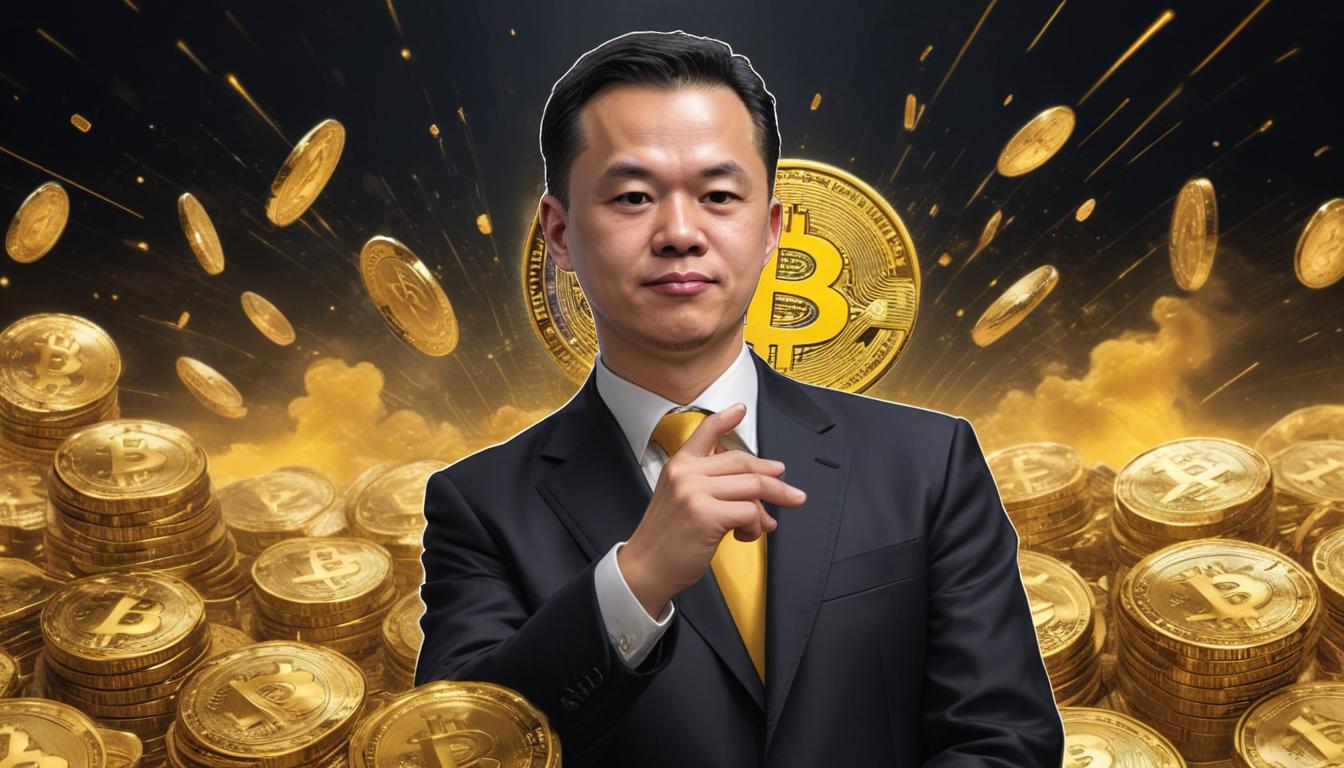
Navigating Uncertainty: How Trade Protectionism Could Fuel Bitcoin's Ascent
Binance CEO Richard Teng's analysis of trade protectionism and its potential impact on Bitcoin presents a compelling narrative for investors seeking alternative stores of value. Teng argues that the inherent instability fostered by protectionist trade policies could inadvertently bolster Bitcoin's appeal as a decentralized, non-sovereign asset. This analysis resonates with a broader trend of investors seeking diversification and risk mitigation in an increasingly uncertain global economic landscape.
Lee también: Bitcoin to $100,000? Trade War, Safe Haven, & Breakout Factors Explored!
Historically, periods of economic uncertainty, often exacerbated by trade disputes and protectionist measures, have led investors towards safe havens like gold and government bonds. However, these traditional safe havens face limitations during significant global economic turmoil. Government bonds are susceptible to inflation and currency devaluation, particularly when governments grapple with economic challenges worsened by protectionist policies. Gold, while a recognized safe haven, can experience price volatility and presents logistical challenges for storage and transport.
Bitcoin, with its decentralized nature and fixed supply of 21 million coins, offers a compelling alternative. Operating outside the control of national governments and central banks, it provides a hedge against inflation and currency devaluation, particularly appealing during times of economic uncertainty. As trade protectionism and geopolitical tensions rise, investors may gravitate towards assets less susceptible to government influence and the disruptions of escalating trade disputes.
This perspective aligns with a growing trend among investors seeking diversification. Trade protectionism introduces unpredictability, triggering market volatility and currency fluctuations. This encourages consideration of assets like Bitcoin, which offer potential stability and resilience due to its decentralized and transparent nature, coupled with its limited supply.
Furthermore, Bitcoin's increasing global adoption as a form of payment and its integration into various financial systems strengthen its position as a viable alternative to traditional assets. A wider network of users enhances the Bitcoin ecosystem's resilience against economic instability potentially triggered by protectionist measures.
While Bitcoin's price is subject to volatility, Teng's analysis focuses on its long-term potential as a store of value. The core attributes of Bitcoin—decentralization, scarcity, and increasing global adoption—position it favorably for investors seeking to mitigate risks associated with protectionist policies and broader economic uncertainty.
Teng's viewpoint emphasizes the interconnectedness of the global economy and its inherent vulnerabilities to geopolitical risks. Trade protectionism creates uncertainty and volatility, prompting investors to seek alternative stores of value. Bitcoin, with its unique properties, emerges as a potential solution in this evolving financial landscape. While not without its own risks, Bitcoin's potential role as a non-sovereign store of value is likely to gain further traction as economic instability persists. This underscores the growing importance for investors to understand Bitcoin's position within a broader macroeconomic context, particularly concerning trade protectionism, to navigate the complexities of the modern financial world. This isn't just about short-term gains; it's about positioning for a future where economic and political landscapes are increasingly unpredictable.
The Impact of Economic Volatility on Bitcoin Adoption
Binance CEO Richard Teng's observations on trade protectionism offer valuable insights into how economic uncertainty can drive Bitcoin adoption. Teng's analysis suggests that the instability created by protectionist policies – tariffs, trade wars, and subsequent economic disruptions – can serve as a catalyst, pushing investors towards decentralized assets like Bitcoin as a hedge against traditional market risks. This section explores the historical relationship between economic volatility and Bitcoin adoption, examining why investors turn to cryptocurrency during periods of heightened uncertainty and dissecting the mechanics driving this behavior.
Historical Precedents: Economic Shocks and Bitcoin's Rise
Examining historical data reveals a correlation between periods of economic volatility and heightened interest in Bitcoin. The 2008 global financial crisis, for example, exposed vulnerabilities within traditional financial systems, breeding distrust in centralized institutions and government-backed currencies. While predating Bitcoin's widespread adoption, this event created fertile ground for alternative, decentralized financial systems. The years following saw a steady rise in Bitcoin adoption, interspersed with periods of rapid growth and sharp corrections. These market fluctuations, while initially concerning to some, inadvertently highlighted Bitcoin's resilience and potential as a store of value independent of traditional economic forces.
Subsequent economic instabilities, whether stemming from geopolitical events, currency devaluations, or inflationary pressures, have generally followed this pattern. When traditional asset classes experience significant losses or demonstrate reduced stability, Bitcoin often witnesses a surge in interest as investors seek diversification and protection. While Bitcoin is not immune to market fluctuations – its price is known for its volatility – its relative performance during economic downturns often underscores its appeal as a less correlated, potentially more resilient investment. This resilience is partly attributed to its decentralized nature, which shields it from direct government intervention.
Trade Protectionism as a Catalyst for Bitcoin Adoption
The impact of trade protectionist policies on Bitcoin adoption is complex, but Teng's analysis highlights several crucial factors. Trade wars and protectionist measures generate uncertainty by disrupting trade routes, impacting supply chains, and raising costs for consumers. This uncertainty creates volatility in traditional markets – stocks, bonds, and currencies – making them less attractive as stable stores of value. Investors facing this volatility may seek alternative assets, potentially leading them to cryptocurrencies like Bitcoin, which are, in theory, unaffected by national borders or trade agreements.
Trade protectionism also often leads to inflationary pressures. When goods become more expensive due to tariffs or trade restrictions, the purchasing power of traditional currencies declines. This is where Bitcoin's fixed supply of 21 million coins becomes a significant advantage. This scarcity makes it resistant to inflationary pressures in a way that fiat currencies, subject to government control and expansionary monetary policies, are not. In essence, Bitcoin's pre-determined scarcity offers a hedge against the potential devaluation of fiat currencies during periods of trade-induced inflation.
The Role of Fear, Uncertainty, and Doubt (FUD)
The uncertainty generated by trade protectionism also triggers a psychological response: Fear, Uncertainty, and Doubt (FUD). Investors, facing potential losses in traditional markets due to unpredictable geopolitical scenarios, are more likely to consider alternative investments perceived as less susceptible to the same risks. Bitcoin's decentralized nature, its resistance to government censorship, and its inherent scarcity appeal to investors seeking a safe haven during times of increased FUD. This decision-making process isn't solely driven by rational economic analysis; a significant emotional component is involved, making Bitcoin, with its narrative of resilience and independence, an attractive proposition. The perception of control and autonomy that Bitcoin offers becomes particularly valuable during times of widespread economic anxiety.
Institutional Adoption and Economic Volatility
The impact of economic volatility extends beyond individual investors; institutional investors are increasingly incorporating Bitcoin into their portfolios. Hedge funds, investment firms, and even corporations are allocating portions of their assets to Bitcoin as a diversification strategy, especially during periods of heightened economic uncertainty. This institutional adoption further solidifies Bitcoin's position as a credible alternative asset class. The growing involvement of institutional investors lends credence to Bitcoin's long-term viability and enhances its potential as a hedge against macroeconomic risks, particularly those exacerbated by trade protectionism. Their participation provides liquidity and maturity to the Bitcoin market, further legitimizing its role as a potential store of value.
Bitcoin's Limitations and Future Considerations
It's crucial to acknowledge Bitcoin's limitations. Its price volatility remains a significant deterrent for some risk-averse investors. Regulatory uncertainty, differing national stances on cryptocurrencies, and the evolving technological landscape also present challenges. However, Teng's analysis focuses on Bitcoin's long-term potential as a store of value, emphasizing its resilience in the face of global economic instability. While short-term price fluctuations are inevitable, the fundamental attributes of Bitcoin – decentralization, scarcity, and increasing adoption – continue to support its position as a compelling asset in a volatile world. Future developments in regulatory frameworks and technological advancements will play a crucial role in shaping Bitcoin's trajectory and its widespread acceptance.
Conclusion: Bitcoin in a Protectionist World
In conclusion, Binance CEO Richard Teng's argument highlights a significant connection between trade protectionism, economic volatility, and the increasing adoption of Bitcoin. The uncertainty generated by protectionist policies disrupts traditional financial markets, prompting investors to seek alternative, more resilient assets. Bitcoin, with its decentralized nature, limited supply, and growing global adoption, offers a potentially attractive hedge against the risks associated with economic instability. While Bitcoin's price remains volatile, its long-term potential as a store of value in a world increasingly characterized by geopolitical uncertainty continues to attract substantial interest from both individual and institutional investors. The interplay between trade protectionism and Bitcoin's growth demonstrates a crucial shift in the global financial landscape, underscoring the evolving role of cryptocurrencies in mitigating risks associated with traditional economic models and offering a potential pathway to financial autonomy in an increasingly uncertain world.
Bitcoin's Long-Term Prospects as a Store of Value in a Protectionist World
The resurgence of trade protectionism, a trend observed by Binance CEO Richard Teng, provides a critical backdrop against which Bitcoin's long-term potential as a store of value can be assessed. While Bitcoin's price volatility remains a talking point, Teng's analysis underscores fundamental attributes that position Bitcoin as a viable alternative in an increasingly unstable global economy. This section explores the challenges and opportunities facing Bitcoin, considering regulatory developments, technological advancements, and macroeconomic factors while acknowledging varied perspectives on its future role. We'll examine how trade protectionism may inadvertently strengthen Bitcoin's appeal and discuss the factors that will determine its long-term success.
Regulatory Uncertainty: Navigating the Shifting Sands
The regulatory landscape surrounding Bitcoin is characterized by fragmentation and constant change. The spectrum of national approaches, from outright bans to carefully crafted regulations, introduces uncertainty for investors. While regulatory clarity could stimulate mainstream adoption and attract significant institutional investment, overly restrictive or poorly conceived regulations could stifle innovation and constrain Bitcoin's growth. The ongoing debate concerning Bitcoin's classification—whether it should be categorized as a security, a commodity, or a currency—reflects this persistent uncertainty, which has the potential to both accelerate and impede Bitcoin's progress, depending on the resulting legal frameworks.
Lessons from other asset classes operating under diverse regulatory regimes offer valuable context. For example, the evolution of the gold market demonstrates how legal frameworks can significantly influence investment patterns and price stability. Applying this historical lens to Bitcoin suggests that international harmonization in regulatory approaches is essential for fostering confidence and maximizing its utility as a globally accessible store of value. Consider the contrasting approaches of Switzerland, with its crypto-friendly regulations attracting blockchain innovation, and countries with outright bans, which effectively stifle the industry. The path Bitcoin takes will depend heavily on the regulatory choices made by individual nations and international bodies.
Scaling Solutions and Technological Advancements
Bitcoin's underlying technology is constantly evolving, spurred by discussions surrounding scalability solutions like the Lightning Network. These innovations are designed to address limitations related to transaction speed and fees. The successful and widespread adoption of these solutions is crucial to Bitcoin's long-term viability as a practical medium of exchange, which, in turn, supports its acceptance as a store of value. Successful scaling would not only improve Bitcoin's usability but also attract a broader range of users and investors, strengthening its position within the financial ecosystem.
Conversely, the failure to overcome these scalability challenges could limit its widespread adoption, hindering its potential as a global store of value. Imagine a scenario where transaction fees remain prohibitively high during peak usage; this would significantly impede Bitcoin's use in everyday transactions, limiting its role primarily to large-scale settlements and investment. The ongoing development of layer-two solutions like the Lightning Network are therefore critical to Bitcoin's future.
Macroeconomic Factors and Inflationary Concerns
Macroeconomic factors, including inflation rates and global economic instability, exert significant influence on Bitcoin's attractiveness as a store of value. Periods of high inflation or economic uncertainty often drive investors towards assets perceived as hedges against inflation, potentially increasing demand for Bitcoin due to its fixed supply and decentralized nature. Consider the example of countries experiencing hyperinflation, where citizens have increasingly turned to Bitcoin to preserve their wealth, demonstrating its potential as an alternative to rapidly devaluing national currencies.
However, Bitcoin's price is not entirely detached from macroeconomic trends; its value fluctuates based on market sentiment, technological advancements, and regulatory changes. While Bitcoin's limited supply provides inherent protection against inflationary pressures, external factors such as government policies and geopolitical events can significantly impact its long-term price stability. Therefore, a thorough analysis of macroeconomic indicators is vital for understanding Bitcoin's role within diverse investment strategies. Analyzing the impact of quantitative easing policies by central banks, for instance, can provide valuable insights into how Bitcoin might react to changes in the money supply.
Diverse Perspectives on Bitcoin's Role
Not all investors agree on Bitcoin's long-term potential as a store of value. Some argue that its inherent price volatility and susceptibility to market manipulation make it unsuitable for this role. Others view Bitcoin as a speculative asset, prone to bubbles and crashes, rather than a stable store of value comparable to gold or government bonds. Critics often point to historical price crashes and the influence of social media sentiment on its price as evidence of its speculative nature.
The counter-argument often highlights Bitcoin's nascent stage of development, drawing parallels to the early days of gold's adoption as currency and an investment vehicle. Furthermore, the increasing adoption of Bitcoin by institutional investors, albeit gradual, suggests a shift in perception, potentially signaling a growing acceptance of Bitcoin's long-term prospects as a diversifying asset in institutional portfolios. The decision by companies like MicroStrategy to hold significant Bitcoin reserves on their balance sheets can be seen as a vote of confidence in its long-term value.
These contrasting perspectives underscore the complexities involved in predicting Bitcoin's future and highlight the need for continuous research and monitoring of market trends. A balanced approach requires acknowledging both the potential risks and the potential rewards associated with investing in Bitcoin as a store of value.
Bitcoin's Expanding Role in a Decentralized Future
Richard Teng's insights, emphasizing Bitcoin's potential during times of economic uncertainty caused by trade protectionism, point towards a future where Bitcoin's decentralized nature provides a crucial counterpoint to centralized financial systems. This suggests a potential expansion of Bitcoin's role beyond a simple store of value, towards broader integration within a decentralized financial ecosystem.
This future could potentially lead to increased reliance on Bitcoin for cross-border transactions, circumventing limitations imposed by national protectionist policies. Imagine a scenario where businesses use Bitcoin to settle international payments, bypassing tariffs and trade restrictions. This, in turn, could create a self-reinforcing cycle, whereby increasing adoption enhances Bitcoin's stability and further fuels its appeal as a resilient store of value. The growth of decentralized finance (DeFi) applications built on Bitcoin could further solidify this role.
Conclusion: Embracing a Dynamic and Evolving Landscape
In conclusion, Bitcoin's long-term prospects as a store of value are multifaceted and contingent on a complex interplay of factors. While regulatory uncertainty, technological challenges, and macroeconomic influences present potential obstacles, Bitcoin's inherent characteristics—decentralization, scarcity, and increasing adoption—offer compelling arguments in its favor. Richard Teng's perspective underscores the potential for Bitcoin to thrive in a world increasingly defined by economic uncertainty and protectionist policies. The evolving dynamics between these forces will ultimately determine Bitcoin's success in establishing itself as a reliable, long-term store of value. Continued research, analysis of market trends, and ongoing observation of regulatory developments are essential for navigating this dynamic and evolving landscape. Investors should approach Bitcoin with a long-term perspective, acknowledging both its potential and its inherent risks, and staying informed about the factors that will shape its future.
Bitcoin's Rise Amidst Trade Protectionism: A Safe Haven in Uncertain Times
Binance CEO Richard Teng's analysis highlights Bitcoin's potential to thrive amidst rising trade protectionism and global economic uncertainty. This insightful perspective explores how Bitcoin's decentralized nature offers a compelling alternative to traditional assets during times of instability.
Key Takeaways:
- Bitcoin's decentralized nature acts as a hedge against inflation and currency devaluation, especially appealing during periods of economic uncertainty fueled by trade protectionism.
- The inherent scarcity of Bitcoin (21 million coins) makes it resistant to inflationary pressures often associated with protectionist policies.
- Growing global adoption and integration into financial systems strengthen Bitcoin's resilience against economic instability and increase its appeal as an alternative store of value.
#Inflation Hedge #Safe Haven #Trade Protectionism #Store of value #Richard Teng #Economic Uncertainty #Cryptocurrency