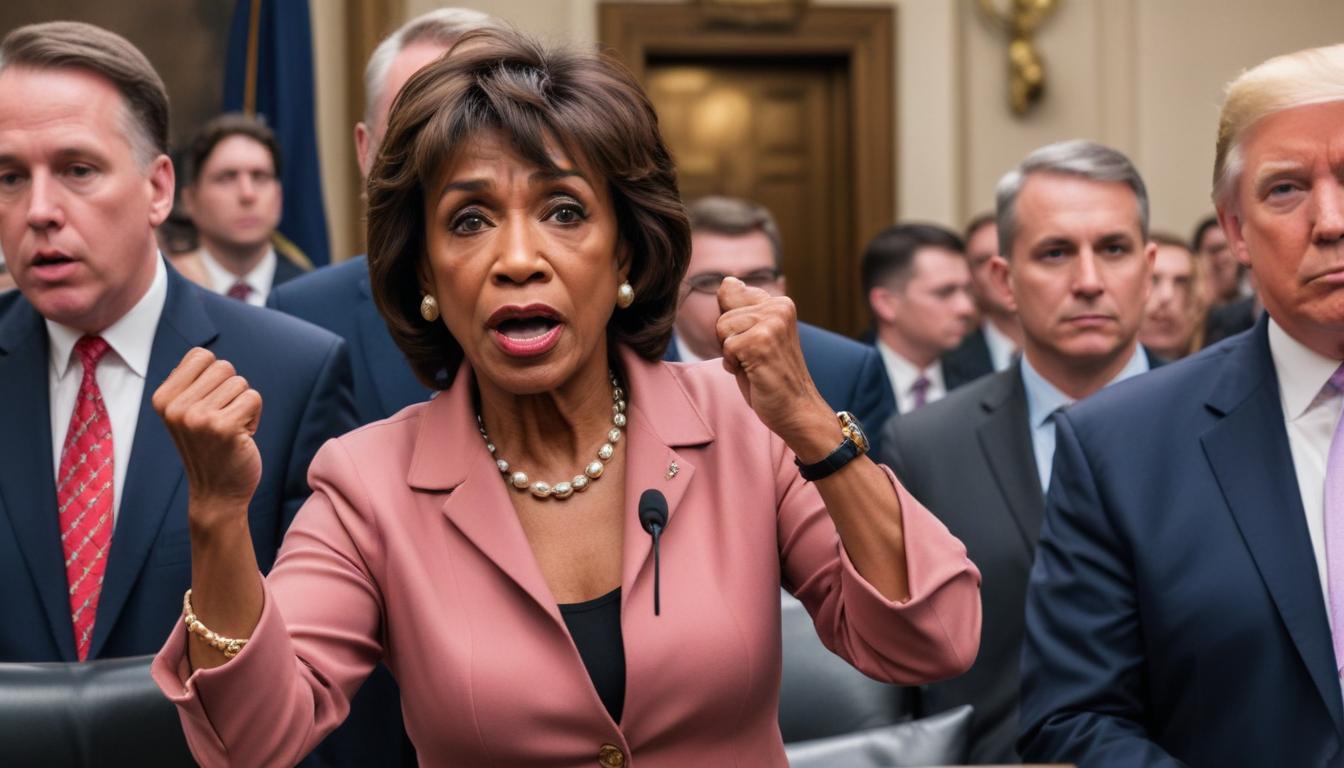
Maxine Waters' Fierce Criticism of Trump's Cryptocurrency Ventures: A Deep Dive
The intersection of cryptocurrency and politics is a volatile mix, and Representative Maxine Waters' vocal opposition to Donald Trump's cryptocurrency ventures exemplifies this perfectly. Waters' accusations are not merely partisan attacks; they represent a significant concern about potential corruption, conflicts of interest, and the exploitation of vulnerable investors. Her criticisms center around two key projects: the Official Trump token (TRUMP) and World Liberty Financial, highlighting the potential for these ventures to be used for illicit activities and undue influence on U.S. policy.
Waters' Accusations and the Official Trump Token (TRUMP)
During a highly publicized House hearing, Representative Waters directly accused Donald Trump of using cryptocurrency ventures to significantly enhance his personal wealth. This wasn't solely a critique of financial gain; Waters emphasized the potential for corruption, involving both domestic and foreign actors, facilitated by the often anonymous nature of cryptocurrency transactions. The Official Trump token (TRUMP), a memecoin, serves as a prime example. Waters highlighted the dramatic price drop from its all-time high, suggesting substantial investor losses while Trump and his family allegedly profited. While precise figures remain elusive due to market volatility, Waters' statements underscore the potential for significant financial harm to ordinary investors while potentially enriching those connected to the venture. The inherent volatility of memecoins, especially those associated with high-profile figures, exacerbates the risk and complicates effective regulation.
World Liberty Financial: Foreign Influence and Regulatory Concerns
Waters' concerns extend beyond the TRUMP token to include World Liberty Financial, another Trump-associated venture. She expressed profound alarm at the potential for this venture to serve as a conduit for foreign or domestic entities seeking to influence U.S. policy. The opacity inherent in some cryptocurrency transactions creates a pathway for discreet financial transfers, potentially allowing both allies and adversaries to funnel money to Trump and his associates. This raises critical questions regarding transparency, accountability, and the potential for significant conflicts of interest when political figures engage with the cryptocurrency market. The added dimension of Justin Sun's investment in World Liberty Financial further fuels the debate surrounding the possibility of foreign influence.
Accusations of Regulatory Favoritism and Stablecoin Risks
Waters' criticism extends to a subcommittee, which she accused of potentially favoring Trump's cryptocurrency ambitions. She argued that their actions could elevate Trump to a position of dominance within the stablecoin market, effectively making him the "king of crypto." This is particularly concerning given World Liberty Financial's announced stablecoin, USD1, which is designed to be redeemable for U.S. dollars and backed by short-term U.S. Treasuries. Waters warned of the possibility of preferential regulatory treatment for this stablecoin, providing an unfair advantage to Trump. This highlights the broader and escalating debate surrounding stablecoin regulation and the potential for political interference to complicate an already challenging regulatory landscape.
The Broader Political Context: Waters, Warren, and Crypto Regulation
Maxine Waters' stance reflects a broader trend within the Democratic party. Along with Senator Elizabeth Warren, she has consistently expressed skepticism toward Donald Trump's crypto ventures and advocated for stricter crypto regulations. Their shared concern reflects a deep-seated worry about the potential for abuse and exploitation in unregulated cryptocurrency markets. Their advocacy for increased scrutiny underscores the growing political polarization surrounding crypto regulation, with significant disagreement on the optimal balance between fostering innovation and prioritizing consumer protection and market stability.
Implications for the Future of Cryptocurrency Regulation
The conflict between Maxine Waters and Donald Trump's cryptocurrency ventures exemplifies the complex intersection of politics, finance, and technology in the digital age. Waters' accusations have raised profound questions about the potential for corruption, foreign influence, and regulatory capture within the cryptocurrency market. These concerns will undoubtedly fuel further debate and intensify scrutiny of crypto regulation, particularly regarding the involvement of political figures. The rapid evolution of the cryptocurrency landscape necessitates robust and comprehensive regulatory frameworks that protect investors, prevent illicit activities, and ensure market integrity. The controversy surrounding Trump's ventures underscores the urgent need for clear, impartial regulations that apply equally to all market participants, regardless of their political affiliations. The ongoing efforts by the US House to reform digital asset regulation, as detailed elsewhere in this article, directly address these concerns and highlight the complexities of navigating this evolving field. The future of crypto regulation will significantly impact innovation, consumer protection, and the global standing of the United States in the digital asset sphere.
EU's Retaliatory Crypto Tariffs: Navigating the Implications
The European Union's move to impose retaliatory tariffs on cryptocurrency activities signifies a notable shift in global crypto regulation. Stemming from disagreements over cross-border digital asset transactions, these tariffs present potential hurdles for both cryptocurrency exchanges and investors, signaling a more cautious regulatory approach within the EU. This section explores the rationale behind the EU's decision, analyzes its potential impacts, and provides context within the broader regulatory landscape shaping the EU's stance on digital currencies, equipping stakeholders with the knowledge to navigate these evolving challenges.
Deciphering the EU's Rationale for Crypto Tariffs
The EU's decision to implement these tariffs is driven by a combination of economic and regulatory factors. Primarily, the EU views them as a response to perceived imbalances and unfair practices in the global digital asset trade. The core objective is to create a level playing field, ensuring cryptocurrency operations within EU member states comply with stringent regulatory standards and contribute fairly to the regional economy. These tariffs aren't purely punitive; they aim to foster compliance with the EU's regulatory framework, particularly concerning:
- Anti-Money Laundering (AML) compliance: Preventing the use of cryptocurrencies for illicit financial flows.
- Counter-Terrorist Financing (CTF) compliance: Ensuring digital assets are not used to fund terrorist activities.
- Consumer Protection: Safeguarding investors and users from fraud and scams.
A central concern driving this decision is the potential for cryptocurrencies to be used for illegal activities. The pseudo-anonymity of some crypto transactions has raised alarms among European regulators, who fear these assets could facilitate tax evasion, money laundering, or terrorism financing. By imposing tariffs, the EU aims to enhance transparency and deter illegal operations, thus protecting its financial system. This concern is globally relevant, as governments worldwide grapple with regulating a borderless and often opaque digital asset market.
Furthermore, the EU's action can be viewed as a strategic move to assert its regulatory authority in the digital sphere. As cryptocurrencies gain traction, the EU seeks to maintain control over its financial policies and prevent external forces from undermining its regulations. The tariffs send a clear message to crypto exchanges and investors: the EU is committed to enforcing its rules and safeguarding its interests. This aligns with the EU's wider ambition to lead in digital regulation, setting standards for data privacy, artificial intelligence, and other emerging technologies.
Impacts on Cryptocurrency Exchanges Operating in the EU
The introduction of these tariffs could have significant consequences for cryptocurrency exchanges operating within the EU. Here's a breakdown of potential challenges:
- Increased Operational Costs: Tariffs are likely to raise the cost of doing business, potentially reducing profitability and competitiveness. Exchanges may need to pass these costs onto customers, making crypto trading more expensive for EU residents and potentially dampening demand.
- Compliance Burdens: Adapting to the new regulatory environment will be a major challenge. Exchanges will need to invest heavily in compliance measures to meet the EU's requirements for transparency, security, and AML/CTF compliance. This includes stricter KYC (Know Your Customer) procedures, advanced transaction monitoring, and reporting suspicious activities. Non-compliance could result in substantial fines, legal penalties, and even the loss of operating licenses.
- Uneven Playing Field: The tariffs could favor larger, more established exchanges with the resources to absorb the additional costs and comply with complex regulations. Smaller exchanges may struggle to compete, potentially leading to market consolidation and reduced consumer choice. Some exchanges might even relocate to jurisdictions with more favorable regulatory environments, reducing the EU's influence in the global crypto market.
- Limited Asset Availability: The tariffs could impact the types of crypto assets available to EU investors. Exchanges may become hesitant to list cryptocurrencies deemed high-risk or difficult to regulate, limiting investment options and potentially hindering innovation within the EU.
Implications for Cryptocurrency Investors in the EU
Cryptocurrency investors in the EU also face several potential implications due to these tariffs:
- Higher Trading Costs: As exchanges pass on the tariff costs, investors can expect to pay higher fees for buying, selling, and transferring cryptocurrencies. This could erode profits and make crypto investments less attractive, especially for retail investors.
- Increased Market Volatility: Uncertainty surrounding the new regulations could cause fluctuations in crypto prices as investors react to the changing regulatory environment. This heightened volatility can make it harder to predict market trends and manage risk effectively, potentially leading to more cautious investment strategies.
- Reduced Asset Accessibility: As exchanges become more selective about listed cryptocurrencies, investors may have fewer options, limiting portfolio diversification and participation in emerging crypto trends. Access to decentralized finance (DeFi) platforms and innovative crypto services could also be restricted, potentially limiting opportunities for passive income or participation in the evolving crypto ecosystem.
- Potential Positive Outcomes: Despite the challenges, increased regulatory oversight could foster a more mature and stable crypto market, reducing the risk of fraud and scams. This could attract institutional investors, increasing liquidity and price stability. The tariffs could also incentivize the development of more compliant and transparent crypto projects, benefiting investors who prioritize security and regulatory adherence.
EU's Broader Regulatory Landscape: MiCA and Beyond
The EU's retaliatory tariffs are part of a larger effort to develop a comprehensive regulatory framework for digital assets. A key initiative is the Markets in Crypto-Assets (MiCA) regulation, which aims to standardize rules for crypto asset service providers across the EU.
MiCA's objectives include:
- Creating a Level Playing Field: Ensuring crypto companies operate under the same regulatory standards regardless of their location within the EU.
- Comprehensive Coverage: Regulating a wide range of crypto assets, including stablecoins, utility tokens, and security tokens.
- Setting Clear Requirements: Establishing guidelines for licensing, capital adequacy, investor protection, and market integrity.
MiCA is expected to take effect soon and will significantly impact the crypto industry in Europe.
In addition to MiCA, the EU is addressing specific cryptocurrency-related risks, such as money laundering and tax evasion. Amendments to the EU's Anti-Money Laundering Directive (AMLD) now include crypto asset service providers, requiring them to implement AML/CTF measures and report suspicious activities. The EU is also exploring ways to enhance cross-border information sharing on crypto assets to combat tax evasion and money laundering.
The EU's approach to crypto regulation is characterized by:
- Caution and Pragmatism: Recognizing the potential benefits of digital assets while acknowledging the associated risks.
- Balancing Innovation and Protection: Designing a framework that fosters innovation while safeguarding consumers and maintaining financial stability.
- Emphasis on Established Principles: Aligning with the EU's broader regulatory philosophy, which prioritizes consumer protection, market integrity, and the rule of law.
Strategies for Navigating the Evolving Regulatory Terrain
In light of the EU's retaliatory tariffs and the broader regulatory landscape, crypto exchanges and investors must adopt proactive strategies:
- Prioritize Compliance: Exchanges should invest in robust KYC/AML procedures and maintain open communication with regulators to avoid penalties, retain operating licenses, and build customer trust.
- Educate and Diversify: Investors should thoroughly research the EU's regulatory framework and understand the risks and opportunities associated with different crypto assets. Diversifying portfolios, investing in EU-compliant assets, and seeking professional financial advice are crucial.
The EU's decision on crypto tariffs serves as a clear signal of regulators' increasing willingness to address perceived imbalances in the digital asset market. While posing challenges, these tariffs also present opportunities for innovation, compliance, and the development of a more sustainable crypto ecosystem. Constructive engagement with regulators, adaptation to the changing landscape, and collaboration are essential for all stakeholders to ensure digital assets can thrive securely, transparently, and compliantly within the EU.
Navigating the Shifting Sands: A Deep Dive into the US House Hearing on Digital Asset Regulation Reform
The recent US House hearing on digital asset regulation reform represents a watershed moment for the cryptocurrency industry in the United States. The hearing’s discussions, anxieties voiced by industry players, and proposed regulatory adjustments paint a compelling picture of the evolving landscape and the path forward for digital assets within the US regulatory environment. This analysis delves into the key takeaways, providing actionable insights for both investors and businesses navigating this complex terrain.
Key Policy Discussions: Clarity, Stablecoins, and Exchanges Under the Microscope
The hearing highlighted several critical policy issues. Central to the discussion was the persistent need for clarity regarding regulatory jurisdiction. The ambiguity surrounding which digital assets fall under the Securities and Exchange Commission (SEC) versus the Commodity Futures Trading Commission (CFTC) remains a significant hurdle, hindering innovation and investment. Industry participants emphasized the urgent need for clear, consistent guidelines.
Stablecoins emerged as another focal point, with lawmakers exploring various approaches to mitigate systemic risk. Proposals included reserve requirements (cash or highly liquid assets), bank-like supervision, and a potential federal framework to replace the current patchwork of state laws. Significant concerns were also raised about algorithmic stablecoins, their inherent complexities, and the potential for stricter regulations or even outright bans.
Regulation of cryptocurrency exchanges and intermediaries was also heavily debated. Lawmakers stressed the importance of enhanced consumer protections, including mandatory segregation of customer funds, transparent risk disclosures, and robust cybersecurity measures. The creation of a licensing regime, mirroring that of traditional financial institutions, was also considered. Concerns about market manipulation and insider trading underscored the need for strengthened oversight and regulatory tools. The potential impact on innovation and the risk of driving innovation overseas through overly stringent regulations were also carefully considered.
Furthermore, the implications for national security and law enforcement were discussed extensively. The use of cryptocurrencies in illicit activities, including money laundering and terrorist financing, was a recurring theme. Lawmakers explored strategies to improve law enforcement’s ability to track and seize illicit crypto assets while preserving the privacy rights of legitimate users. The inherent challenges of regulating decentralized finance (DeFi) platforms, with their decentralized nature and often opaque operations, also received considerable attention. The discussion underscored the need to find a balance between effective oversight and fostering innovation.
The hearing also underscored the critical need for a coordinated, international approach to crypto regulation. The global nature of cryptocurrencies necessitates collaboration between countries and regulatory bodies to develop effective and consistent standards. Cooperation with organizations such as the Financial Stability Board (FSB) and the Financial Action Task Force (FATF) was identified as a crucial step towards achieving this goal.
Industry Concerns: Navigating a Regulatory Tightrope
The hearing provided a platform for industry stakeholders to articulate their concerns regarding the impact of potential new regulations. A recurring theme was the fear that overly restrictive measures could stifle innovation and drive businesses outside of the United States, potentially hindering the nation's competitiveness in the burgeoning digital asset space. Industry representatives warned against a heavy-handed approach, advocating for a balanced regulatory framework that fosters growth without compromising consumer protection.
The lack of regulatory clarity emerged as a major concern, with industry participants expressing frustration over the ambiguity surrounding the legal status of various digital assets and conflicting guidance from different agencies. This uncertainty, they argued, creates compliance challenges, discourages investment, and hinders market development. The need for a clear, consistent, and predictable regulatory framework capable of fostering innovation was consistently emphasized.
The potential costs and burdens of complying with new regulations were also significant concerns, especially for smaller businesses and startups. These entities, it was argued, may lack the resources to meet stringent regulatory requirements, potentially creating an uneven playing field. The importance of tailoring regulations to the specific risks associated with different types of digital assets was highlighted, rather than implementing a one-size-fits-all approach.
The potential impact on decentralized finance (DeFi) garnered substantial attention. Industry representatives stressed the fundamental differences between DeFi platforms and traditional financial institutions, arguing for a tailored regulatory approach that avoids stifling the unique characteristics of DeFi, including its open-source nature and permissionless innovation. Technologically neutral regulations were advocated, preventing bias towards specific digital assets or business models. The discussion also included a nuanced discussion of the tension between innovation and regulatory oversight.
Throughout the hearing, industry representatives expressed their willingness to collaborate with lawmakers and regulators to develop a balanced framework that prioritizes both consumer protection and financial stability. They highlighted the importance of reasonable and proportionate regulations that do not unduly burden the crypto industry.
Potential Regulatory Shifts: A Look at the Horizon
The hearing laid the groundwork for substantial changes to the US regulatory landscape for digital assets. While specific details remain uncertain, several key areas point towards significant shifts.
One likely outcome is a clearer jurisdictional framework, potentially through legislation clarifying which digital assets are securities and which are commodities or through a formal agreement between the SEC and CFTC. This would alleviate the current ambiguity, simplifying compliance and encouraging investment.
A federal framework for stablecoin regulation is also highly probable, involving licensing requirements, reserve stipulations, and adherence to Anti-Money Laundering (AML) and Know Your Customer (KYC) standards. This would replace the current inconsistent state-level regulations.
Enhanced consumer protections are anticipated, potentially including requirements for exchanges to segregate customer funds, implement robust cybersecurity measures, and provide comprehensive risk disclosures. A private right of action, enabling investors harmed by fraud or misconduct to pursue legal recourse, may also be considered.
Further regulatory adjustments targeting cryptocurrency exchanges and intermediaries are likely, potentially encompassing a licensing regime, stricter rules against market manipulation and insider trading, and strengthened oversight of DeFi platforms.
Finally, the need for greater international cooperation is evident, suggesting collaboration with international organizations and bilateral agreements to foster consistency and effectiveness in global crypto regulation.
The hearing clearly demonstrates a commitment from policymakers to establish a comprehensive legal framework for cryptocurrencies in the US. The outcome will significantly influence the future of the industry, shaping how digital assets are used, traded, and regulated for years to come. The successful implementation of these changes will depend on a balanced approach that fosters innovation while adequately protecting consumers and safeguarding financial stability. The ongoing dialogue between policymakers and industry stakeholders will be crucial in shaping this future.
Trump & Crypto: Waters' Warnings on Conflicts of Interest
Representative Maxine Waters has voiced strong criticism of Donald Trump's crypto ventures, raising concerns about potential corruption and regulatory favoritism. This article examines her key arguments and their implications for the future of cryptocurrency regulation.
Key Takeaways:
- Waters alleges Trump's crypto ventures could enable corruption and foreign influence due to the anonymity of some transactions.
- She warns against potential regulatory advantages for Trump's stablecoin, USD1, creating an unfair market advantage.
- Waters' stance reflects a broader Democratic concern regarding crypto regulation and the need for stricter consumer protection measures.
#Crypto Market #Political Influence #Corruption #Stablecoins #Maxine Waters #EU Crypto Tariffs #US House Hearing #Official Trump Token (TRUMP) #Conflicts of Interest #Donald Trump #USD1 #Digital Asset Regulation #Cryptocurrency #Crypto Regulation