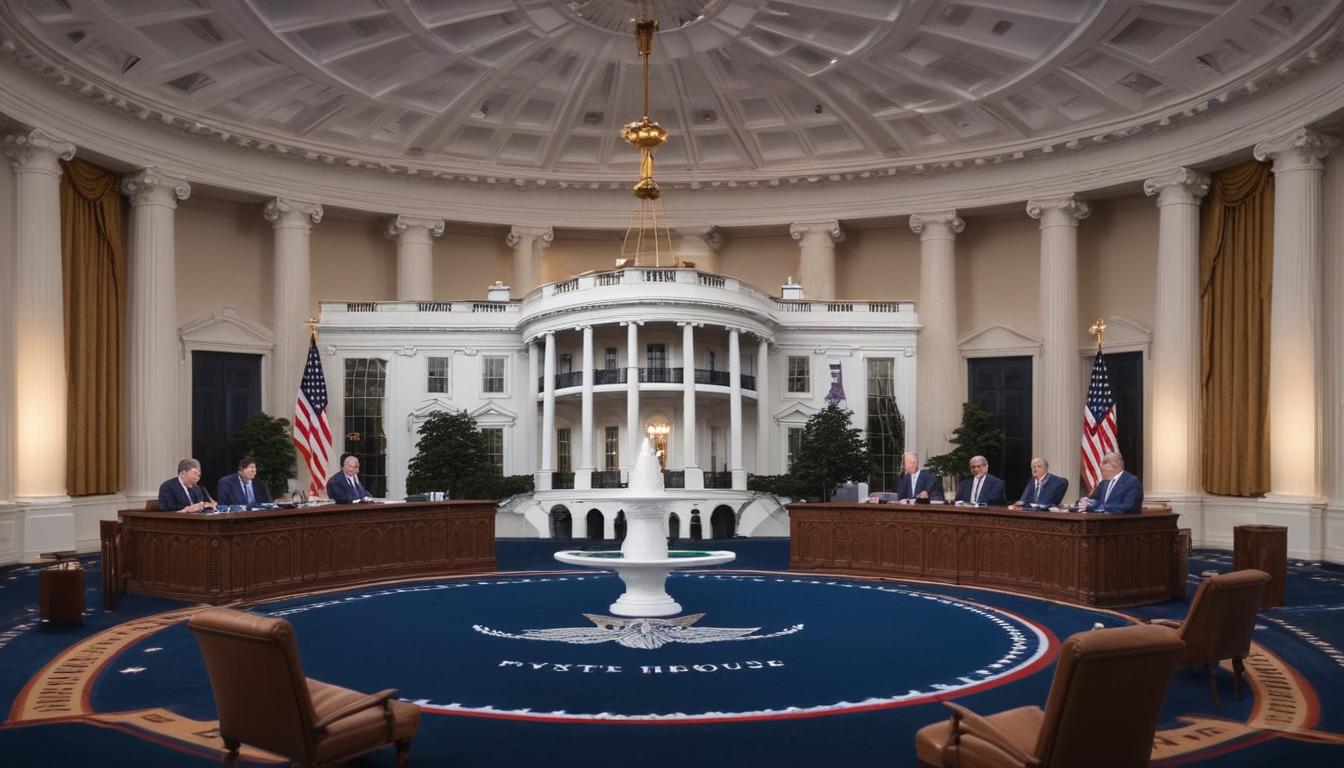
Key Attendees and Their Agendas at the White House Crypto Summit 2025: A Deep Dive
The White House Crypto Summit 2025 was a landmark event, bringing together a diverse group of key players to shape the future of digital assets. Understanding the agendas of these attendees provides crucial insights into the potential outcomes and long-term implications of this pivotal summit. This analysis goes beyond a simple list; we'll delve into the motivations, priorities, and potential impact of each key attendee group, providing a comprehensive overview for investors, policymakers, and anyone interested in the future of cryptocurrency.
Government Officials: Navigating the Regulatory Tightrope
While specific government agendas remained confidential before and during the summit, the overall context points towards a clear objective: fostering responsible innovation within the crypto space. This involves creating a regulatory framework that balances consumer protection with the encouragement of technological advancement—a delicate tightrope walk indeed. The anticipated focus areas included:
- Stablecoins: The inherent risks and potential benefits of stablecoins dominated discussions. Finding the right balance between fostering innovation in the DeFi space and safeguarding against systemic risk was a key challenge.
- Decentralized Finance (DeFi): The explosive growth of DeFi, with its complex protocols and decentralized governance, presented significant regulatory challenges. Discussions likely centered on finding innovative regulatory approaches that acknowledge DeFi's decentralized nature while ensuring investor protection and preventing illicit activities.
- Central Bank Digital Currencies (CBDCs): The potential benefits and drawbacks of CBDCs were thoroughly explored. This included examining their impact on monetary policy, financial inclusion, and the overall architecture of the global financial system.
- Anti-Money Laundering (AML) and Know Your Customer (KYC) Compliance: The critical need for strong AML/KYC regulations within the crypto ecosystem was undeniably highlighted. Government officials likely sought input on how to effectively enforce these regulations while minimizing undue burdens on legitimate businesses.
- Cross-Border Payments: The potential of cryptocurrencies to revolutionize cross-border payments was a significant topic. The goal was to determine how to harness this potential while also addressing risks related to regulatory arbitrage and illicit finance.
- Taxation of Digital Assets: Creating a transparent and efficient tax framework for digital assets was another key area. The aim was to balance the need for revenue generation with the specific characteristics of the crypto market.
The government's perspective emphasized protecting consumers and maintaining financial stability, while simultaneously recognizing the potential of blockchain technology to drive innovation and economic growth. This delicate balance was central to their agenda, shaping many of the summit's discussions.
Industry CEOs: Championing Innovation and Regulatory Clarity
The summit brought together some of the most influential CEOs in the cryptocurrency industry. Their presence was critical, as their views directly impact market sentiment, investor confidence, and the overall trajectory of the sector. Each CEO brought unique perspectives and prioritized specific concerns:
- Michael Saylor (MicroStrategy): A staunch Bitcoin advocate, Saylor's agenda focused on promoting Bitcoin as a long-term store of value and a hedge against inflation. He likely emphasized the importance of regulatory frameworks that acknowledge Bitcoin's unique characteristics.
- Brad Garlinghouse (Ripple Labs): Garlinghouse championed regulatory clarity surrounding XRP, emphasizing its potential in cross-border payments and the need for fair and consistent regulatory treatment compared to other digital assets. He likely argued against overly restrictive regulations that could stifle innovation and adoption.
- Brian Armstrong (Coinbase): Armstrong focused on policies that support the growth of cryptocurrency exchanges and broader market access for retail investors. He likely advocated for regulations that protect consumers while avoiding unnecessary barriers to entry for reputable platforms. Ensuring a level playing field and promoting fair competition was a central theme.
- Other CEOs: The presence of other major players in the crypto space added depth and breadth to the discussions, showcasing the diverse applications and potential of blockchain technology.
These industry leaders played a critical role in providing realistic insights into the practical implications of various regulatory approaches, bridging the gap between theoretical concepts and real-world applications. Their collective voice provided a powerful counterpoint to the regulatory concerns, advocating for a balanced approach that supports responsible innovation.
Technology Visionaries: Prioritizing Innovation and Interoperability
Technology experts and developers, including prominent figures like Sergey Nazarov of Chainlink, brought a critical technical perspective to the summit. Their primary focus was on ensuring that regulations don't stifle the development and adoption of blockchain technology. This involved:
- Interoperability: A key theme centered on enhancing the interoperability between various blockchain networks, enabling seamless communication and data exchange, and unlocking the full potential of decentralized applications (dApps).
- Scalability: Addressing the scalability challenges that often hinder the widespread adoption of blockchain technologies was vital. Discussions likely involved exploring different scaling solutions and their relative merits.
- Security and Privacy: Ensuring the security and privacy of user data and transactions remained a core concern. Experts likely emphasized the importance of robust security protocols and privacy-preserving technologies.
- New Use Cases: Beyond finance, discussions extended to explore the application of blockchain technology in other sectors, including supply chain management, digital identity, healthcare, and voting systems. This emphasized the far-reaching impact of blockchain beyond its current applications.
The technical experts' expertise was invaluable in bridging the gap between technological capabilities and regulatory considerations, ensuring that future regulations are both effective and conducive to responsible innovation and sustainable growth within the crypto ecosystem.
Investors: Seeking Regulatory Certainty and Market Stability
The participation of prominent investors like Matt Huang of Paradigm and Kyle Samani of Multicoin Capital highlighted the importance of regulatory clarity for investment decisions and market stability. Their presence underscored the need for policies that promote trust and attract further capital into the market. Their primary concerns included:
- Regulatory Clarity: Investors emphasized the need for clear and predictable regulatory frameworks, reducing uncertainty and fostering confidence. This certainty is crucial for attracting institutional investment and driving market growth.
- Market Stability: Addressing the volatility inherent in cryptocurrency markets was a key priority. Discussions likely included exploring mechanisms to mitigate risks and improve market transparency.
- Investor Protection: Clear regulatory frameworks can help protect investors from fraud and manipulation, further promoting trust and attracting long-term investment.
Their insightful perspectives emphasized the crucial link between regulatory decisions and market dynamics, directly influencing investor sentiment and capital flows within the cryptocurrency ecosystem. Their involvement highlighted the need for a collaborative approach between regulators and investors to build a sustainable and thriving market.
A Collaborative Effort: The Path Forward
The White House Crypto Summit 2025 wasn't merely a gathering; it was a critical step toward establishing a collaborative approach to navigating the complexities of the cryptocurrency world. By bringing together representatives from government, industry, technology, and investment, the summit fostered a shared understanding of the challenges and opportunities in this rapidly evolving space. The discussions and outcomes had a significant impact, shaping regulatory frameworks, market trends, and the overall trajectory of the industry. The collaborative effort was, and remains, vital for creating a future where digital assets can thrive within a robust and well-defined regulatory framework, balancing innovation with consumer protection and market stability. The true measure of success will be seen in the implementation and effectiveness of the resulting policies and their impact on the long-term health and development of the cryptocurrency ecosystem.## Summit Agenda and Key Discussion Points: Charting the Course for Crypto's Future
The White House Crypto Summit 2025. The very name conjures images of intense debates, groundbreaking policy suggestions, and perhaps even a bit of behind-the-scenes drama. While the presence of industry titans like Michael Saylor, Brad Garlinghouse, and Brian Armstrong undoubtedly added star power and insightful perspectives, let's be clear: the real roadmap lies within the summit's agenda itself. This isn't just about a conference; it's about actively shaping the future of cryptocurrencies in the global economy. So, let’s dive deep into the anticipated key discussion points and decipher what this summit truly aims to achieve. Think of it as peeking behind the curtain to see the gears turning.
Regulatory Frameworks: Walking the Tightrope Between Innovation and Oversight
Let’s be honest, the current regulatory environment surrounding digital assets? It's a bit of a mess. Fragmented, often unclear, and frankly, a headache for anyone trying to navigate it. This is precisely why regulatory frameworks will be front and center at the summit. It's about striking that delicate balance: fostering innovation while simultaneously protecting consumers and maintaining financial stability. It's like walking a tightrope, and the summit represents the collective effort to keep everyone from falling. Expect discussions to heavily revolve around these critical areas:
- Defining Digital Assets with Precision: This isn't just semantics; it's fundamental. Clear, legally sound definitions for different types of cryptocurrencies – stablecoins, utility tokens, security tokens – are essential. Without them, effective regulation is virtually impossible. Think of it as needing precise blueprints before you can start building a skyscraper. What makes a stablecoin a stablecoin? What distinguishes a utility token from a security offering? These questions need definitive answers.
- AML (Anti-Money Laundering) and KYC (Know Your Customer): The Cornerstones of Trust: Let's face it, the crypto space has, unfortunately, attracted its fair share of bad actors. Implementing robust AML/KYC procedures isn’t just a suggestion; it’s a necessity. It’s about weeding out the illicit activities and upholding the integrity of the financial system. This means knowing who's transacting and where the money is coming from and going to. It's about building trust and legitimacy.
- Taxation of Digital Assets: Clarity for All: Taxes. The one certainty in life, as they say. And cryptocurrencies are no exception. A clear and consistent tax framework is vital for two key reasons: generating government revenue and providing much-needed clarity for investors. Right now, the lack of clarity creates confusion and potential compliance issues. A well-defined system benefits everyone involved.
- Decentralized Governance vs. Regulatory Oversight: A Modern Balancing Act: This is where things get interesting. Blockchain's inherent decentralized nature presents a unique challenge for regulators. How do you oversee something that, by design, resists centralized control? The summit needs to explore innovative approaches that respect the core principles of decentralization while ensuring adequate consumer protection. It’s a complex puzzle, but solving it is crucial for the long-term health of the industry. Can regulatory bodies adapt to the decentralized paradigm, or will they try to force a square peg into a round hole?
Blockchain Development: Fueling the Engine of Innovation
Beyond the crucial, albeit sometimes dry, world of regulation, the summit is also expected to delve into the exciting technological advancements driving the crypto industry forward. Blockchain isn't just about cryptocurrencies; it's a transformative technology with far-reaching potential. Discussions here will likely focus on:
- Promoting Interoperability: Breaking Down the Silos: Imagine a world where different blockchain networks could seamlessly communicate and exchange data. That's the promise of interoperability. It's about unlocking the full potential of decentralized applications (dApps) by allowing them to interact with each other. Think of it as building bridges between isolated islands, creating a thriving, interconnected ecosystem. This will necessitate common standards and protocols, a significant challenge, but one with enormous potential rewards.
- Scalability Solutions: Overcoming the Bottlenecks: One of the biggest hurdles to mainstream adoption is scalability. Existing blockchain networks often struggle to handle a large volume of transactions, leading to slow processing times and high fees. The summit will need to address these limitations by exploring different scaling solutions, such as Layer 2 protocols and sharding. It’s about finding ways to increase transaction throughput without sacrificing security or decentralization. If blockchain is to become the backbone of a new financial system, it needs to be able to handle the load.
- Enhancing Security and Privacy: Building a Foundation of Trust: Security breaches and privacy concerns can erode trust and hinder widespread adoption. The summit must prioritize discussions on enhancing the security and privacy of user data and transactions on blockchain networks. This includes exploring advanced encryption techniques, multi-signature wallets, and other security measures. A secure and private blockchain is essential for building a sustainable and trustworthy ecosystem. It's about protecting users from fraud and ensuring their data is safe.
- Exploring New Use Cases: Beyond the Financial Realm: While finance is the most obvious application of blockchain, its potential extends far beyond. The summit is likely to explore use cases in areas such as supply chain management, digital identity, healthcare, and voting systems. Think about tracking goods from origin to consumer, verifying identities securely online, or ensuring the integrity of elections. Blockchain has the potential to revolutionize these industries and more. It’s about exploring the art of the possible.
Market Stability: Taming the Wild West
The infamous volatility of cryptocurrency markets remains a significant concern, not just for investors, but also for regulators. The summit offers a crucial platform to discuss strategies for enhancing market stability and fostering a more predictable environment. This is about creating a market that's less like a rollercoaster and more like a steady, reliable train. Expect discussions to center on:
- Stablecoin Regulation: Anchoring the Crypto Seas: Stablecoins, which aim to maintain a stable value pegged to a fiat currency or other assets, play a critical role in the crypto ecosystem. However, they also pose potential systemic risks if not properly regulated. The summit will need to establish clear regulatory guidelines for stablecoins, addressing issues such as reserve requirements, auditability, and redemption mechanisms. It’s about ensuring that stablecoins are truly stable and don't become a source of instability.
- Combating Market Manipulation: Leveling the Playing Field: Market manipulation, such as insider trading and pump-and-dump schemes, erodes investor confidence and undermines the integrity of the market. The summit needs to develop mechanisms to prevent and address these illicit activities. This includes enhanced surveillance, stricter enforcement, and investor education. It’s about creating a level playing field where everyone has a fair chance to succeed.
- Improving Market Transparency: Shedding Light on the Shadows: Lack of transparency can breed distrust and make it difficult for investors to make informed decisions. The summit should advocate for greater transparency in cryptocurrency markets through enhanced data reporting and disclosure requirements. This includes providing more information about trading volumes, order books, and market participants. It’s about shedding light on the shadows and empowering investors with the knowledge they need to navigate the market effectively.
- Developing Robust Risk Management Frameworks: Building a Safety Net: Cryptocurrency exchanges and other service providers need to implement robust risk management practices to protect investors from potential losses. The summit should encourage the development and implementation of these frameworks, addressing issues such as cybersecurity, custody of assets, and insurance. It’s about building a safety net to mitigate the risks inherent in the crypto market.
The Role of Cryptocurrencies in the Global Economy: Reshaping the Financial Landscape
Ultimately, the summit will likely tackle the big picture: the broader implications of cryptocurrencies for the global economy. How can these digital assets reshape traditional financial systems and contribute to a more inclusive and efficient world? Expect discussions to delve into:
- Central Bank Digital Currencies (CBDCs): The Future of Fiat? CBDCs, digital versions of a country's fiat currency issued by its central bank, are a hot topic in the financial world. The summit will undoubtedly explore the potential benefits and challenges of CBDCs, including their impact on monetary policy, financial inclusion, and the overall architecture of the financial system. Will CBDCs compete with or complement existing cryptocurrencies? What are the implications for privacy and control?
- Cross-Border Payments: Making Global Transactions Seamless: Traditional cross-border payments are often slow, expensive, and inefficient. Cryptocurrencies have the potential to streamline and reduce the cost of these transactions, making it easier for businesses and individuals to send money across borders. The summit will likely assess this potential and explore ways to facilitate the adoption of cryptocurrencies for cross-border payments. It’s about breaking down barriers and creating a more connected global economy.
- Financial Inclusion: Empowering the Underserved: Cryptocurrencies have the potential to provide access to financial services for underserved populations, particularly in developing countries. The summit will likely examine how cryptocurrencies can be used to promote financial inclusion, empowering individuals to participate in the global economy. It’s about extending financial access to those who have been traditionally excluded.
- The Future of Decentralized Finance (DeFi): Disrupting the Status Quo: DeFi, which encompasses a range of decentralized financial applications built on blockchain technology, has the potential to disrupt traditional financial intermediaries. The summit will likely explore this potential, examining the opportunities and challenges of DeFi. Will DeFi replace traditional financial institutions? What are the regulatory implications of this emerging ecosystem?
The White House Crypto Summit 2025 is more than just a talk shop; it's a strategic forum for shaping the future of the cryptocurrency industry. By fostering collaboration between government, industry, and academia, the summit aims to create a more mature, sustainable, and integrated ecosystem for digital assets. The outcomes of these discussions will have far-reaching implications, influencing regulatory frameworks, market trends, and the overall trajectory of the industry for years to come. It's a crucial step towards mainstream adoption and a future where cryptocurrencies play a significant role in the global economy. It's about building a solid foundation for a future where digital assets can thrive, offering innovation, efficiency, and inclusivity on a global scale.## The Ripple Effect: Potential Market Impact and Long-Term Implications of the White House Crypto Summit 2025
The White House Crypto Summit 2025: it's more than just a gathering of suits and ties; it represents a potential seismic shift for the entire cryptocurrency universe. Think of it as the crypto world's version of the Bretton Woods agreement, but for the digital age. The decisions forged within those hallowed halls have the power to ripple outwards, influencing market behavior, shaping investor confidence, and laying the groundwork for the regulatory frameworks that will govern the industry for years to come. This section isn't just about predicting the future; it's about understanding the potential pathways that this landmark event could carve out, examining its long-term implications for the industry's growth, mainstream adoption, and its integration into the broader global financial ecosystem. Buckle up, because we're about to dive deep into the crystal ball.
Regulatory Clarity: A Lighthouse for Market Confidence and Sustainable Growth
Let's face it: the regulatory landscape surrounding cryptocurrencies has resembled something of a Wild West. A confusing patchwork of rules, regulations, and sometimes, a complete lack thereof, has created a climate of uncertainty for businesses, innovators, and investors alike. Imagine trying to build a skyscraper on shifting sands – that's the crypto industry under the weight of regulatory ambiguity. The most profound impact of the summit lies in its potential to act as a lighthouse, providing much-needed regulatory clarity. A unified and comprehensive framework, emerging from these discussions, could act as a major confidence booster for the market, attracting substantial institutional investment and paving the way for widespread mainstream acceptance. This newfound clarity could also drastically simplify the process for budding projects and established businesses looking to enter the crypto arena, thus fueling innovation and fostering healthy competition. Think of it as clearing the path for a new generation of crypto pioneers.
Consider the alternative: a continued lack of clear direction or, even worse, the implementation of overly restrictive regulations. Such a scenario could very well stifle growth, sending innovation scurrying offshore to more welcoming jurisdictions. We've seen this happen in other industries, and the crypto space is no exception. Businesses will naturally gravitate towards environments that foster growth and innovation, and regulation plays a key role in determining that environment.
Moreover, regulatory clarity isn't just about attracting investment; it's about protecting consumers. Clear rules and guidelines help to prevent fraud, scams, and other illicit activities, ultimately building trust in the cryptocurrency ecosystem. This trust is essential for long-term growth and adoption.
Market Reactions: Riding the Waves of Regulatory Tides
The immediate aftermath of the summit is likely to be a rollercoaster ride for the markets. Expect volatility, and be prepared for both exhilarating highs and potentially unsettling lows. Positive announcements, such as the establishment of clear regulatory guidelines, strong government backing for blockchain technology, or the seamless integration of cryptocurrencies into existing financial infrastructures, could trigger a significant market rally. Think of it as a collective sigh of relief, followed by a surge of optimism.
Conversely, any negative signals, such as the imposition of excessively stringent regulations or heightened scrutiny from government agencies, could very well lead to a market downturn. Fear, uncertainty, and doubt (FUD) are powerful forces in the crypto market, and negative news can quickly trigger a sell-off. The long-term market trajectory, however, hinges on the specific details and practical implementation of any policies or regulations that stem from the summit. It's not enough to simply announce new rules; the devil is in the details, and the market will be closely scrutinizing how these regulations are put into practice.
To illustrate, imagine the summit announces a new tax framework for cryptocurrencies. If the framework is simple, fair, and easy to understand, the market will likely react positively. However, if the framework is complex, burdensome, and unclear, it could lead to confusion and a potential sell-off as investors try to navigate the new rules.
Investor Sentiment: Sculpting Perceptions and Steering Investment Strategies
In the cryptocurrency market, perception is reality. Investor sentiment wields considerable influence, often dictating market trends and driving investment decisions. The summit possesses the power to dramatically shape this sentiment by influencing perceptions regarding the legitimacy and future viability of digital assets. Favorable endorsements from government officials and prominent industry figures could significantly bolster investor confidence, drawing fresh capital into the market. This influx of capital can fuel further growth and innovation, creating a positive feedback loop.
Conversely, negative pronouncements or aggressive regulatory crackdowns could erode trust, triggering a flight of capital as investors seek safer havens. It's crucial to remember that the cryptocurrency market is still relatively young and highly susceptible to shifts in sentiment. The summit's overall impact on investor sentiment will serve as a crucial gauge of its long-term effectiveness in nurturing a sustainable and thriving crypto ecosystem.
Think of it this way: if the summit conveys a message of collaboration, innovation, and responsible regulation, investors are more likely to view the cryptocurrency market as a safe and promising place to invest. However, if the summit conveys a message of fear, uncertainty, and excessive control, investors are likely to become more cautious and potentially withdraw their capital.
The Future of Blockchain Development: A Crossroads of Innovation and Regulation
The summit's discussions concerning blockchain technology hold the potential to profoundly influence its future trajectory. Supportive policies that actively encourage research and development, coupled with the establishment of regulatory sandboxes that provide a safe space for experimentation, could catalyze innovation and unlock a multitude of novel applications for blockchain technology. These sandboxes allow developers to test new ideas and technologies without fear of immediate regulatory repercussions, fostering a culture of experimentation and creativity.
However, overly restrictive regulations could stifle creativity and limit the transformative potential of this groundbreaking technology. Imagine trying to cultivate a garden with overly strict rules about what you can plant and how you can tend to it – the result would likely be a barren landscape. The summit's overall approach to blockchain development will be a crucial determinant of whether the industry flourishes or languishes in the years ahead. It's a high-stakes game, and the choices made at the summit will have lasting consequences.
Consider the potential applications of blockchain beyond cryptocurrencies: supply chain management, healthcare, voting systems, and digital identity, to name just a few. These applications have the potential to revolutionize entire industries, but their development depends on a supportive regulatory environment.
Global Implications: Forging a Path for International Harmony
The White House Crypto Summit 2025 presents a unique opportunity to establish a framework for international cooperation on cryptocurrency regulation. A harmonized approach among leading economies could foster a more stable and predictable global regulatory landscape, facilitating seamless cross-border transactions and fostering enhanced interoperability between diverse crypto ecosystems. This is crucial for the long-term growth and adoption of cryptocurrencies on a global scale. Imagine a world where you can easily send and receive cryptocurrencies across borders without having to navigate a maze of complex regulations – that's the promise of international cooperation.
The summit's discussions on international cooperation will be pivotal in shaping the future of global crypto regulation. Will countries work together to create a unified framework, or will they pursue divergent paths, creating a fragmented and confusing regulatory landscape? The answer to this question will have a significant impact on the future of the cryptocurrency industry.
For example, if the United States, Europe, and Asia can agree on a common set of regulatory standards for stablecoins, it would greatly facilitate their use in international trade and commerce. However, if each region adopts its own unique set of rules, it could create barriers to adoption and hinder innovation.
Long-Term Adoption: Weaving Cryptocurrencies into the Fabric of Everyday Life
The ultimate success of the cryptocurrency industry hinges on its ability to achieve widespread mainstream adoption. The summit can play a pivotal role in this process by addressing key obstacles to adoption, such as regulatory uncertainty, security concerns, and a lack of user-friendliness. By cultivating a collaborative atmosphere between government, industry, and academia, the summit can pave the way for the integration of cryptocurrencies into everyday life. This includes exploring potential applications in areas such as payments, supply chain management, and digital identity.
Imagine a future where you can use cryptocurrencies to pay for your groceries, track the origin of your food, and securely verify your identity online – that's the vision of mainstream adoption. The summit's impact on long-term adoption will depend on its ability to create a more accessible and user-friendly crypto ecosystem.
For instance, if the summit leads to the development of more secure and user-friendly cryptocurrency wallets, it would make it easier for ordinary people to use cryptocurrencies for everyday transactions. Similarly, if the summit promotes the development of blockchain-based identity solutions, it could greatly simplify online verification processes and reduce the risk of identity theft.
The Path Forward: Charting a Course Through the Complexities of the Digital Asset Realm
The White House Crypto Summit 2025 signifies a critical juncture for the cryptocurrency industry. The summit's outcomes have the potential to shape the future of digital assets, influencing market trends, investor sentiment, and the evolution of future regulations. By fostering open dialogue and collaboration among key stakeholders, the summit aims to establish a more mature and sustainable ecosystem for cryptocurrencies. The long-term implications of this event will be closely scrutinized by industry participants and observers alike, as they hold the key to unlocking the full potential of this transformative technology. It's not just about the technology itself; it's about how that technology is integrated into society and how it is used to improve people's lives.
The summit's success will ultimately be gauged by its ability to create a regulatory environment that promotes innovation, safeguards consumers, and fosters the responsible growth of the cryptocurrency industry. This is a pivotal moment, and the decisions made in the coming days could determine the trajectory of the digital asset landscape for years to come. The challenge lies in striking a delicate balance between fostering innovation and mitigating risks, paving the way for a future where cryptocurrencies can play a positive and transformative role in the global economy.
Ultimately, the White House Crypto Summit 2025 is a testament to the growing recognition of cryptocurrencies and blockchain technology as forces to be reckoned with. It's a recognition that these technologies have the potential to reshape the financial landscape and create new opportunities for innovation and economic growth. The summit is an opportunity to shape that future in a responsible and sustainable way, ensuring that the benefits of these technologies are shared by all.## White House Crypto Summit 2025: Shaping the Future of Digital Assets
The White House Crypto Summit 2025 was a pivotal event, bringing together government officials, industry leaders, technologists, and investors to address the future of cryptocurrencies. This summary highlights key takeaways impacting regulation, innovation, and market stability.
Key Takeaways:
- Regulatory Clarity is Crucial: The summit aimed to establish clear, comprehensive regulatory frameworks balancing innovation with consumer protection, covering stablecoins, DeFi, CBDCs, AML/KYC, cross-border payments, and taxation.
- Collaboration is Key: Successful navigation of the crypto space requires collaboration between government, industry, and technology experts to ensure regulations support innovation and market stability.
- Market Impact and Long-Term Implications: The summit's outcomes will significantly influence market sentiment, investor confidence, and the long-term trajectory of the cryptocurrency industry, impacting blockchain development, global cooperation, and mainstream adoption.
#White House Crypto Summit #Cryptocurrency #Digital Assets #Crypto Regulation #Blockchain